

Blogs
Vinyl Printing Materials Explained

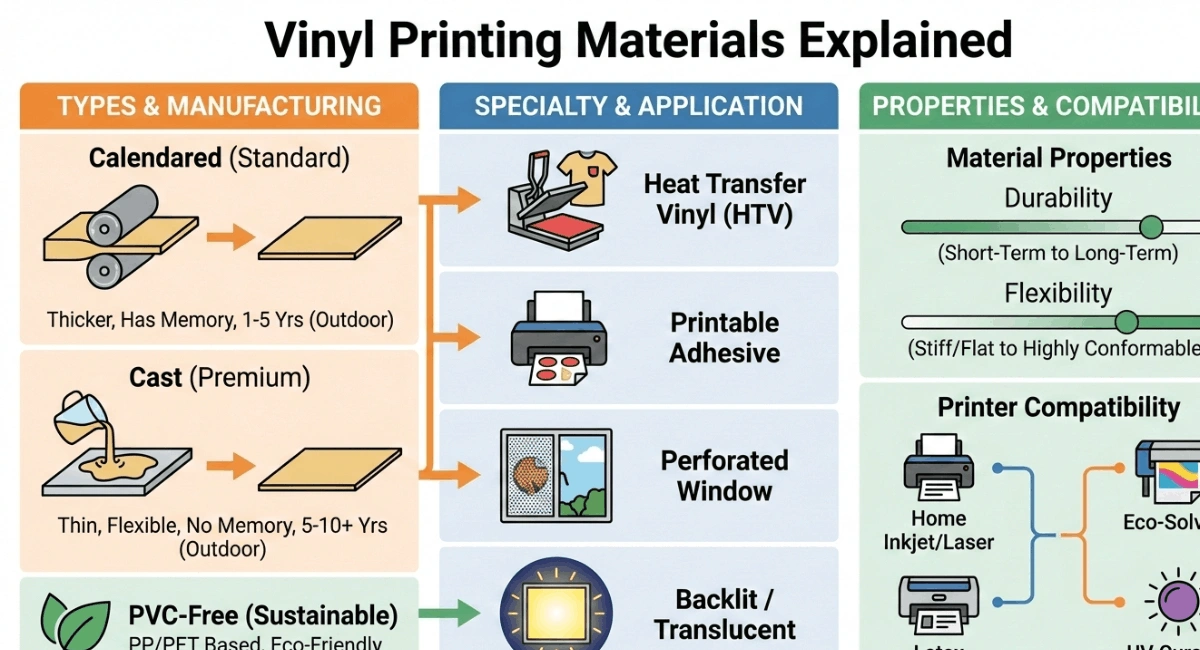
Vinyl printing is one of the most popular and trusted methods used today for signs, branding, decoration, and advertising. From shop windows to outdoor boards, vinyl materials are everywhere. If you have ever wondered what vinyl printing materials are, how they work, and which type is best for your project, this guide explains everything in simple words.
This article is written for normal people who want clear answers. It explains vinyl printing materials step by step, shares real usage experience, and helps you choose the right vinyl without confusion.
What Are Vinyl Printing Materials?
Vinyl printing materials are flexible plastic-based sheets used for printing text, images, and designs. These sheets are specially made to hold ink well and stay strong in different weather conditions. Vinyl is used because it is smooth, durable, and works on many surfaces like glass, metal, walls, and boards.
In real projects, vinyl is often used for shop signs, wall branding, vehicle graphics, stickers, and promotional displays. Many businesses choose vinyl because it looks clean, lasts long, and is cost‑effective.
My Personal Experience With Vinyl Printing
While working on multiple signage and branding projects, I noticed that vinyl printing is often the safest choice. In one project, we needed clear branding for a retail store that had both indoor posters and outdoor signs. We tested different materials, but vinyl gave the best balance between print quality and durability.
The indoor vinyl stayed sharp and smooth for months without fading. The outdoor vinyl handled heat, dust, and sunlight better than paper-based prints. This experience showed me that choosing the right vinyl material makes a big difference in how long your design lasts.
Types of Vinyl Printing Materials
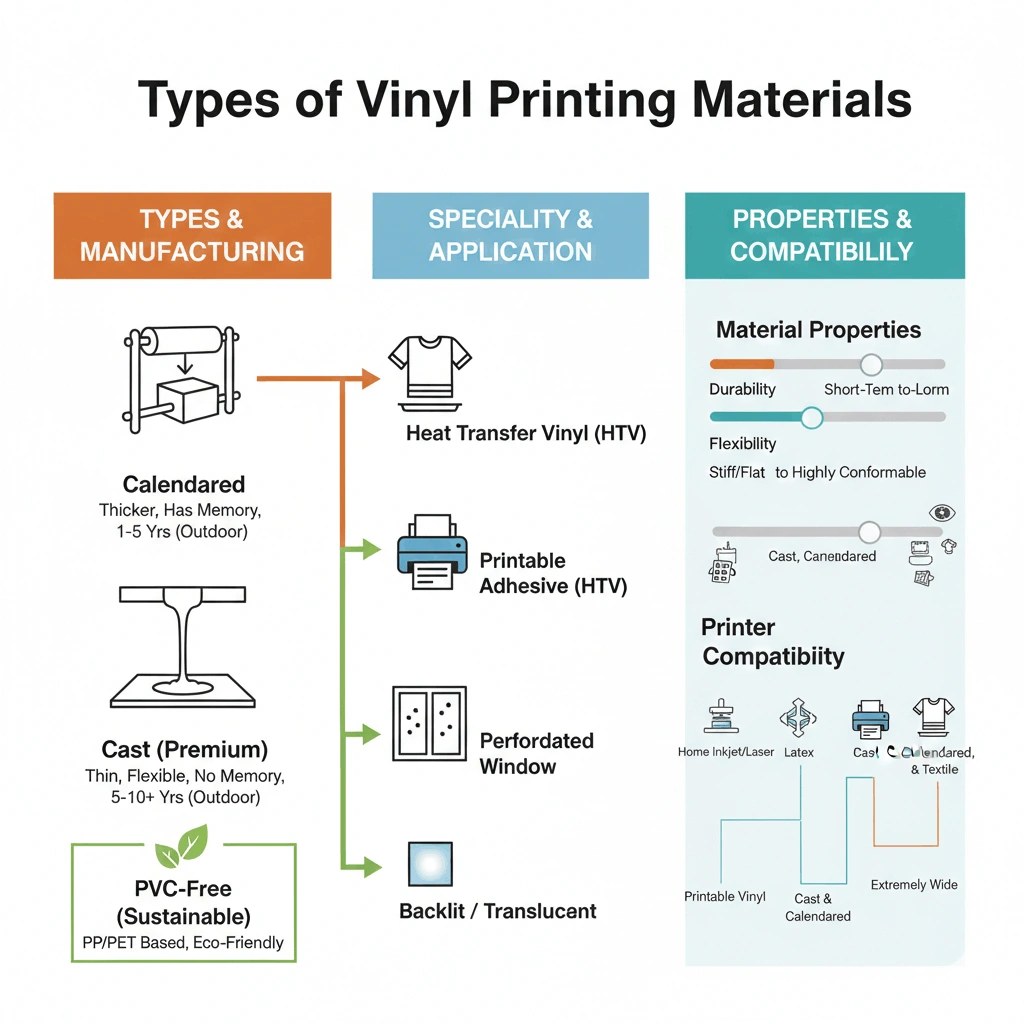
There are different types of vinyl materials, and each one serves a specific purpose. Understanding these types helps avoid mistakes and saves money.
Self-Adhesive Vinyl
Self-adhesive vinyl is the most common type. It has glue on the back, making it easy to stick on flat surfaces. It is widely used for shop windows, signboards, and wall branding.
This type works well for short-term and long-term use, depending on the quality chosen.
Cast Vinyl
Cast vinyl is thin, flexible, and long-lasting. It is used when designs need to cover curves or uneven surfaces. Vehicle graphics often use cast vinyl because it stretches without cracking.
From experience, cast vinyl costs more but performs better in tough conditions.
Calendared Vinyl
Calendared vinyl is thicker and more affordable. It works best on flat surfaces like boards and walls. It is ideal for indoor use or short-term outdoor signage.
This option is popular for promotional campaigns and temporary branding.
Printable Vinyl
Printable vinyl is designed to hold ink clearly. It is used with eco-solvent, UV, or latex printers. This type is common in advertising and display work.
Many shops prefer printable vinyl because it delivers sharp colors and clear text.
Indoor vs Outdoor Vinyl Materials
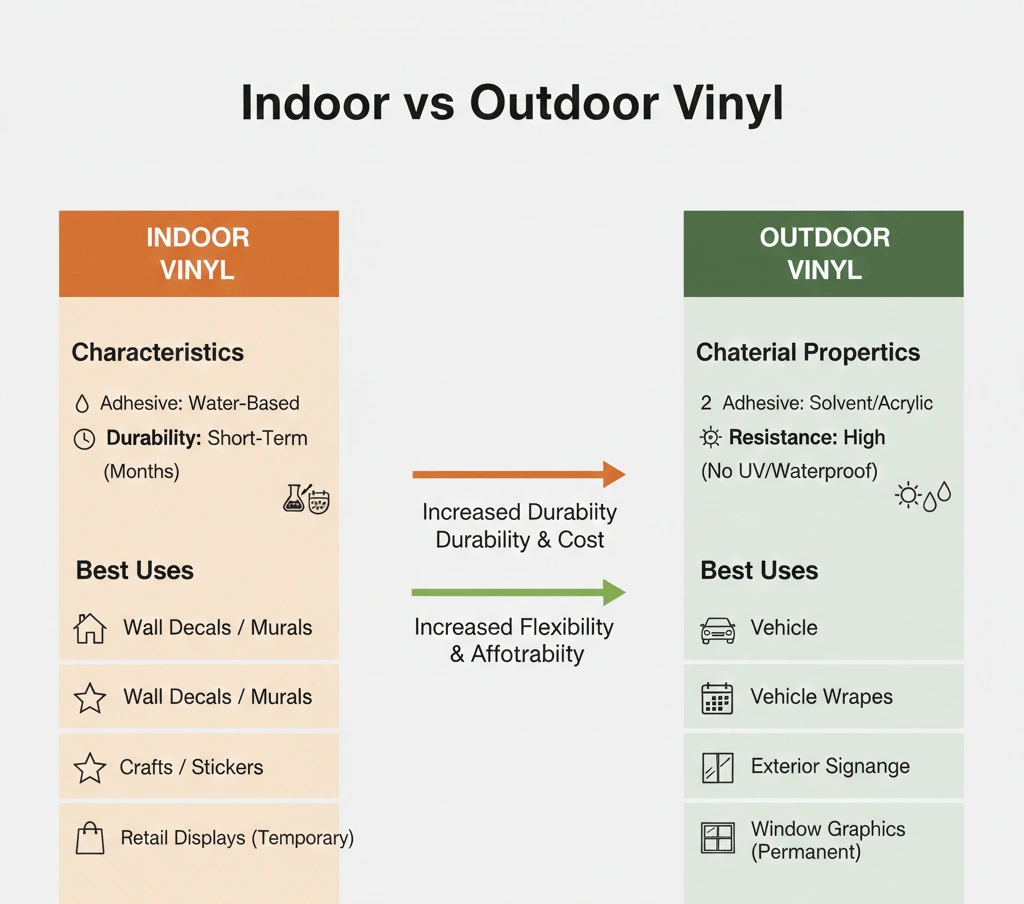
Choosing between indoor and outdoor vinyl is important. Indoor vinyl focuses on appearance, while outdoor vinyl focuses on durability.
Indoor vinyl materials are smoother and focus on print quality. They are perfect for wall graphics, office branding, and indoor promotions.
Outdoor vinyl materials are thicker, weather-resistant, and UV-protected. They are used for shop signs, hoardings, and outdoor displays where heat and dust are common.
In one outdoor project, switching from standard vinyl to outdoor-grade vinyl doubled the lifespan of the signage.
Vinyl Thickness and Finish
Vinyl comes in different thickness levels and finishes. These features affect both look and performance.
Thickness
Thicker vinyl lasts longer but is harder to apply on curved surfaces. Thin vinyl is easier to install but may not last as long outdoors.
Finish Types
- Gloss finish gives bright colors and sharp contrast
- Matte finish reduces glare and looks more professional
- Satin finish offers a balance between gloss and matte
Choosing the right finish depends on lighting and viewing angle.
Where Vinyl Printing Is Commonly Used
Vinyl printing materials are used in many industries. Some common uses include:
- Retail shop branding
- Window graphics
- Wall signs
- Promotional boards
- Event backdrops
- Directional signage
Vinyl also works well alongside digital displays such as a display led panel, creating a mixed branding setup that looks modern and professional.
Printing Vinyl for Clear Results
Printing Vinyl requires proper settings and good-quality ink. When done correctly, the result is sharp text, rich colors, and long-lasting prints.
In practical use, allowing enough drying time after printing improves durability. Laminating printed vinyl also adds extra protection, especially for outdoor use.
Vinyl Lamination Explained
Lamination is a clear protective layer added on top of printed vinyl. It protects the print from scratches, sunlight, and moisture.
From real projects, laminated vinyl lasts much longer and looks cleaner over time. It is strongly recommended for outdoor signage.
Choosing the Right Vinyl for Your Project
To choose the right vinyl, ask these simple questions:
- Is it for indoor or outdoor use?
- How long should it last?
- Will it be placed on a flat or curved surface?
- Is the area exposed to sunlight?
Answering these questions helps narrow down the correct vinyl type.
Common Problems With Vinyl Printing
Even good materials can fail if used incorrectly. Common problems include:
- Bubbles during installation
- Fading due to poor ink quality
- Peeling edges on low-quality vinyl
- Cracking on curved surfaces
Most of these issues can be avoided by choosing the right material and proper installation.
Installation Tips for Vinyl Materials
Proper installation improves the final look and lifespan. Clean the surface before applying vinyl. Use proper tools to avoid bubbles and wrinkles.
From experience, slow and careful installation always gives better results than rushing.
Vinyl Printing and Maintenance
Vinyl materials are easy to maintain. Clean them with a soft cloth and mild cleaner. Avoid harsh chemicals.
Regular cleaning keeps colors bright and the surface smooth.
Cost vs Quality in Vinyl Printing
Cheaper vinyl may save money at first but often needs replacement sooner. High-quality vinyl costs more but lasts longer.
In long-term projects, investing in better vinyl reduces maintenance and replacement costs.
Vinyl Printing for Business Branding
Vinyl printing is a strong branding tool. It helps businesses show logos, messages, and designs clearly.
When combined with lighting or digital displays, vinyl creates a strong visual impact that attracts attention.
Final Thoughts on Vinyl Printing Materials
Vinyl printing materials are versatile, durable, and reliable. Whether used for small stickers or large signs, vinyl offers clean results and long life when chosen correctly.
From real experience, the key to success is understanding the environment, selecting the right vinyl type, and ensuring proper printing and installation. When these steps are followed, vinyl printing delivers professional results that last.
Vinyl printing remains one of the most effective solutions for modern signage and branding. With the right material choice, it continues to support businesses, events, and displays with style and strength.