

Blogs
How to Choose Lamination for Printed Signs

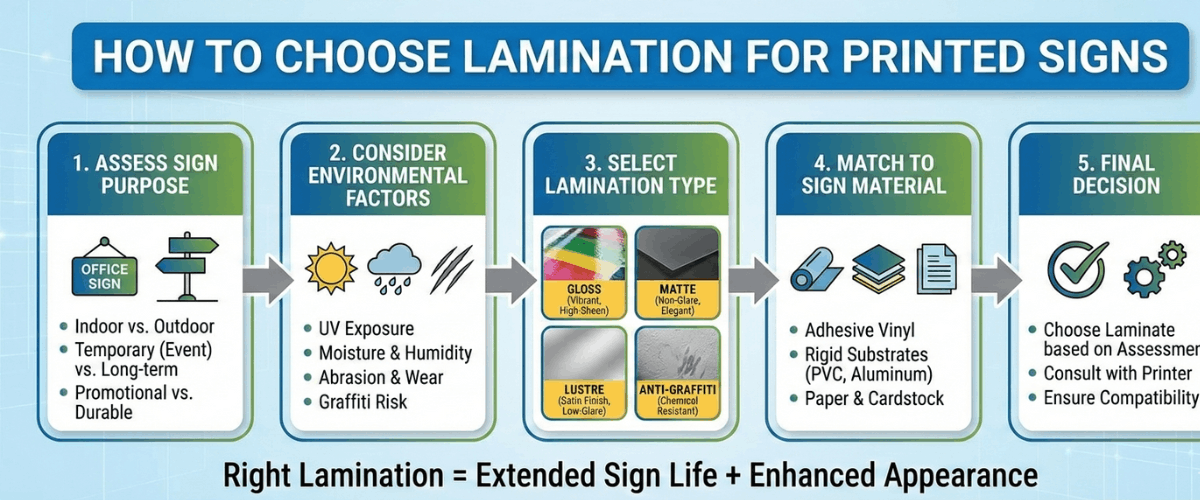
Lamination plays a very important role in printed signs. Many people focus only on design and printing, but lamination is what protects the print and keeps it looking new for a long time. If you choose the wrong lamination, even a good print can fade, scratch, or peel quickly. This guide explains everything about choosing lamination for printed signs in simple words.
This content is written for normal readers who want clear answers. It explains lamination types, real usage experience, and how to choose the right option for different signs.
What Is Lamination in Printed Signs?
Lamination is a thin protective layer placed on top of a printed sign. It protects the print from sunlight, dust, moisture, scratches, and daily wear. Lamination also improves the look of the sign by giving it a smooth finish.
From small stickers to large outdoor boards, lamination is used everywhere. Without lamination, printed signs usually lose color faster and get damaged easily.
My Personal Experience With Sign Lamination
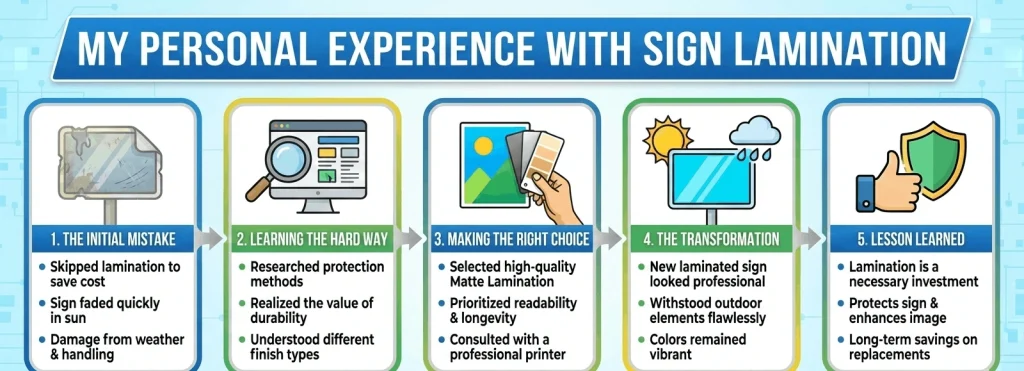
In one of my early signage projects, we installed printed signs without lamination to save cost. Within a few weeks, the colors started fading and small scratches appeared. After replacing them with laminated prints, the difference was very clear.
The laminated signs stayed bright, clean, and professional for months. Since then, I always recommend lamination, especially for outdoor and high-traffic areas. This experience showed me that lamination is not an extra step, but a necessary one.
Why Lamination Is Important for Printed Signs
Lamination protects your investment. Printing costs money, and lamination helps that print last longer. It also makes cleaning easier and improves durability.
Key benefits include:
- Protection from sunlight
- Resistance to water and dust
- Scratch prevention
- Longer lifespan
- Better visual finish
Signs placed near LED display Dubai installations also benefit from lamination, as lighting can increase heat and exposure.
Types of Lamination for Printed Signs
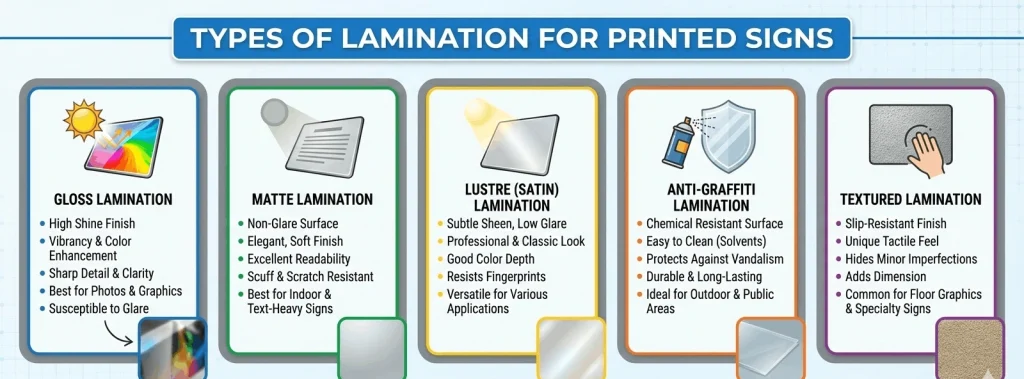
There are different types of lamination available. Each type serves a different purpose.
Gloss Lamination
Gloss lamination gives a shiny and bright look. Colors appear more vibrant and sharp. It is often used for promotional signs and indoor displays.
However, gloss lamination can reflect light, which may cause glare in bright areas.
Matte Lamination
Matte lamination gives a soft, non-shiny finish. It reduces glare and looks professional. Many offices and retail stores prefer matte lamination.
From experience, matte lamination works well for signs placed under strong lighting.
Satin Lamination
Satin lamination is a balance between gloss and matte. It gives a smooth look without too much shine. It is suitable for both indoor and semi-outdoor signs.
Cold Lamination vs Hot Lamination
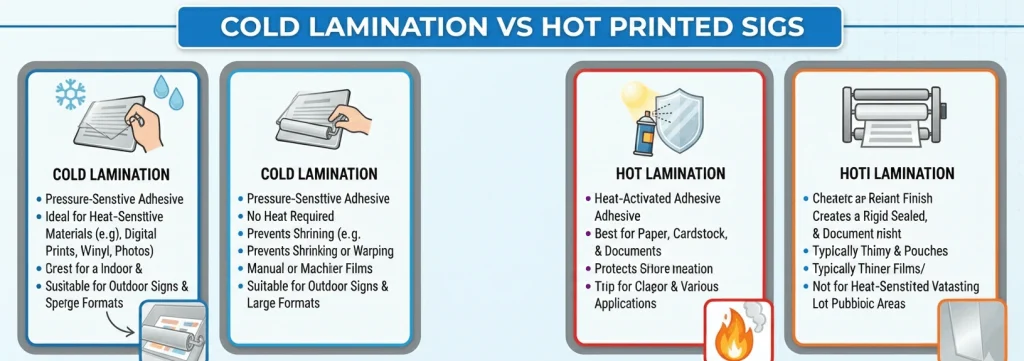
Understanding the lamination process is also important.
Cold Lamination
Cold lamination uses pressure instead of heat. It is safe for sensitive prints and vinyl materials. Many modern sign shops prefer cold lamination for flexibility.
Hot Lamination
Hot lamination uses heat to seal the laminate. It provides strong bonding but may damage some materials if not handled properly.
In most signage projects, cold lamination gives better control and safety.
Choosing Lamination Based on Sign Location
The location of the sign plays a big role in lamination choice.
Indoor Signs
Indoor signs usually face less damage. Matte or gloss lamination both work well depending on lighting and design needs.
Outdoor Signs
Outdoor signs need strong protection. UV-resistant lamination is recommended to prevent fading. Thicker laminate also improves durability.
High-Traffic Areas
Signs in busy areas need scratch-resistant lamination. This helps keep the sign clean and readable.
Lamination Thickness Explained
Lamination comes in different thickness levels. Thicker lamination offers more protection but may cost more.
Thin lamination is good for short-term signs. Thick lamination is better for long-term outdoor use.
From real projects, thicker lamination always performs better in harsh conditions.
Lamination for Vinyl and Printed Boards
Vinyl prints benefit greatly from lamination. It prevents peeling and color fading.
Printed boards such as foam boards and acrylic signs also need lamination for surface protection.
JET Lamination is commonly used for vinyl signs because it provides smooth coverage and strong protection.
Lamination and Color Protection
Sunlight is one of the biggest enemies of printed signs. UV lamination helps protect colors from fading.
In outdoor signage projects, using UV-protected lamination doubled the lifespan of the print.
Common Mistakes When Choosing Lamination
Many people make mistakes when selecting lamination:
- Choosing gloss lamination for bright outdoor areas
- Using thin lamination for long-term signs
- Skipping lamination to reduce cost
- Using poor-quality laminate
Avoiding these mistakes helps improve results and saves money in the long run.
How to Match Lamination With Print Design
Design and lamination should work together. Bright designs look better with gloss lamination, while text-heavy designs work well with matte lamination.
From experience, testing a small sample before final production helps avoid problems.
Lamination for Digital and Backlit Signs
Printed signs used near digital displays or LED panels need special care. Heat and light exposure are higher.
Choosing strong lamination helps protect the print and maintain clarity.
Maintenance Tips for Laminated Signs
Laminated signs are easy to maintain. Use a soft cloth and mild cleaner. Avoid sharp tools or harsh chemicals.
Regular cleaning keeps the sign looking new.
Cost vs Quality in Lamination
Cheap lamination may reduce initial cost but often fails quickly. High-quality lamination costs more but lasts longer.
In long-term projects, better lamination always proves more cost-effective.
When Lamination Is Not Required
In some short-term indoor projects, lamination may not be necessary. However, for most professional signage, lamination is recommended.
Skipping lamination should only be done when lifespan is not important.
Final Thoughts on Choosing Lamination for Printed Signs
Choosing the right lamination is just as important as choosing the right print material. Lamination protects, enhances, and extends the life of printed signs.
From real experience, the best results come from matching lamination type with location, lighting, and usage. When done correctly, laminated signs stay bright, clean, and professional for a long time.
Lamination is a smart investment for anyone serious about signage quality and durability.