

Blogs
Adhesive Tapes Used in Sign Making

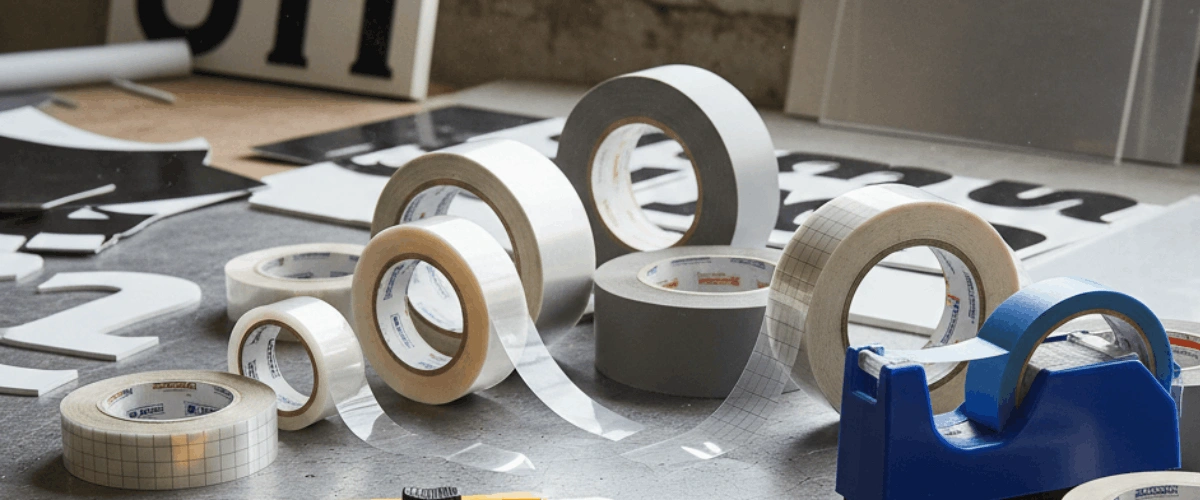
Sign making looks simple from the outside, but anyone who has worked on signs knows that small details matter a lot. One of the most important details is adhesive tape. The right tape keeps a sign straight, clean, strong, and long-lasting. The wrong tape can cause peeling edges, bubbles, or complete failure.
In this guide, I will explain adhesive tapes used in sign making in very simple words. I will also share real-world experience from daily sign work so you understand what actually works, not just what sounds good on paper.
This article is written for beginners, business owners, designers, installers, and anyone who wants signs that last longer and look professional.
What Is Adhesive Tape in Sign Making?
Adhesive tape in sign making is a pressure-sensitive bonding material. It sticks without heat, water, or chemicals. You press it, and it bonds.
In sign work, adhesive tapes are used to:
- Fix vinyl graphics
- Mount sign boards
- Attach letters
- Hold temporary displays
- Support heavy panels
- Align signage during installation
Unlike glue, tape gives clean work, even bonding, and easy control.
Why Adhesive Tape Is So Important for Signs
Many sign failures do not happen because of bad printing or bad material. They happen because of poor adhesive choice.
From experience, I have seen:
- Vinyl lifting in hot weather
- Letters falling due to weak tape
- Outdoor signs damaged by dust and moisture
- Panels shifting because the tape could not handle weight
The correct adhesive tape solves all these problems.
Common Types of Adhesive Tapes Used in Sign Making
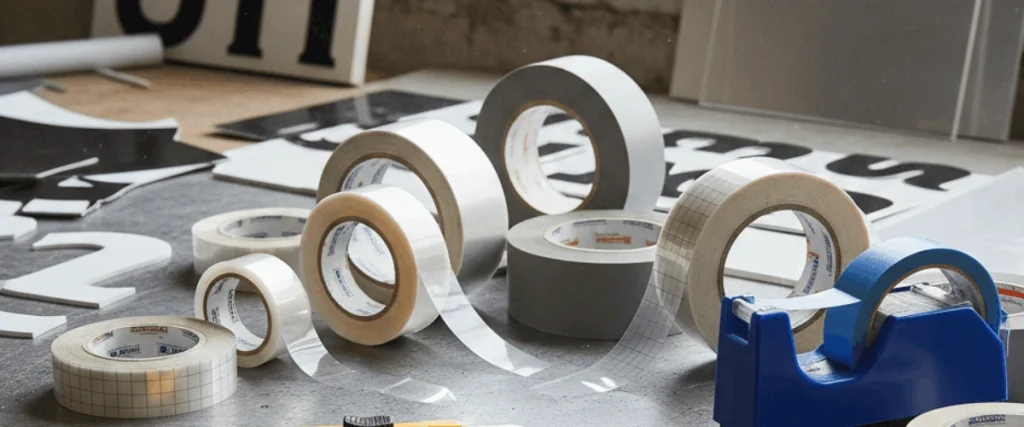
Let’s break down the main types of adhesive tapes used in the sign industry.
Double-Sided Acrylic Foam Tape
This is one of the most popular tapes in professional sign making.
Why It Is Used
- Strong bonding
- Handles heat well
- Absorbs vibration
- Works on metal, glass, acrylic, and PVC
Where It Is Used
- Acrylic letters
- Metal signage
- Outdoor wall signs
- Lightbox panels
Personal Experience
In hot outdoor conditions, acrylic foam tape performs much better than cheap rubber tapes. Once installed properly, signs stay fixed even after years of heat and dust exposure.
Double-Sided Tissue Tape
This tape is thin and flexible.
Best Uses
- Temporary signs
- Indoor posters
- Vinyl alignment
- Light materials
Limitations
- Not suitable for outdoor use
- Weak in high heat
- Not water-resistant
This tape is helpful during installation but should not be trusted for long-term outdoor signs.
Double-Sided Polyester Tape
Polyester tape is thin but strong.
Key Features
- Heat resistant
- Clean finish
- Stable bonding
Where It Works Best
- LED frames
- Slim signboards
- Electronic signage
- Rental display systems like Rental Led Screens where clean installation matters
This tape keeps signs neat without adding thickness.
Foam Mounting Tape
Foam mounting tape is thicker and softer.
Benefits
- Fills uneven surfaces
- Absorbs shock
- Works on rough walls
Common Uses
- Wall signage
- Temporary boards
- Retail displays
Foam tape is useful when the wall is not perfectly flat.
Transfer Tape (Application Tape)
Transfer tape is used to apply vinyl graphics, not to permanently mount signs.
Purpose
- Moves vinyl letters from backing paper to surface
- Keeps spacing and alignment correct
Types
- Clear transfer tape
- Paper transfer tape
Without transfer tape, vinyl installation becomes messy and inaccurate.
Masking Tape in Sign Making
Masking tape may look simple, but it plays a big role.
Uses
- Holding vinyl in place before final fixing
- Marking alignment
- Temporary positioning
It does not replace strong adhesive tape but supports clean installation.
Outdoor-Grade Adhesive Tapes
Outdoor signs need special attention.
Must Handle
- Extreme heat
- Dust
- Moisture
- UV exposure
Outdoor-grade tapes are usually:
- Acrylic-based
- UV resistant
- Waterproof
When combined with outdoor materials like High Opacity Whiteback Vinyl Matt, the result is long-lasting signage with no color show-through and strong adhesion.
Adhesive Tapes for Vinyl Signage
Vinyl signage depends heavily on proper adhesive support.
Key Factors
- Surface cleanliness
- Correct pressure
- Right temperature
Vinyl signs fail mostly due to:
- Dust under tape
- Cheap adhesive
- Heat expansion
Using quality tape avoids edge lifting and bubbling.
Heat and Dust: Real-World Performance
From real installation work, heat is the biggest enemy of weak tape.
What Happens in Heat
- Rubber adhesives soften
- Cheap glue melts
- Tape slides or releases
What Works Best
- Acrylic adhesive tapes
- High-bond foam tapes
- Proper surface cleaning
Dust also reduces bonding strength. Always clean surfaces before tape application.
Indoor vs Outdoor Tape Selection
Indoor Sign Tape
- Thin
- Light adhesive
- Cost-effective
Outdoor Sign Tape
- Thick or foam-based
- Strong adhesive
- Weather-resistant
Never use indoor tape outdoors. It will fail.
Adhesive Tapes for LED and Digital Signage
Digital signage requires vibration control and heat handling.
Why Tape Matters
- LEDs generate heat
- Screens vibrate slightly
- Clean edges are required
Polyester and acrylic foam tapes work best for LED displays and digital panels.
This is especially important in setups involving Rental Led Screens where installation and removal must be clean and damage-free.
Weight Load and Tape Strength
Every tape has a weight limit.
Always Check
- Tape thickness
- Adhesive type
- Load rating
Heavy signs need:
- High-bond acrylic tape
- Full surface contact
- Extra mechanical support if required
Never rely on tape alone for very heavy signage without checking limits.
Common Mistakes in Using Adhesive Tape
From real experience, these mistakes happen often:
- Applying tape on dusty surfaces
- Using indoor tape outdoors
- Not applying enough pressure
- Installing during extreme heat without acclimation
- Using cheap unknown brands
Avoiding these mistakes improves sign life greatly.
How to Apply Adhesive Tape Correctly
Step-by-Step
- Clean the surface properly
- Dry the area completely
- Apply tape evenly
- Press firmly for bonding
- Allow bonding time before full load
Good application is as important as good tape.
How Long Do Adhesive Tapes Last?
Quality adhesive tapes can last:
- 3–5 years indoors
- 2–4 years outdoors
- Longer with proper care
Cheap tapes may fail within weeks.
Cost vs Quality in Adhesive Tapes
Cheap tape seems attractive but costs more in the long run.
Problems with Cheap Tape
- Rework
- Customer complaints
- Damaged signs
- Lost reputation
Quality tape saves time, money, and stress.
Choosing the Right Tape for Your Sign Project
Ask yourself:
- Is the sign indoor or outdoor?
- How heavy is it?
- What surface is it applied to?
- Is heat exposure high?
- Is removal required later?
Answering these helps you choose correctly.