

Blogs
PVC Foam Board vs ACP: Which Is Better?

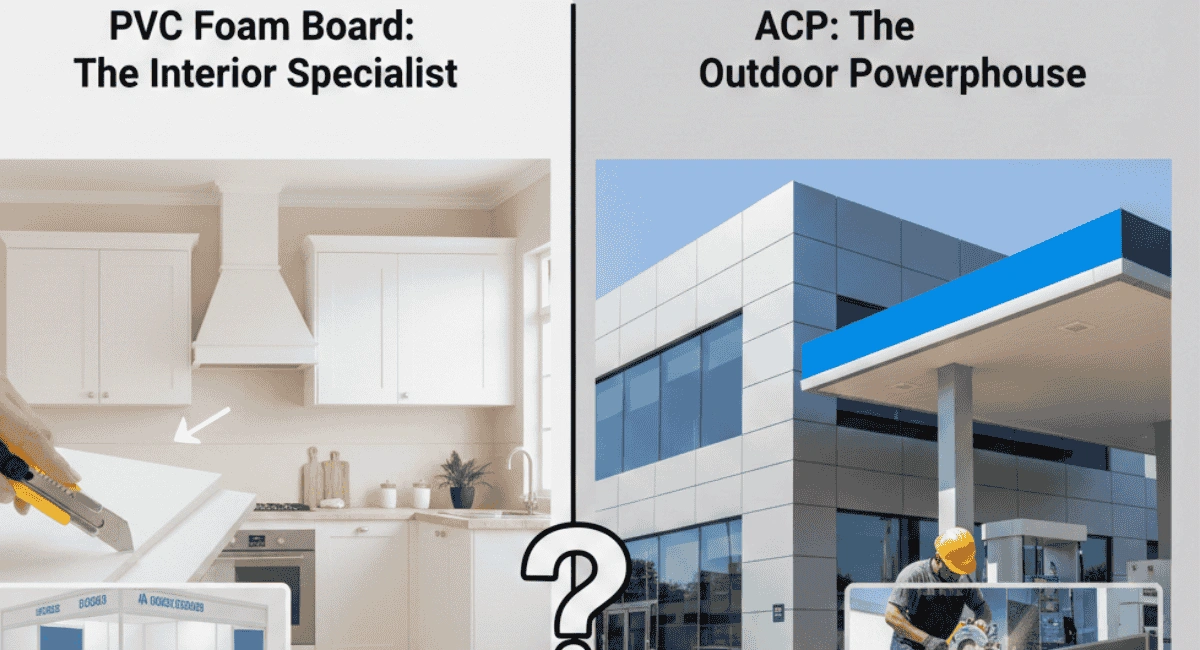
When it comes to modern signage and interior applications, choosing the right material is crucial for durability, aesthetics, and cost-effectiveness. Two of the most popular options in the signage and construction industry are PVC foam boards and Aluminium Composite Panels (ACP). Both materials have their strengths and specific uses, and understanding their differences can help businesses, signage companies, and designers make the best choice.
In this guide, we’ll explore PVC Foam Board vs ACP, their features, benefits, drawbacks, and ideal applications, helping you decide which is better for your project.
What Is PVC Foam Board?
PVC foam boards, sometimes called PVC sheets, are lightweight, rigid sheets made from polyvinyl chloride (PVC). They are widely used in signage, advertising, interior decoration, and display solutions. These boards are known for their smooth surface, easy workability, and cost-effectiveness.
Key Features of PVC Foam Boards:
- Lightweight and easy to handle: PVC boards are lighter than ACP, making them easy to transport and install, even for large signs.
- Smooth printable surface: The smooth finish makes them ideal for high-quality printing, stickers, and digital graphics. Many signage Dubai companies prefer PVC foam boards for indoor displays and wall panels.
- Cost-effective: Compared to ACP, PVC boards are generally more affordable, especially for small and medium-sized signage projects.
- Water-resistant: PVC does not absorb water, making it suitable for humid environments.
Popular brands like ECO PVC Forex Sheets are commonly used because they combine eco-friendliness with durable performance. These sheets are widely adopted for indoor signage, decorative panels, and lightweight partitions.
What Is ACP (Aluminium Composite Panel)?
ACP, or Aluminium Composite Panel, is a sandwich panel made of two thin layers of aluminium enclosing a core material, which can be polyethylene or fire-retardant material. ACPs are popular in exterior cladding, large outdoor signage, facades, and high-end architectural projects.
Key Features of ACP:
- Durable and rigid: ACP panels are stronger and more rigid than PVC boards, making them ideal for exterior applications where structural strength is essential.
- Weather-resistant: Aluminium layers protect the core from UV rays, rain, and heat, making ACP suitable for outdoor signage and building facades.
- Variety of finishes: ACP comes in glossy, matte, metallic, or textured finishes, giving designers flexibility for modern aesthetics. Some options like Honeycomb Diamond ACP panels add a premium look and extra rigidity.
- Fire-resistant options: Many ACP panels are now available in fire-retardant variants, enhancing safety in commercial projects.
ACP is widely used by signage Dubai companies for outdoor boards, corporate building facades, shopfront branding, and large-scale digital signage solutions.
PVC Foam Board vs ACP: A Detailed Comparison
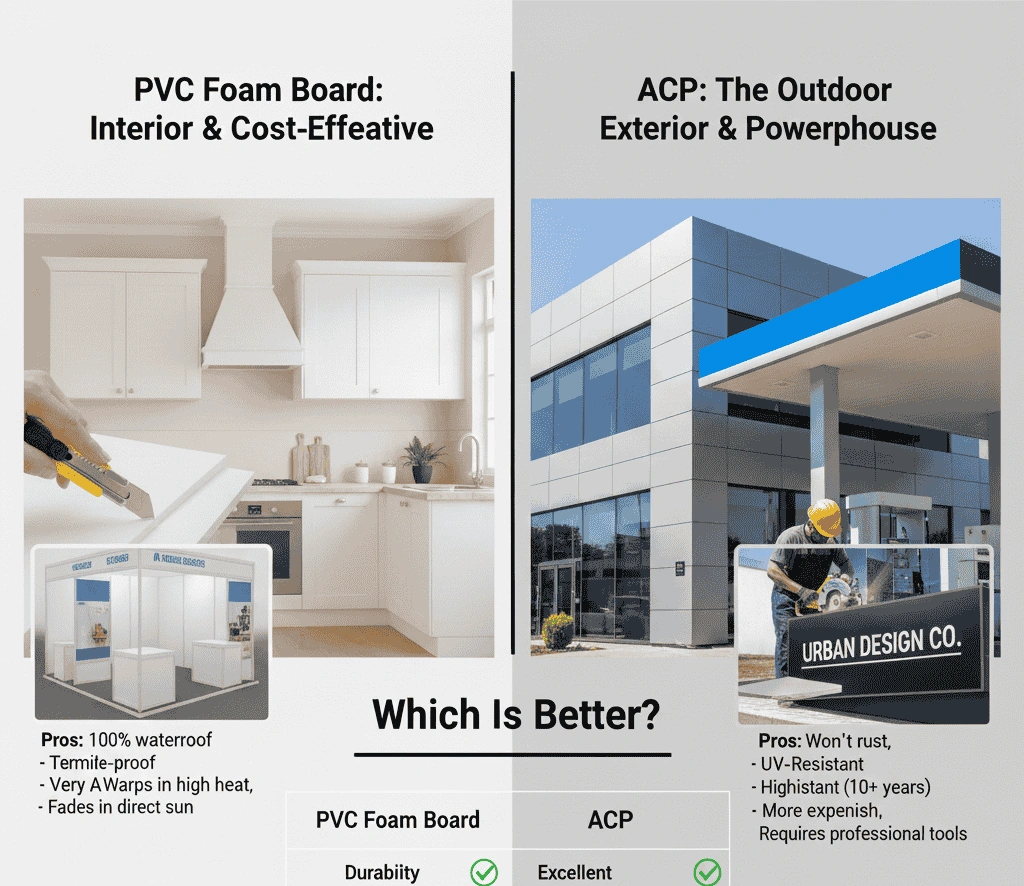
Understanding the differences between PVC foam board and ACP can help you make a decision based on your project’s requirements. Let’s compare them on several key aspects.
1. Weight and Handling
PVC foam boards are significantly lighter than ACP panels. A standard 3mm PVC sheet weighs less than a 3mm ACP sheet of the same size. This makes PVC easier to cut, carry, and install, especially for indoor signage, wall panels, and lightweight displays.
ACP, on the other hand, is heavier due to its aluminium layers. While this makes it more rigid, it also requires additional support structures and handling care, particularly for large outdoor signage.
2. Strength and Rigidity
ACP panels are much stronger and rigid compared to PVC boards. The aluminium layer provides structural integrity, preventing bending, warping, or sagging over time. This makes ACP ideal for outdoor signage, facades, and panels that must withstand wind, weather, or heavy handling.
PVC foam boards, while durable, are less rigid. They can bend under pressure or with excessive weight, making them better suited for indoor use, lightweight signage, and displays that don’t require heavy structural support.
3. Weather Resistance
One of the major differences between PVC foam boards and ACP is how they perform in outdoor conditions.
- PVC Foam Board: Water-resistant but sensitive to UV exposure. Over time, prolonged sun exposure may cause discoloration, warping, or brittleness. Therefore, PVC boards are mostly recommended for indoor signage, wall panels, and short-term outdoor displays.
- ACP: Highly weather-resistant. ACP panels can withstand sun, rain, and temperature fluctuations, making them perfect for exterior cladding, outdoor banners, and permanent signage. Panels like Honeycomb Diamond ACP add extra durability for tough environments.
4. Printability and Finishes
PVC foam boards offer a smooth surface that is excellent for printing, vinyl application, and digital graphics. Many signage companies use ECO PVC Forex Sheets because they are easy to print on and maintain consistent color quality.
ACP panels can also be printed or coated but require specialized machinery for large-format graphics. They are more versatile in terms of finishes—glossy, metallic, textured, and patterned options are available, which can enhance the premium look of signage and facades.
5. Cost Comparison
PVC foam boards are generally more affordable than ACP panels. For small to medium indoor projects, PVC provides a cost-effective solution without compromising on aesthetics.
ACP is more expensive due to its aluminium layers and advanced manufacturing process. However, the investment is justified for outdoor signage, corporate branding, and long-term durability, especially when using premium options like Honeycomb Diamond ACP.
6. Installation Ease
PVC foam boards are easy to cut, drill, and fix on walls using adhesives, screws, or clamps. Their lightweight nature simplifies installation for indoor displays and temporary signage.
ACP panels require more careful handling. They need specialized tools for cutting and may require support structures or framing, particularly for large outdoor installations. While more complex, ACP installation offers a strong, lasting result for commercial and architectural projects.
7. Eco-Friendliness
Eco-friendly PVC options like ECO PVC Forex Sheets are gaining popularity. They are made with low environmental impact processes and can be recycled, making them a sustainable choice for indoor signage.
ACP panels, while durable, are energy-intensive to produce and may have a larger carbon footprint. However, their long lifespan and low maintenance can offset environmental impact over time.
Best Uses of PVC Foam Board
PVC foam boards excel in scenarios where lightweight, cost-effective, and easy-to-handle signage is needed. Common uses include:
- Indoor signboards, wall panels, and decorative displays
- Digital signage backing panels
- Retail displays and point-of-sale boards
- Short-term promotional banners
- Standee boards and exhibition panels
Signage companies in Dubai often rely on ECO PVC Forex Sheets for indoor projects because of their smooth printable surface, affordability, and easy installation.
Best Uses of ACP Panels
ACP panels are the preferred choice for durable, weather-resistant, and premium-quality signage. Typical applications include:
- Outdoor building facades and shopfronts
- Large outdoor banners and hoardings
- Long-term promotional signage
- Premium interior design with metallic or textured finishes
- High-strength structural signage using Honeycomb Diamond ACP
ACP’s rigidity, durability, and variety of finishes make it ideal for commercial branding and architectural applications.
Which Is Better: PVC Foam Board or ACP?
The choice between PVC foam board and ACP depends on your project requirements. Here’s a simple guideline:
- Choose PVC Foam Board if:
- You need lightweight, cost-effective signage
- The application is indoor or short-term outdoor
- Ease of printing and installation is a priority
- You want a sustainable and eco-friendly option (like ECO PVC Forex Sheets)
- Choose ACP if:
- The project requires outdoor durability and weather resistance
- Structural rigidity and long-term performance are important
- You want premium finishes and high-end aesthetics (Honeycomb Diamond ACP)
- Large-scale or architectural signage is required
In many cases, signage companies in Dubai combine both materials to optimize cost, durability, and aesthetics. For example, PVC boards may be used for indoor displays and ACP for exterior facades or premium digital signage.
Conclusion
Both PVC Foam Boards and ACP panels have their strengths. PVC boards, such as ECO PVC Forex Sheets, are lightweight, cost-effective, and ideal for indoor projects and short-term signage. ACP panels, especially premium options like Honeycomb Diamond ACP, offer superior strength, weather resistance, and a variety of finishes, making them ideal for outdoor and long-term applications.
Understanding your project needs—whether it’s indoor signage, large-format outdoor banners, or architectural cladding—will guide you in choosing the right material. Many businesses and signage companies in Dubai leverage both materials to create durable, eye-catching, and professional signage solutions that stand the test of time.