

Blogs
Hotel Exhibition Booth Ideas for Arabian Travel Market


The Arabian Travel Market (ATM) is one of the most important tourism and hospitality exhibitions in the Middle East, bringing together hotels, resorts, destination management companies, travel brands, airlines, tourism authorities, technology providers, and hospitality professionals. For a hotel participating in ATM Dubai, the exhibition booth is more than a temporary structure. It is a physical representation of the property’s identity, guest experience, destinations, facilities, and commercial positioning.
A successful hotel exhibition booth needs to attract attention from busy aisles, communicate the brand within seconds, encourage meaningful conversations, and give buyers a reason to stop. Luxury hotels may require an elegant hospitality environment, while business hotels, resorts, boutique properties, and hotel groups may benefit from different approaches. The best concepts connect architecture, graphics, lighting, technology, storytelling, and visitor experience into one coherent space.
Why Hotel Booth Design Matters at Arabian Travel Market
ATM attracts travel trade professionals who may visit dozens or even hundreds of exhibitors during the event. Hotel brands therefore have limited time to create a memorable first impression. A well-designed booth can make the difference between someone walking past a stand and entering it to discuss room inventory, corporate rates, partnerships, destination packages, or future business opportunities.
The exhibition environment in Dubai is highly competitive, with international hotel groups and independent hospitality brands appearing alongside tourism boards and travel technology companies. A hotel booth should therefore avoid looking like a generic office. Instead, it should communicate the atmosphere and positioning of the property through materials, colour, spatial planning, digital content, furniture, lighting, and branded hospitality elements.
Create a Luxury Hotel Lobby Experience
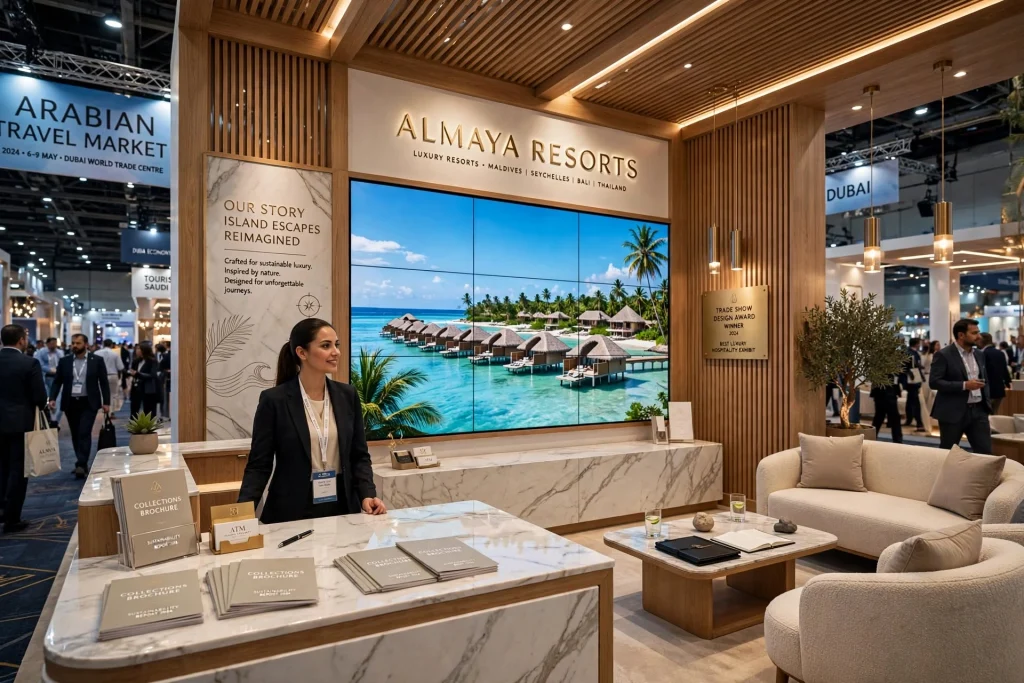
One strong idea for a hotel booth at ATM is to recreate the feeling of a luxury hotel lobby on a smaller scale. Instead of filling the entire stand with promotional graphics, the design can incorporate a sophisticated reception counter, premium seating, decorative lighting, textured walls, architectural details, and carefully selected materials.
Marble-effect surfaces, timber finishes, brushed metal, textured panels, soft upholstery, and warm architectural lighting can help establish a premium hospitality atmosphere. The objective is not necessarily to reproduce the hotel’s actual lobby but to translate its design language into an exhibition environment.
This concept works particularly well for five-star hotels, luxury resorts, boutique properties, and hospitality groups targeting high-value leisure and business travellers.
Use the Destination as Part of the Booth Design
Hotels sell more than rooms. They sell destinations, experiences, accessibility, culture, food, wellness, business opportunities, and memorable stays. An ATM booth can communicate this through visual storytelling.
A Dubai hotel might showcase the city’s skyline, beaches, shopping destinations, entertainment, and business districts. A resort in the Maldives, Saudi Arabia, Oman, or another international destination could use large-scale photography and immersive digital content to bring the destination into the booth.
Instead of using many small photographs, consider one or two strong hero visuals supported by concise messaging. This creates a cleaner exhibition environment while allowing visitors to understand the property’s location and experience quickly.
Make the Hotel Logo Highly Visible
Brand recognition is essential in a busy exhibition hall. The hotel logo should be visible from the main visitor approach and positioned at an appropriate height.
Large illuminated lettering, three-dimensional logos, backlit graphics, LED signage, or architectural branding can make the hotel easier to identify from a distance. The logo should remain visually clear rather than being surrounded by excessive promotional text.
For hotel groups with several properties, the booth can use a master brand prominently while presenting individual hotels through carefully organised secondary branding.

Build a Distinctive Reception Counter
The reception counter is one of the most recognisable elements of a hotel environment, making it an effective feature for an exhibition booth. A custom reception desk can provide a practical location for greeting visitors while reinforcing the hotel’s design identity.
The counter can incorporate the hotel logo, illuminated acrylic, timber, stone-effect finishes, metal details, or integrated digital screens. Curved counters can create a softer hospitality appearance, while geometric forms may suit contemporary business or lifestyle hotels.
Storage should be incorporated into the counter design wherever possible so that brochures, bags, stationery, cables, and other materials remain hidden.
Add Comfortable Meeting Areas
ATM is a business-focused event, so booth seating should support professional conversations. Hotels may meet travel agents, tour operators, corporate buyers, destination partners, event planners, travel management companies, and other hospitality professionals.
Instead of placing chairs randomly around the stand, create clearly defined meeting zones. Small tables can support quick conversations, while semi-private seating areas can accommodate longer discussions.
For premium hotel brands, a lounge-style environment with comfortable sofas and side tables can create a more relaxed experience. For business hotels, compact meeting tables with ergonomic chairs may be more appropriate.
Create Semi-Private Business Meeting Rooms
Hotels attending ATM often need to discuss commercial agreements, group bookings, corporate rates, partnerships, and distribution relationships. These conversations may require more privacy than an open seating area provides.
A small enclosed or semi-enclosed meeting room can therefore add significant practical value to a booth. Glass partitions, decorative screens, timber slats, acoustic panels, or branded architectural walls can create privacy without making the stand feel closed.
The meeting room should still maintain visual connection with the wider booth so the stand does not lose its welcoming character.

Use Large LED Screens Strategically
Digital technology can transform a hotel exhibition booth when it is used for storytelling rather than simply displaying promotional slides. Large LED screens can show hotel rooms, restaurants, swimming pools, spas, meeting facilities, beaches, attractions, guest experiences, and destination footage.
A high-resolution LED display positioned at the rear of the booth can act as a visual focal point. Alternatively, smaller screens can be integrated into reception counters or meeting areas.
Content should be short, visually strong, and easy to understand from several metres away. Avoid overcrowding screens with paragraphs of text that visitors cannot comfortably read while walking through the exhibition hall.
Introduce Immersive Hotel Experiences
Immersive technology can help a hotel stand out at ATM. Virtual reality, interactive touchscreens, digital room tours, 360-degree videos, and interactive destination maps can allow visitors to explore the property without physically visiting it.
For resorts, a virtual walkthrough could take visitors from the arrival experience to guest rooms, restaurants, pools, beaches, wellness facilities, and activities. For business hotels, interactive content could focus on meeting rooms, conference facilities, location, transport connections, and corporate services.
The technology should support the sales conversation rather than becoming a distraction. A trained booth representative should be available to explain the experience and capture qualified leads.
Use Arabian Design Elements Carefully
ATM takes place in the Middle East, making regional design references potentially valuable for hotel brands targeting Gulf travellers. However, Arabian-inspired design should be sophisticated rather than relying on excessive decorative motifs.
Geometric patterns, contemporary mashrabiya-inspired screens, warm metallic finishes, natural stone, textured surfaces, arches, and carefully controlled lighting can create a regional connection while maintaining a modern international hospitality aesthetic.
For hotels in the UAE, Saudi Arabia, Qatar, Oman, Bahrain, and other Gulf destinations, the design can combine contemporary hospitality architecture with subtle local references.

Create a Dedicated Hospitality Lounge
A hospitality lounge can make the booth feel more like a hotel than a conventional exhibition stand. Comfortable seating, a branded coffee station, refreshments, decorative lighting, and carefully selected furniture can encourage visitors to remain longer.
The lounge should not occupy the entire booth because ATM is primarily a commercial event. Instead, it should complement meeting areas and provide a welcoming transition between the aisle and more formal business spaces.
The choice of furniture also communicates the hotel’s positioning. Luxury upholstery and premium finishes suit high-end resorts, while contemporary furniture can work well for lifestyle and business hotel brands.
Use Lighting as a Branding Tool
Lighting has a major impact on exhibition booth appearance. A hotel booth with strong architecture can still look ordinary if the lighting is poorly planned.
Layered lighting can combine general illumination with accent lighting, architectural lighting, logo illumination, display lighting, and decorative fixtures. Warm lighting can create a hospitality atmosphere, while cooler or neutral lighting may support modern corporate hotel concepts.
LED strips, spotlights, illuminated signage, pendant fixtures, and concealed lighting can highlight feature walls and architectural forms. Glare should be controlled, particularly around digital screens and meeting areas.
Design a Strong Feature Wall
A feature wall can provide the visual anchor for a hotel exhibition booth. It may combine the hotel logo with destination imagery, architectural materials, a digital display, or a statement brand message.
For example, a beachfront resort could use a textured feature wall with an integrated digital screen showing ocean views. A city hotel could combine a skyline image with architectural lighting and a three-dimensional logo.
The wall should have enough visual simplicity to remain recognisable from a distance. Too many messages can weaken the overall impact.

Incorporate Hotel Room Design Elements
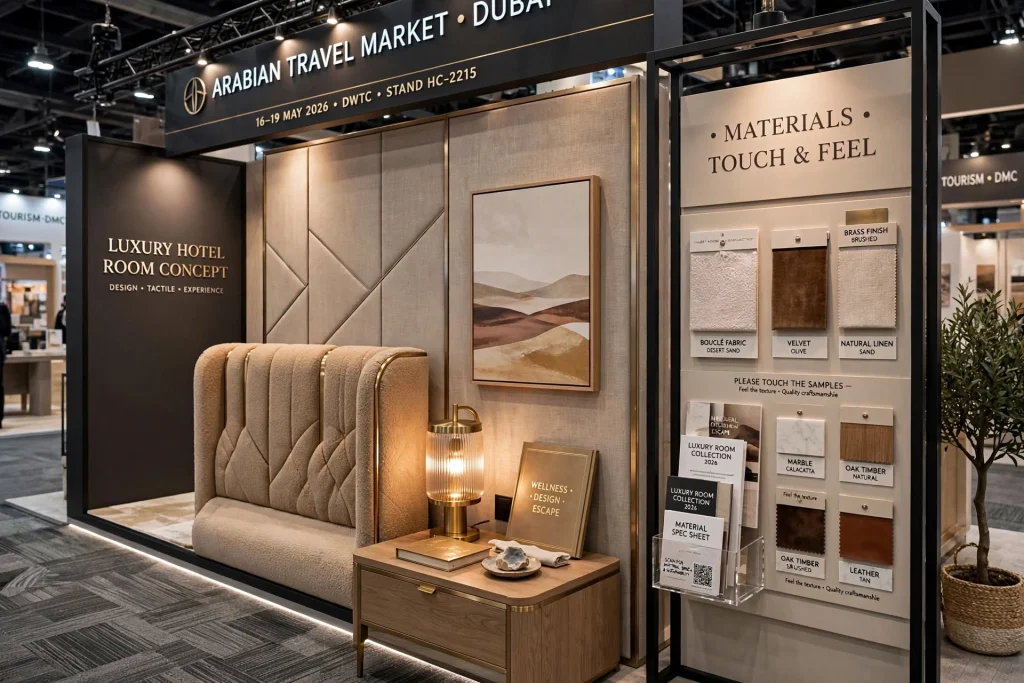
One creative ATM booth idea is to bring selected elements of a hotel guest room into the exhibition environment. A designer does not need to build a complete bedroom. Instead, a partial headboard, bedside table, lighting feature, fabric wall, artwork, or material sample can communicate the room experience.
This approach is particularly useful when the hotel has a distinctive room concept. Visitors can see and touch finishes while discussing room categories, renovation projects, amenities, or property positioning.
For luxury hotels, tactile materials can be especially effective because they communicate quality more effectively than photographs alone.
Add a Restaurant or Culinary Feature
Food is a major part of hospitality branding. Hotels can use their exhibition booth to communicate their culinary identity through photography, digital content, menu displays, chef stories, or carefully planned tasting experiences where permitted by the event and venue regulations.
A restaurant-inspired counter or bar feature can create another strong architectural element. Hotels known for restaurants, rooftop dining, fine dining, or destination cuisine can use this concept to differentiate their booth from competitors.
The visual design should connect the culinary area with the hotel’s wider brand identity rather than appearing as a separate promotional installation.
Make Sustainability Visible
Sustainability is increasingly relevant to hospitality and tourism. A hotel exhibition booth can communicate environmental initiatives through material selection, digital brochures, reusable structures, energy-efficient LED lighting, and carefully planned construction.
Instead of printing hundreds of brochures, hotels can use QR codes connected to digital hotel information, booking resources, media galleries, property presentations, and contact forms.
Natural textures, responsibly selected materials, reusable modular components, and efficient lighting can reinforce an environmentally conscious message without making sustainability feel like an afterthought.
Plan Visitor Flow from the Aisle
A beautiful booth will not perform well if visitors cannot understand how to enter it. The layout should create an inviting relationship between the exhibition aisle and the interior space.
The primary branding should be visible before visitors enter. The reception area can provide an obvious first point of contact, while meeting spaces should be positioned deeper within the stand. Storage, staff areas, and technical equipment should remain visually controlled.
Open corners can increase accessibility and allow visitors to enter from multiple directions. For larger hotel booths, clear pathways can guide visitors naturally toward digital experiences, meeting rooms, hospitality areas, and product displays.
Use Local Exhibition Expertise
Designing a hotel booth specifically for ATM requires an understanding of the exhibition venue, branding requirements, construction processes, lighting, graphics, furniture, electrical services, AV equipment, installation schedules, and dismantling procedures.
Working with an experienced Hotel Exhibition Booth Supplier can help hotel brands translate their concept into a practical exhibition structure. A capable supplier should be able to coordinate design, fabrication, graphics, lighting, furniture, digital displays, installation, and on-site requirements.
For exhibitors coming to Dubai from Saudi Arabia, Europe, Asia, or other international markets, local project coordination can also simplify communication with the exhibition venue and supporting contractors.
Hotel Booth Ideas for Different Hotel Types
Different hotel categories should not use exactly the same exhibition concept. A luxury resort might benefit from immersive destination visuals, premium materials, private meeting lounges, and sophisticated lighting.
A business hotel could focus on location, meeting facilities, corporate accommodation, connectivity, and efficient meeting spaces. A boutique hotel may use distinctive furniture, artistic graphics, custom architectural details, and a strong storytelling concept.
A hotel group can create a larger multi-property experience, using a central brand identity with dedicated zones for individual destinations or properties. This allows the group to communicate scale without making the booth visually confusing.
ATM Booth Design for Dubai’s Hospitality Market
Dubai’s hospitality market is highly international, and hotel brands exhibiting at ATM need to communicate quickly with visitors from different countries and business backgrounds. Clear English messaging, strong visual storytelling, intuitive navigation, and professional meeting facilities are therefore important.
The booth can also reflect Dubai’s premium exhibition environment through high-quality finishes, contemporary architecture, advanced LED technology, and hospitality-focused furniture.
For brands targeting the wider GCC, the booth can present Dubai as a gateway while also communicating regional connectivity to destinations such as Abu Dhabi, Riyadh, Jeddah, Doha, Muscat, and Manama.

Lead Generation Should Be Part of the Design
An exhibition booth should not only attract visitors; it should help the hotel generate useful business leads. Digital forms, QR codes, tablets, badge scanning, and CRM-connected lead collection can reduce the amount of manual paperwork.
Different lead categories can be captured depending on the hotel’s commercial objectives. These may include travel trade partnerships, corporate accounts, tour operators, event bookings, group travel, meetings and incentives, media contacts, and general hotel enquiries.
The booth design should make lead capture easy without making visitors feel that they are entering a sales process immediately.
Prepare the Booth Team Alongside the Design
Even the strongest exhibition architecture cannot compensate for an unprepared team. Staff should know the property’s key selling points, room categories, facilities, destinations, commercial offers, meeting facilities, and partnership opportunities.
The team should also understand how different visitors should be directed to the appropriate person. A corporate buyer may need a different conversation from a leisure travel agent or a destination management company.
The physical booth and staff behaviour should therefore deliver the same brand promise. A luxury hotel booth should feel polished, organised, welcoming, and attentive throughout the exhibition.
Frequently Asked Questions
What makes a good hotel booth for Arabian Travel Market?
A strong hotel booth combines visible branding, attractive architecture, comfortable meeting spaces, effective lighting, engaging digital content, clear messaging, and an easy visitor journey.
How can a hotel booth attract more visitors at ATM Dubai?
Large-scale branding, distinctive architecture, destination imagery, LED displays, interactive experiences, hospitality areas, and an inviting open layout can help attract attention from exhibition aisles.
Should a hotel booth include a meeting room?
For many hotels, yes. ATM is a business-focused tourism exhibition, so a private or semi-private meeting area can be valuable for discussions involving corporate rates, partnerships, group bookings, and travel trade agreements.
Can LED screens be used in hotel exhibition booths?
Yes. LED screens can display hotel videos, destination content, room tours, facilities, promotional campaigns, and interactive experiences. Content should remain visually clear and easy to understand.
Should hotel booths use Arabian design?
Contemporary Arabian influences can work effectively, particularly for Gulf hospitality brands. Geometric patterns, arches, natural materials, and mashrabiya-inspired elements can be incorporated subtly without overwhelming the overall design.

Conclusion
A successful Hotel Exhibition Booth for Arabian Travel Market should function as a compact version of the hotel’s brand and guest experience. From the reception counter and meeting lounge to illuminated logos, destination imagery, LED screens, interactive technology, and carefully selected materials, every element should contribute to a clear hospitality story.
For hotels exhibiting at ATM Dubai, the strongest booth concepts balance visual impact with commercial functionality. The objective is not simply to create the largest or most expensive stand, but to create an environment that attracts the right visitors, encourages conversations, communicates the property’s value, and supports measurable business development.
With thoughtful spatial planning, strong hospitality branding, professional fabrication, and a well-prepared booth team, a hotel can turn its ATM presence into a memorable brand experience and a productive platform for connecting with travel professionals across the UAE, GCC, and international tourism market.