

Blogs
Arabian Travel Market 2027 Exhibition Stand Ideas

Arabian Travel Market is one of the major business events for the travel and tourism industry in Dubai, bringing together destinations, hotels, airlines, tour operators, travel technology companies, hospitality brands, tourism boards and other businesses connected with the global travel market. The event is held at Dubai World Trade Centre, making exhibition stand design an important part of how a travel brand attracts attention and starts conversations with professional visitors.
For companies preparing for Arabian Travel Market 2027, the exhibition stand should do more than display a company logo. It should communicate a destination, experience, service or hospitality concept within seconds. Strong visual storytelling, digital content, comfortable meeting areas, hospitality-focused branding and interactive technology can help a stand become easier to notice and easier for visitors to remember.
Why Exhibition Stand Design Matters at Arabian Travel Market
Travel exhibitions are highly visual environments. Visitors may walk past dozens of destinations, hotels, resorts, airlines, cruise operators, tourism companies and technology providers during a single visit. A stand therefore needs a clear visual identity that can be understood quickly.
For ATM 2027, exhibitors can use the stand environment to communicate their strongest commercial message. A destination marketing organisation may focus on landscapes and cultural experiences, while a hotel group may highlight rooms, restaurants, wellness facilities and unique guest experiences.
The objective is not simply to create the biggest structure in the hall. Effective exhibition design combines branding, spatial planning, lighting, graphics, digital content and visitor interaction so that the stand supports real business conversations.
Create a Destination-Inspired Exhibition Stand
Tourism brands have a natural storytelling advantage because destinations provide strong visual material.
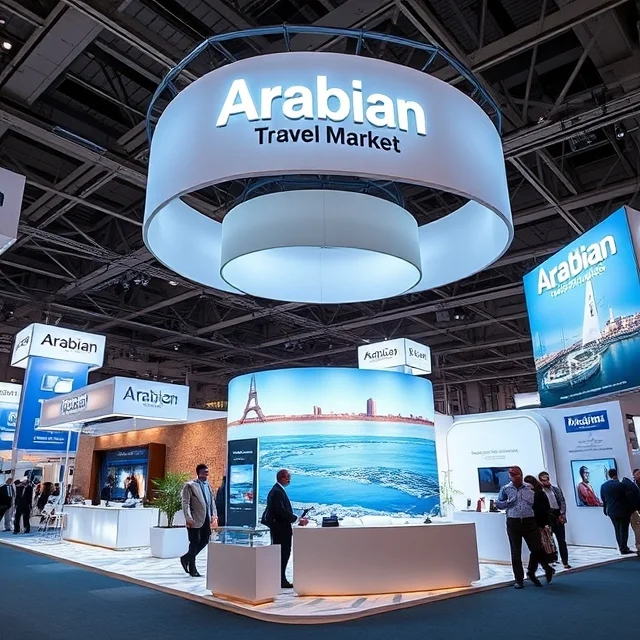
A destination-inspired stand can use architectural references, landscape photography, cultural patterns, colour palettes, local materials and digital imagery to create a recognisable atmosphere. A tourism board promoting beaches might use large-format coastal photography, while a mountain destination could incorporate natural textures and panoramic landscape imagery.
The design should remain commercially focused. Visitors should quickly understand what the destination offers, who the target traveller is and what business opportunities are available.
For international tourism companies attending an exhibition in Dubai, combining destination storytelling with clear corporate messaging can create a more memorable visitor experience.
Use a Large Back Wall for Maximum Visibility
The main back wall is one of the most important areas of an exhibition stand.
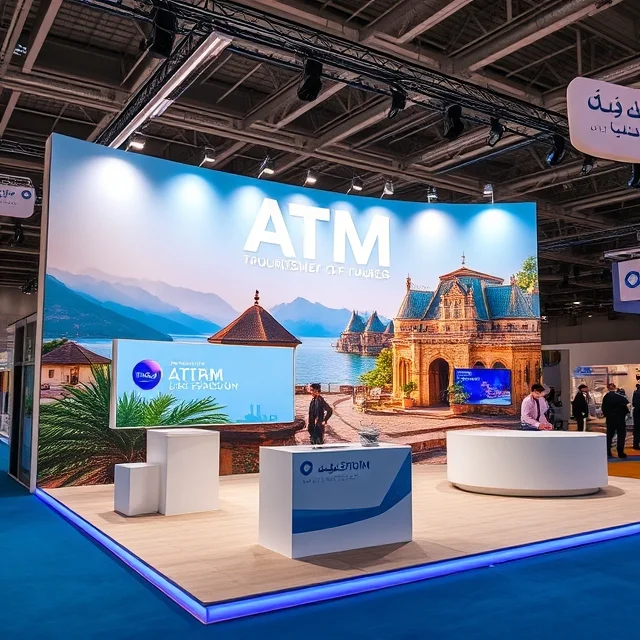
A large branded wall can communicate the company name, destination, campaign message and key visual in a format that remains visible from a distance. It can also provide an effective background for photographs and business meetings.
For ATM 2027, exhibitors can consider large-format printed graphics, illuminated logos, backlit fabric, LED displays or a combination of physical and digital elements.
The message should remain simple. A visitor should not have to read a long paragraph to understand the brand.
Add Large Tourism Photography
Travel is an emotional industry, so photography can play a major role in exhibition communication.
High-quality images of beaches, resorts, city skylines, cultural destinations, adventure tourism, luxury hospitality, restaurants and unique experiences can transform a plain exhibition wall into a visual journey.
Hotels and resorts can use photography to show the guest experience rather than relying only on room images. A hotel brand might combine accommodation photography with restaurants, swimming pools, spa facilities, meeting spaces and destination experiences.
Tour operators can use visual storytelling to demonstrate itineraries and experiences.
Build an Interactive Travel Experience
An interactive stand can encourage visitors to spend more time engaging with the brand.
Touchscreens can allow visitors to explore destinations, hotel properties, tour packages, itineraries or travel experiences. Interactive maps can show locations and attractions, while digital product selectors can help visitors identify suitable travel solutions.
For tourism boards, an interactive destination map can be particularly useful. Visitors could explore regions, attractions, accommodation options and activities through a touchscreen interface.
The technology should support the sales conversation rather than exist simply because it looks impressive.
Use Exhibition Display LED Screens
Large-format digital displays can give travel brands a flexible way to present changing content throughout the exhibition.
Using Exhibition display led screens, an exhibitor can present destination videos, hotel tours, promotional campaigns, aerial footage, tourism experiences, animated maps and corporate presentations without printing every piece of content as a separate graphic.
A properly positioned LED display can also create a strong visual focal point. The content should be designed for exhibition viewing distances, with high-contrast visuals, short messages and movement that attracts attention without becoming distracting.
For a destination brand, a large LED screen could continuously show different travel experiences throughout the day.
Create a Hospitality-Focused Meeting Area
Arabian Travel Market is a business event, so an exhibition stand needs to accommodate professional conversations.
A dedicated meeting area can provide space for hotel representatives, tourism boards, travel agencies, destination management companies, airlines and technology providers to speak with buyers and partners.
The meeting area should feel connected to the main stand while providing enough separation for focused conversations.
Depending on the available stand size, businesses can use round meeting tables for informal discussions, enclosed meeting rooms for private negotiations or a combination of both.
Comfortable seating, suitable lighting and accessible power points are practical details that should be considered during the planning stage.
Design a Professional Reception Counter
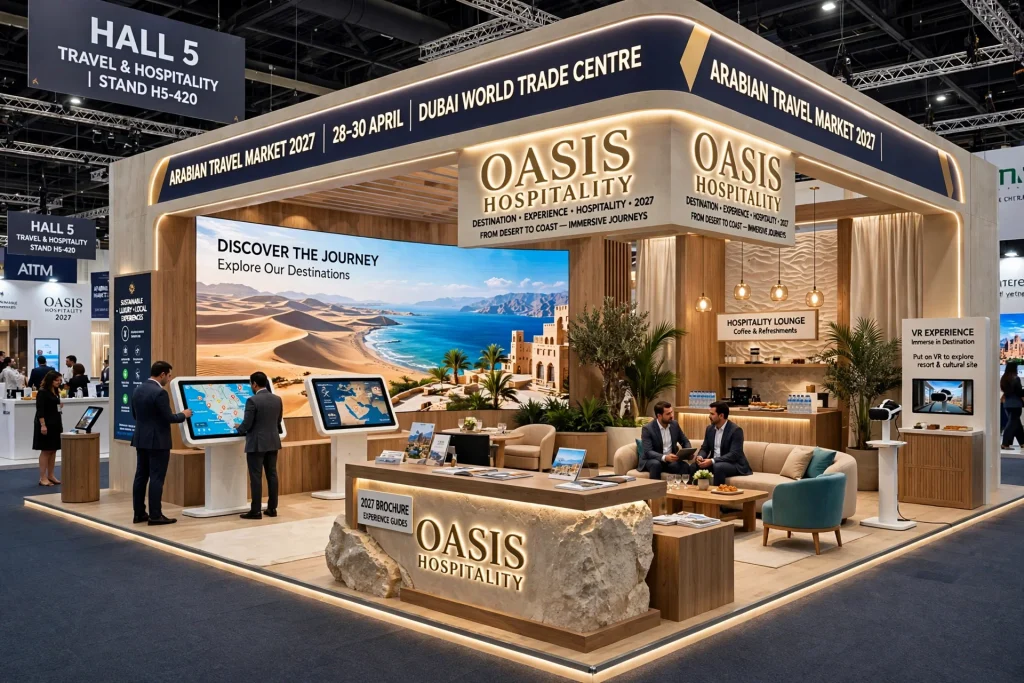
The reception counter provides the first physical interaction between the visitor and the brand.
It should be positioned where visitors can easily see it without creating a barrier between the stand and the exhibition aisle.
The company logo should remain clearly visible, while the counter can incorporate storage for brochures, business cards, tablets and other materials.
For travel brands, the reception area can also include a QR code allowing visitors to access brochures, destination guides, booking information or contact forms digitally.
Create a Digital Destination Map
Maps are highly relevant to tourism exhibitions.
A digital destination map can communicate geographic information more effectively than a large amount of printed text. Visitors can explore hotels, attractions, airports, resorts, cultural sites and travel routes through an interactive interface.
For a destination marketing organisation, this can become a central feature of the booth.
For hotel groups with multiple properties, a digital map can show where each hotel is located and connect each property with its own photographs, facilities and booking information.
Use Immersive Video Walls
Video walls can create a stronger sense of place than static graphics.
A resort could show a journey beginning at the airport and continuing through check-in, accommodation, dining, recreation and local experiences. A destination could show a combination of landscapes, culture, food, entertainment and hospitality.
The video content should be short, visually strong and easy to understand without sound because exhibition halls can be noisy.
Subtitles or concise on-screen messaging can make videos more accessible when visitors watch without audio.
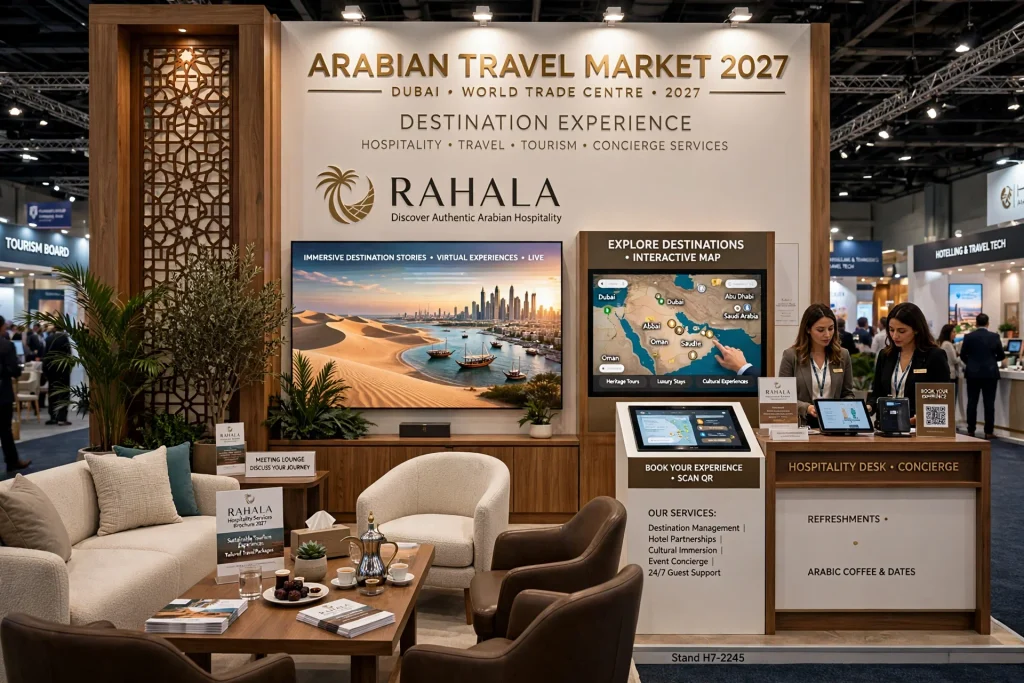
Add Virtual Reality or 360-Degree Experiences
Virtual reality can allow visitors to experience a destination before travelling.
Hotels can use VR to demonstrate suites, villas, restaurants, spas or event spaces. Tourism destinations can provide virtual tours of landmarks, cultural attractions, museums and outdoor experiences.
A 360-degree experience can also be delivered through a large touchscreen or interactive display without requiring a headset.
The choice depends on the brand’s target audience, available budget, stand size and desired visitor journey.
Create an Instagram-Friendly Photo Area
Social media can extend the life of an exhibition stand beyond the event itself.
A branded photo area can encourage visitors to take photographs and share them online. The background could feature a destination image, architectural installation, illuminated logo or creative tourism-themed design.
However, the photo opportunity should remain connected to the brand. A visually attractive installation without clear branding may generate attention without generating meaningful business value.
A QR code can also connect visitors to the company’s social channels, website or campaign landing page.
Use Hospitality-Inspired Materials
Materials can influence how visitors perceive a travel brand.
A luxury hotel may use premium finishes, warm lighting, textured surfaces, metal details and elegant furniture. An adventure tourism company may prefer natural textures, timber-inspired finishes and energetic graphics.
A sustainable tourism company can incorporate reusable structures, responsibly selected materials and graphics communicating environmental initiatives.
The materials should reflect the brand rather than simply follow a generic luxury exhibition style.
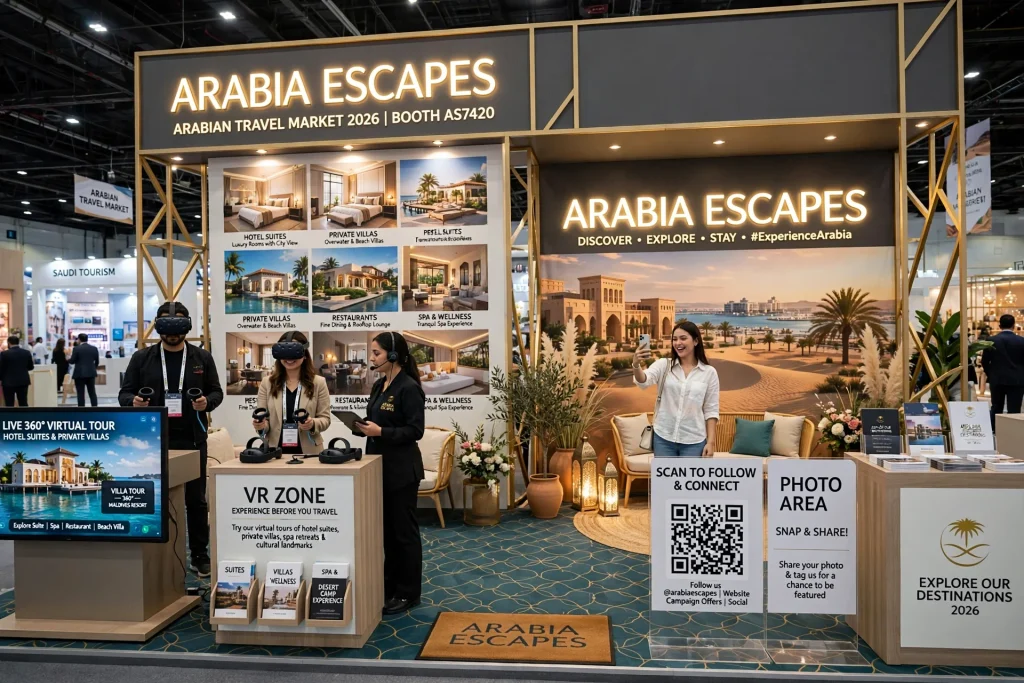
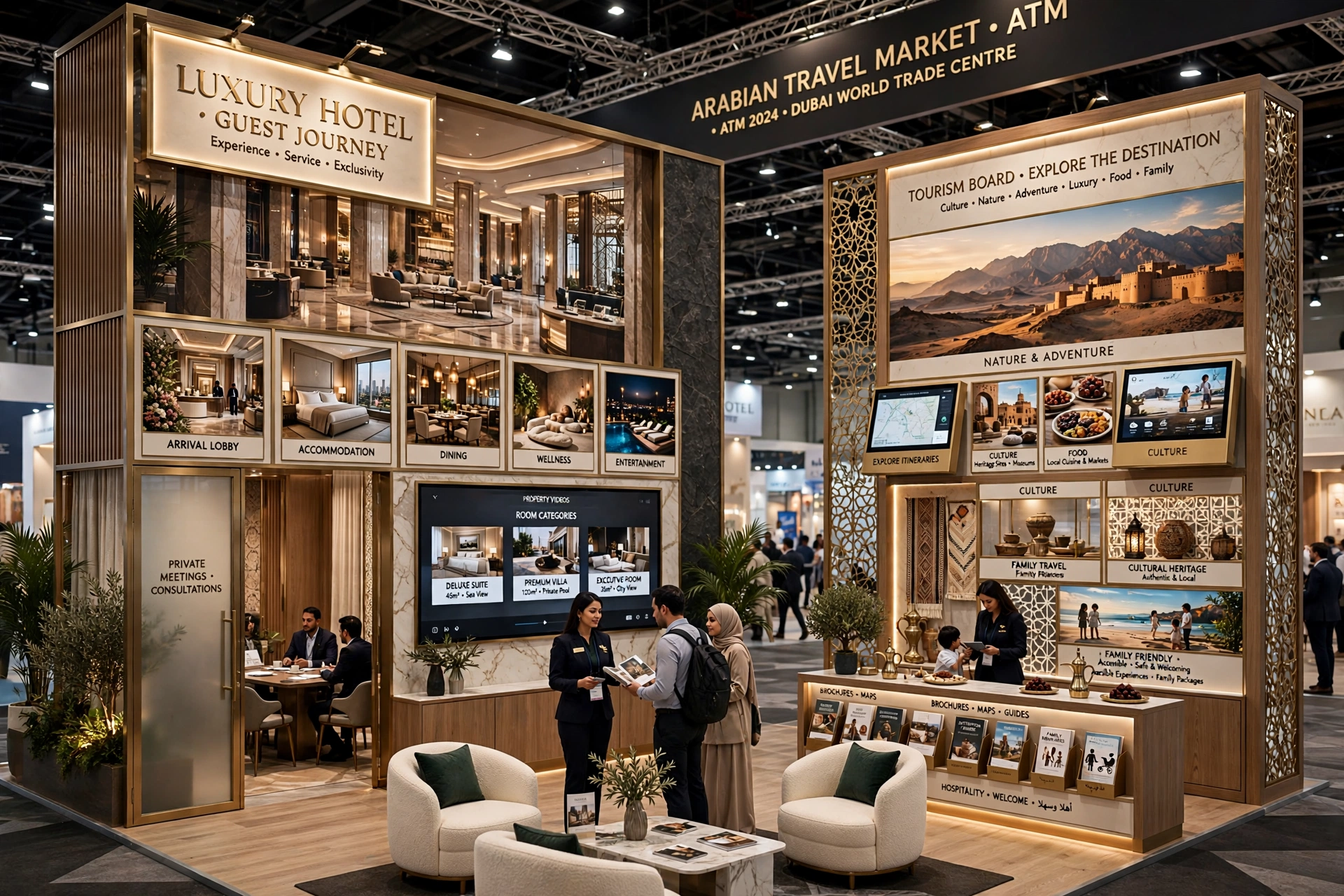
Create a Luxury Hotel Exhibition Stand
Luxury hotels need to communicate experience, service and exclusivity.
A hotel stand can combine large-scale photography, premium finishes, architectural lighting, digital displays and private meeting areas.
Instead of showing only hotel rooms, the stand can tell the complete guest story. Images can include arrival, lobby, accommodation, dining, wellness, entertainment, meetings and destination experiences.
A digital display can show property videos and different room categories while sales staff handle detailed discussions.
Exhibition Stand Ideas for Tourism Boards
Tourism boards can benefit from highly immersive designs.
A tourism stand can divide the experience into different themes such as culture, nature, adventure, luxury, food and family travel.
Large destination photography can create the visual identity, while interactive screens can allow visitors to explore attractions and suggested itineraries.
Traditional cultural elements can also be incorporated into the design, provided they are authentic and presented respectfully.
For tourism boards targeting Middle Eastern travellers, the stand can communicate relevant travel experiences, accessibility, hospitality and family-friendly options where appropriate.
Exhibition Stand Ideas for Travel Technology Companies
Travel technology companies have different requirements from hotels and destinations.
Their stands need to demonstrate the product.
Booking platforms, hotel technology, artificial intelligence solutions, customer experience platforms, payment systems, travel management software and digital concierge solutions can be presented through interactive demonstrations.
Instead of filling the stand with long technical explanations, companies can build short product journeys.
For example, a visitor could scan a QR code, test a platform on a touchscreen, watch a short demonstration and then move to a meeting area for a commercial discussion.
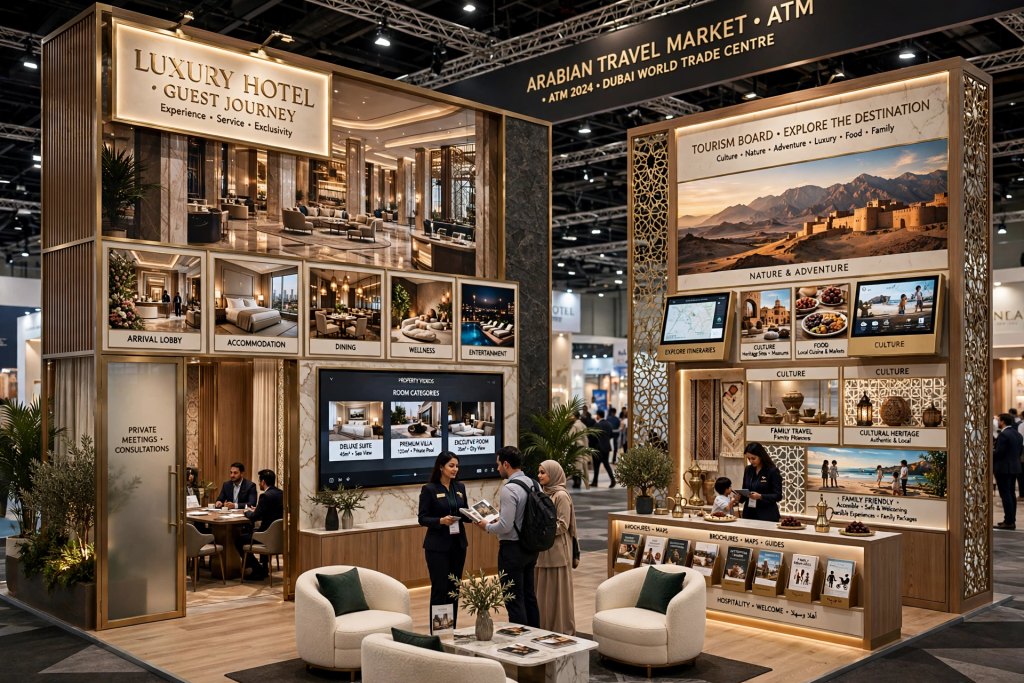
Create a Dedicated Product Demonstration Area
A demonstration area can help technology and service providers communicate their products.
The demonstration space should be positioned so visitors can see what is happening without blocking the main walkway.
A large display can show the product interface, while a presenter demonstrates important functions.
For travel technology companies, live demonstrations can include booking workflows, customer management, hotel operations, analytics dashboards or travel planning tools.
The key is to make the demonstration short enough to accommodate visitors who have limited time.
Use Smart Lighting to Guide Visitors
Lighting is more than decoration.
A well-planned exhibition lighting system can direct attention toward important areas such as the main logo, product displays, meeting areas and digital screens.
Backlit graphics can provide strong visibility, while accent lighting can highlight architectural features.
Warm lighting may support a luxury hospitality atmosphere, while neutral or cooler lighting may work better for technology-focused brands. Colour temperature should be selected according to the brand identity, materials and photography.
Lighting should also avoid excessive glare on screens and reflective surfaces.
Use Clear Wayfinding Inside the Stand
Large stands can become confusing when different services, destinations or properties are presented at the same time.
Clear internal wayfinding can help visitors understand the stand layout.
Sections can be identified using simple labels such as Hotels, Destinations, Travel Technology, Partnerships, Experiences or Meetings.
Digital wayfinding can also direct visitors toward specific representatives or meeting areas.
This is particularly useful for companies with multiple brands or properties participating under one exhibition presence.
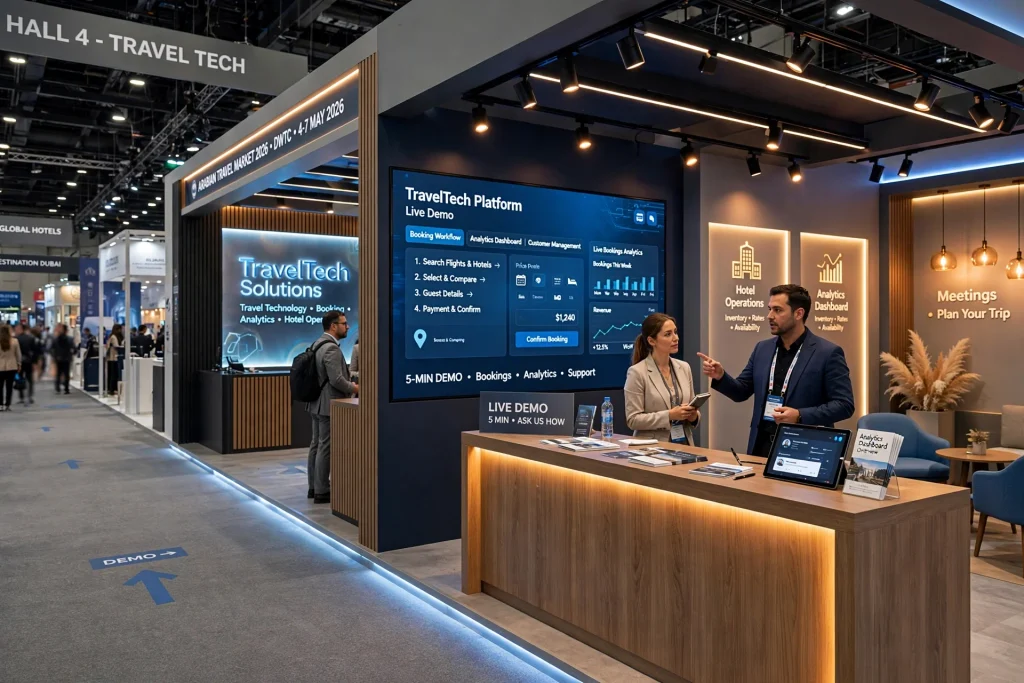
Create a Strong Entrance
The entrance should remain visually open.
Large solid walls around the front of a stand can make the space appear inaccessible. An open entrance allows visitors to see the interior and understand what the company offers before stepping inside.
Architectural frames, overhead branding, illuminated logos and suspended visual elements can help create a recognisable stand without blocking visitor movement.
The stand entrance should support both spontaneous walk-ins and scheduled meetings.
Include QR Codes Strategically
QR codes can connect physical exhibition experiences with digital information.
A QR code can link to a hotel brochure, destination guide, booking enquiry, property portfolio, travel itinerary, corporate website or meeting request.
Instead of placing many QR codes throughout the stand, businesses should give each code a clear purpose.
For example, a hotel may have one code for accommodation information and another for corporate enquiries.
The landing page should also be mobile-friendly because most visitors will scan the code using their smartphones.
Build an Exhibition Lead Generation Journey
A successful exhibition stand should make it easy to move from attention to conversation and then to follow-up.
The journey could begin with a strong visual display, continue with an interactive experience, move into a conversation with a representative and finish with a digital lead capture form.
The sales team should know which information to collect, such as company name, role, travel interests, partnership requirements, destination interests or project requirements.
Lead collection should be simple enough that it does not interrupt the visitor experience.
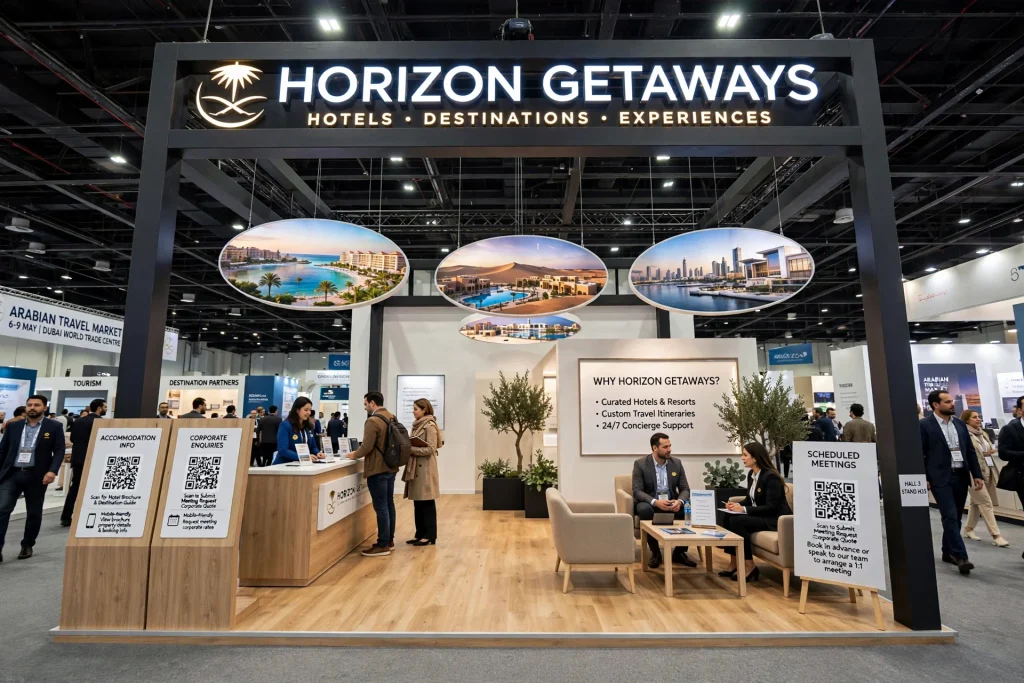
Make the Stand Suitable for B2B Meetings
Arabian Travel Market is a business-focused event, so the exhibition environment should support professional networking.
Travel agencies, tour operators, corporate travel buyers, destination management companies, hotel representatives, airlines and technology companies may need private discussions.
A well-designed meeting area should therefore include comfortable seating, sufficient lighting, charging facilities and a professional visual background.
For larger exhibitors, semi-private meeting rooms can provide greater confidentiality while still maintaining connection with the main stand.
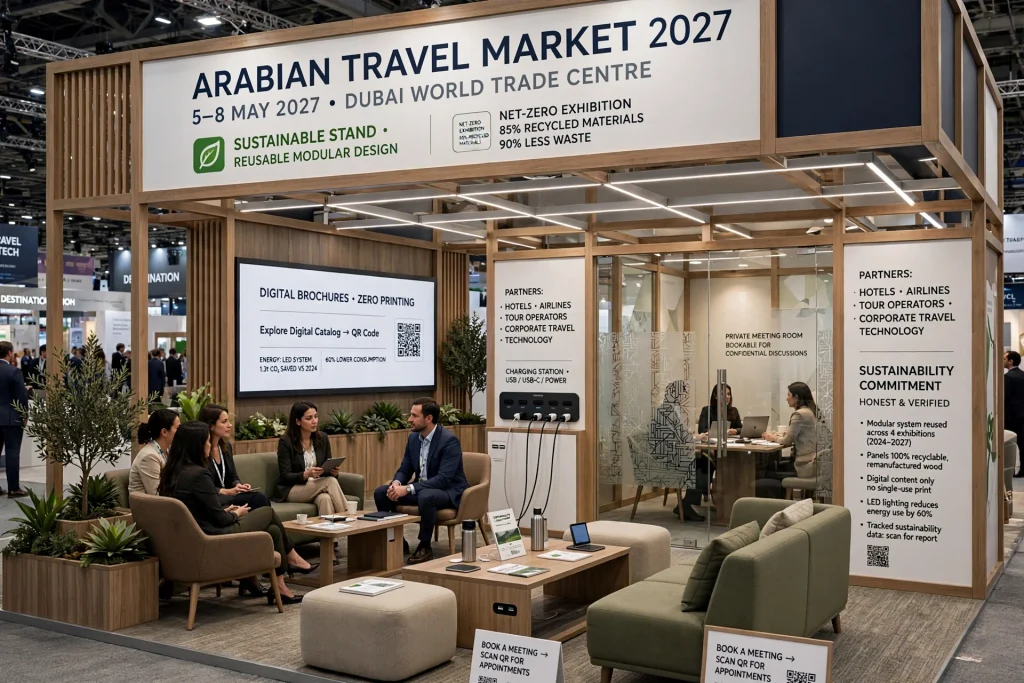
Sustainable Exhibition Stand Ideas for ATM 2027
Sustainability can be incorporated into exhibition design without compromising visual quality.
Reusable modular structures can be designed for use across multiple exhibitions. Replaceable graphics can allow the same framework to support different campaigns.
LED lighting can reduce energy consumption compared with older lighting technologies, while digital displays can reduce dependence on printed promotional materials.
Materials should be selected based on the company’s sustainability objectives and practical exhibition requirements.
Sustainable design should be communicated honestly rather than using vague environmental claims.
Dubai Location Considerations for ATM Exhibitors
Dubai World Trade Centre is located in the central Trade Centre area and hosts a major calendar of international exhibitions and conferences. ATM has historically occupied multiple halls and event spaces within the venue, with the official DWTC listing identifying it as a trade-only exhibition in the leisure, sport and travel sector.
This makes spatial planning particularly important for exhibitors. A stand should be designed around the actual allocated space, access points, neighbouring stands, visitor flow, storage requirements and venue regulations.
Companies preparing for ATM 2027 should confirm the latest exhibitor manual, hall allocation, stand regulations, build-up requirements and event dates with the organiser before finalising the stand design.
Exhibition Stand Ideas for Dubai Travel Brands
Dubai-based hotels, destination companies, travel agencies and hospitality businesses can use the exhibition to strengthen their regional business relationships.
Brands from Downtown Dubai, Business Bay, Dubai Marina, Jumeirah, Palm Jumeirah, Dubai Internet City and Dubai Media City can use location-specific experiences where relevant to their offering.
A Dubai tourism brand, for example, could use skyline photography, hospitality experiences, desert activities, dining, shopping and entertainment to communicate a complete visitor journey.
The important factor is to connect the visuals to a commercial proposition.
Stand Ideas for Abu Dhabi and UAE Tourism Brands
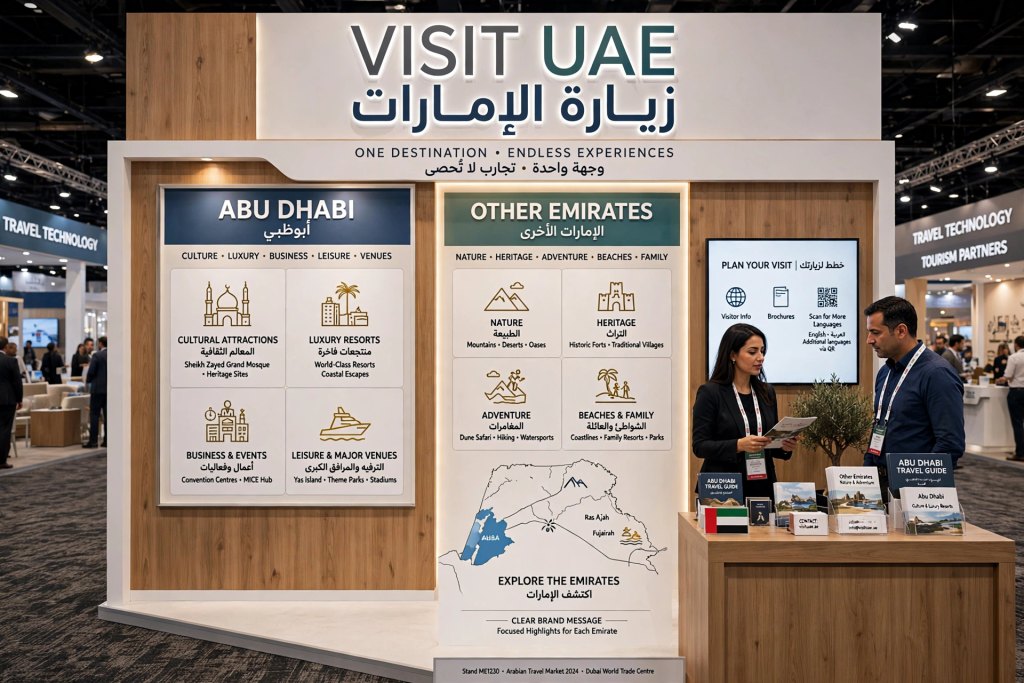
UAE exhibitors can use their stand design to present the wider destination rather than focusing on one service.
Abu Dhabi brands can highlight cultural attractions, luxury resorts, business tourism, leisure experiences and major venues. Other Emirates can focus on their own tourism strengths, including nature, heritage, adventure, beaches and family experiences.
The UAE has a diverse tourism proposition, so the exhibition stand should make the specific brand message clear rather than attempting to communicate everything at once.
Design for International Visitors
ATM attracts an international professional audience, so exhibition graphics should be easy to understand.
English is widely used in international business environments in Dubai, while Arabic can be valuable for UAE and regional audiences.
Where relevant, additional languages can be incorporated into digital content rather than overcrowding physical graphics.
Icons, maps, short headlines and visual storytelling can make information easier to understand for visitors from different markets.
Common Exhibition Stand Design Mistakes
One common mistake is filling every wall with text.
Another is using too many competing colours, fonts and messages. This can make the stand visually confusing.
A third problem is creating a beautiful structure without enough space for conversations.
Poor lighting, weak screen content, inaccessible reception areas and insufficient storage can also affect the visitor experience.
Technology should not be added simply for appearance. Every screen, touchscreen or interactive feature should have a defined purpose.
How to Plan an Arabian Travel Market 2027 Stand
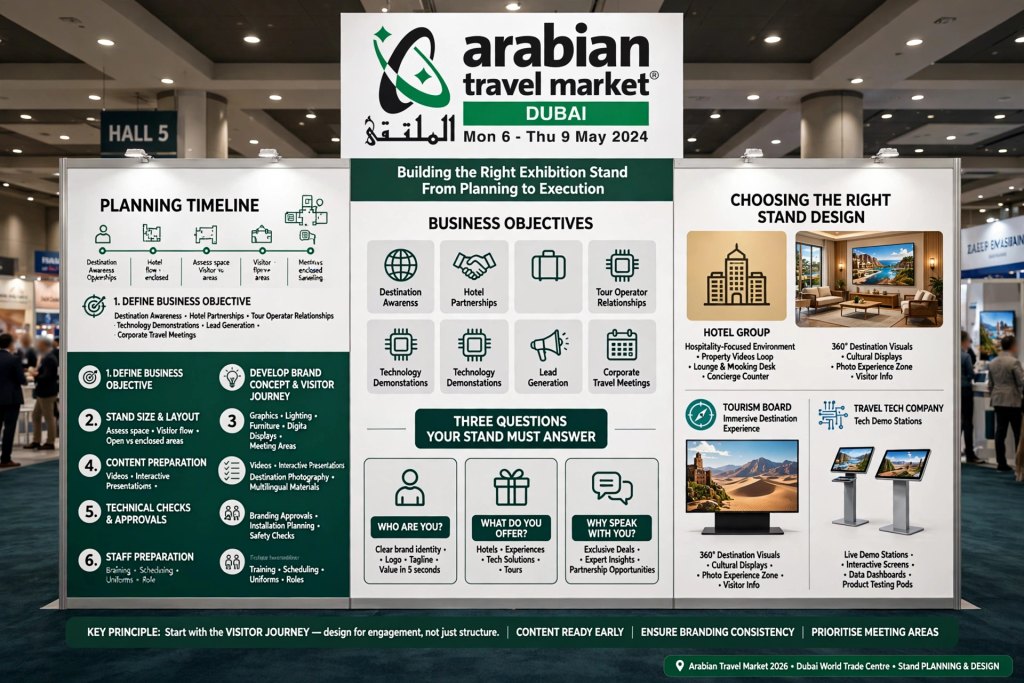
Planning should begin well before the exhibition.
Start by defining the primary business objective. The goal may be destination awareness, hotel partnerships, tour operator relationships, technology demonstrations, lead generation or corporate travel meetings.
Next, determine the stand size and layout. Then develop the brand concept, visitor journey, graphics, lighting, furniture, digital displays and meeting areas.
Content should be prepared early, especially videos, interactive presentations, destination photography and multilingual materials.
The final stage should include technical checks, branding approvals, installation planning and staff preparation.
Choosing the Right Exhibition Stand Design
The right stand design depends on the exhibitor’s business model, audience, space and objectives.
A hotel group may need a hospitality-focused environment with property videos and meeting rooms. A tourism board may benefit from an immersive destination experience. A travel technology company may need demonstration stations and screens.
The design should therefore begin with the visitor journey rather than the physical structure.
A strong exhibition stand should answer three questions quickly: Who are you? What do you offer? Why should I speak with you?
Final Thoughts on Arabian Travel Market 2027 Exhibition Stand Ideas
Preparing for Arabian Travel Market 2027 provides travel and tourism businesses with an opportunity to create a stand that functions as both a brand experience and a business development environment.
Strong ideas can include destination-inspired architecture, large-format photography, LED displays, interactive maps, virtual experiences, digital product demonstrations, hospitality-style meeting spaces, QR-enabled content and carefully planned exhibition lighting.
The most effective design is not necessarily the most complicated one. It is the one that makes the brand easy to understand, creates a comfortable environment for professional conversations and gives visitors a memorable reason to engage.
For exhibitors preparing for Dubai’s next Arabian Travel Market, the strongest approach is to combine visual storytelling with practical business functionality. The final stand should reflect the company’s identity, support its sales team and make every square metre contribute to the visitor experience.