

Blogs
LED Neon Strips vs Traditional Neon: Complete Comparison Guide

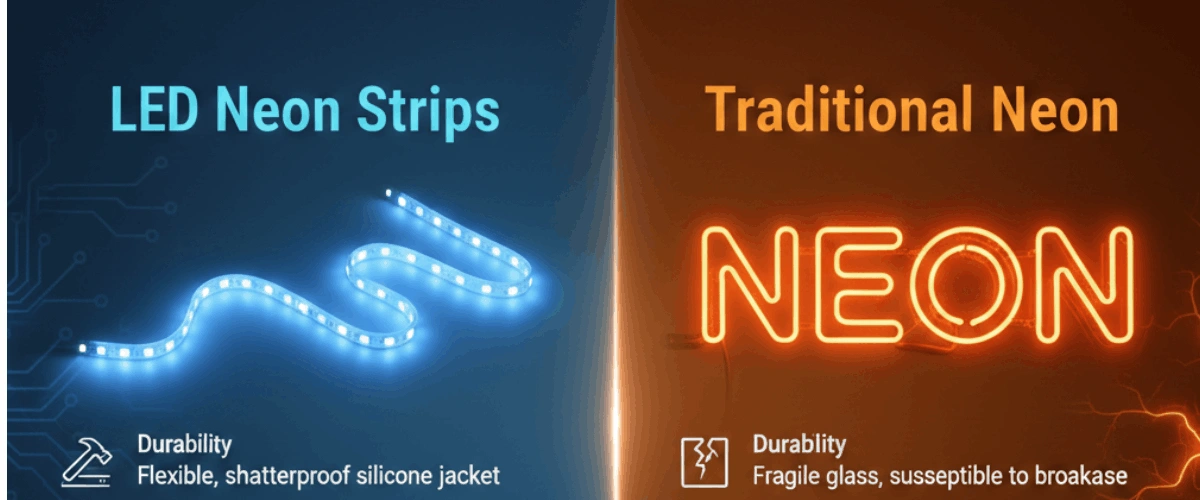
Neon lighting has been a symbol of bright advertising and creative design for more than 100 years. From classic shop signs to modern interior décor, neon has always attracted attention. Today, businesses and homeowners often compare LED neon strips vs traditional neon before making a decision.
Both options create eye-catching light, but they are very different in technology, cost, safety, and performance. This guide explains everything in clear, simple English so you can choose the right option for your project and understand which solution offers better long-term value.
What Is Traditional Neon?
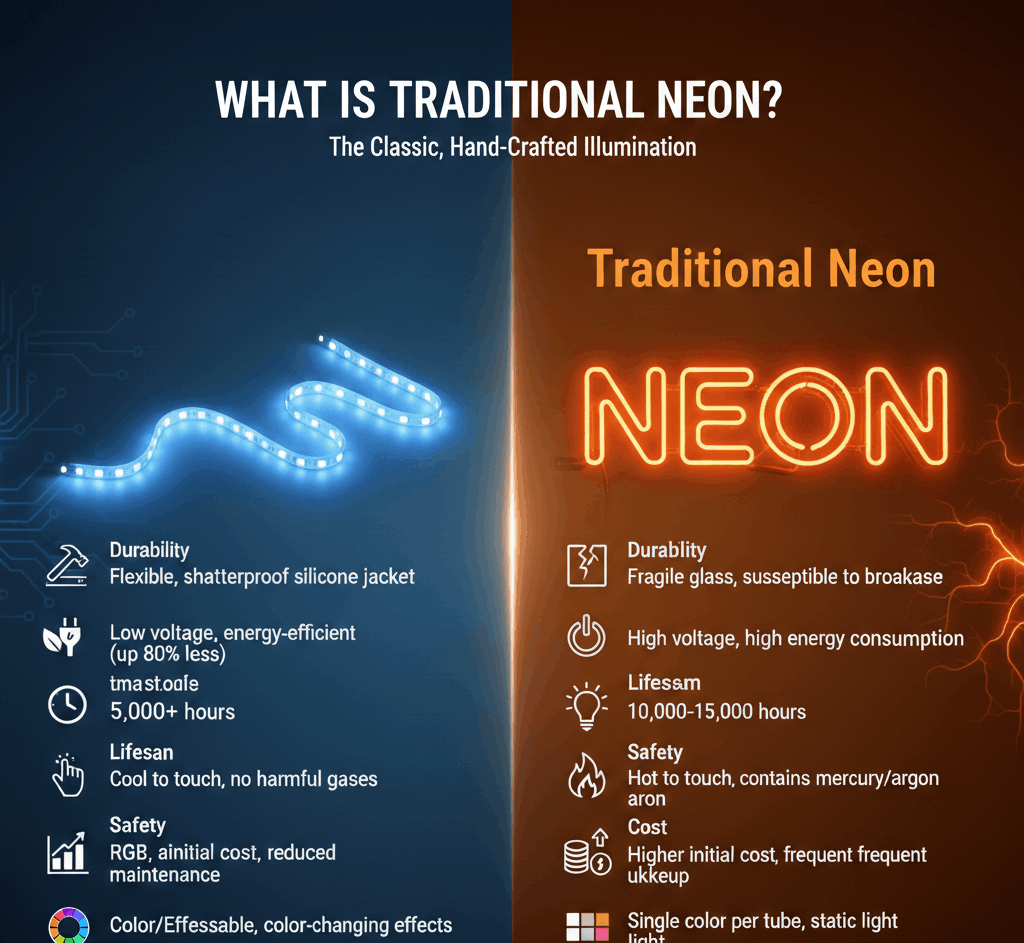
Traditional neon lighting uses glass tubes filled with neon or other gases. When electricity passes through the gas, it produces light. This technology became famous in the early 1900s and was widely used in cities like Las Vegas and New York City for advertising signs.
How Traditional Neon Works
- Glass tubes are shaped by hand.
- Tubes are filled with gas.
- High-voltage electricity powers the light.
- Different gases create different colors.
Traditional neon signs are known for their warm glow and vintage look. However, they require skilled craftsmanship and careful handling.
What Are LED Neon Strips?
LED neon strips are modern lighting products that use Light Emitting Diodes (LEDs) inside flexible silicone or PVC housing. They are designed to look like traditional neon but use low-voltage technology.
Instead of glass tubes and gas, LED neon strips use energy-efficient LED chips placed inside a flexible strip. This makes them durable, safe, and easy to install.
Businesses searching for modern signage solutions often choose options like LED neon lighting dubai because of energy savings and safety advantages.
Key Differences Between LED Neon Strips and Traditional Neon
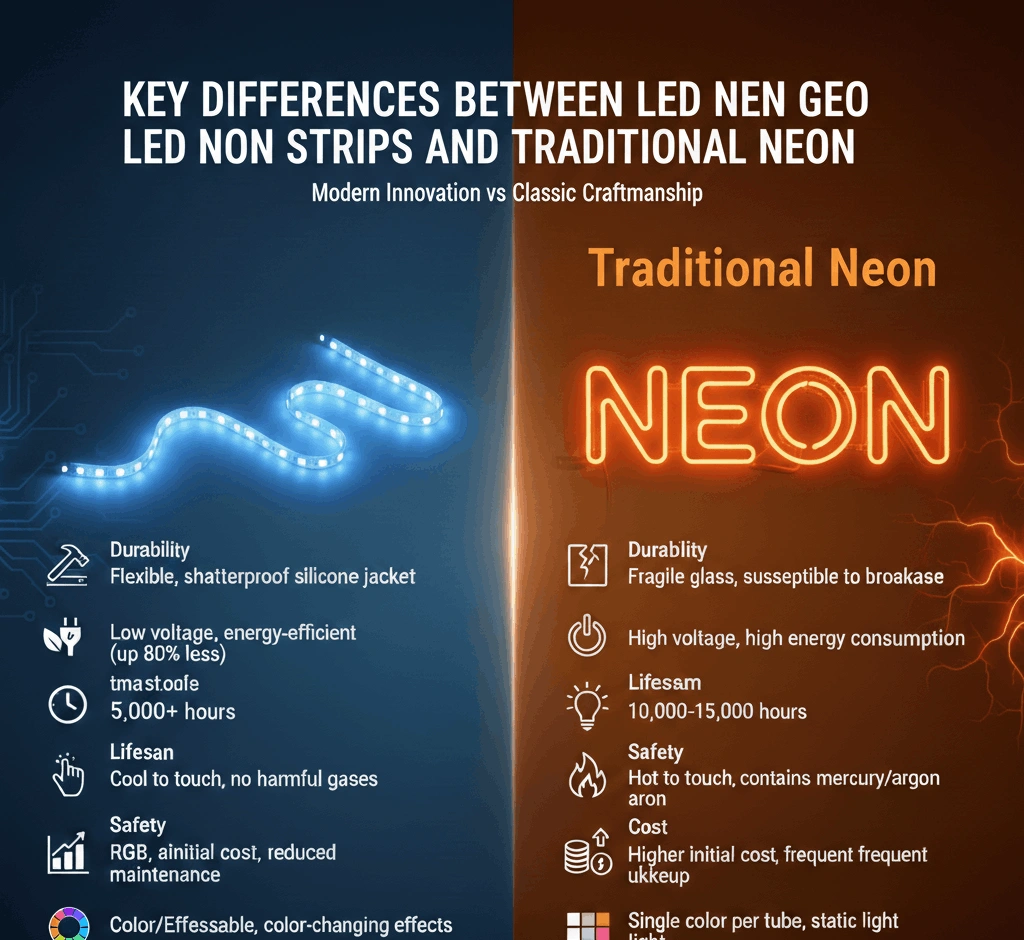
1. Energy Consumption
Traditional neon requires high voltage and consumes more power. LED neon strips use low voltage (usually 12V or 24V), which reduces electricity costs significantly.
LED neon:
- Energy-efficient
- Lower electricity bills
- Better for long-term operation
Traditional neon:
- Higher power consumption
- Increased operating costs
For businesses running signage 10–12 hours daily, energy savings make a big difference.
2. Safety and Voltage
Traditional neon works on high voltage, which can pose safety risks if not installed properly. Glass tubes can break, and transformers generate heat.
LED neon strips operate on low voltage and are much safer for indoor and outdoor use.
Safety advantages of LED neon:
- Low heat emission
- Reduced electric shock risk
- Safe for residential use
- Suitable for children’s rooms and retail interiors
This makes LED neon the preferred choice for modern commercial spaces.
3. Durability and Lifespan
Traditional neon glass is fragile. It can break during shipping, installation, or due to impact.
LED neon strips are:
- Flexible
- Shock-resistant
- Weather-resistant
- Long-lasting (up to 50,000 hours)
In hot climates like United Arab Emirates, durability matters. LED neon performs better under high temperatures compared to traditional glass tubes.
4. Installation Process
Traditional neon requires:
- Skilled glass bending
- Special transformers
- Professional installation
- Careful mounting
LED neon strips:
- Flexible and lightweight
- Easy to cut and shape
- Quick installation
- Minimal maintenance
For commercial projects, faster installation saves time and labor cost.
5. Maintenance and Repair
Traditional neon signs require professional repair if the glass breaks or gas leaks. Repair can be expensive and time-consuming.
LED neon strips are modular. If one section fails, it can be replaced easily without removing the entire system.
Maintenance comparison:
| Feature | LED Neon | Traditional Neon |
|---|---|---|
| Breakage Risk | Very low | High |
| Repair Cost | Lower | Higher |
| Maintenance Frequency | Minimal | Moderate to High |
6. Design Flexibility
Traditional neon offers a classic glow but is limited by glass shaping techniques.
LED neon strips offer:
- Multiple color options
- RGB color changing
- Dimmable brightness
- Smart control compatibility
- Waterproof options
Designers prefer LED neon because it supports modern architectural and branding concepts.
7. Weather Resistance
Outdoor signage must handle rain, dust, heat, and wind.
LED neon strips often come with IP65 or IP67 waterproof ratings. They are sealed with silicone protection, making them suitable for outdoor installation.
Traditional neon glass is sensitive to moisture and physical impact.
Cost Comparison
Initial Cost
Traditional neon may appear cheaper for small signs, but installation and transformer costs increase the total price.
LED neon may have a slightly higher material cost but lower installation expense.
Long-Term Cost
LED neon wins in:
- Lower electricity bills
- Lower maintenance cost
- Longer lifespan
- Reduced replacement frequency
For businesses focused on ROI (Return on Investment), LED neon is more cost-effective.
Environmental Impact
Sustainability matters for modern businesses.
Traditional neon:
- Uses gases
- Higher energy use
- More fragile waste
LED neon:
- Energy-efficient
- Longer lifespan
- Lower carbon footprint
Energy-saving lighting helps businesses meet sustainability goals and improve brand image.
Commercial Use Cases
Retail Stores
LED neon is widely used for:
- Logo signs
- Window displays
- Feature walls
Restaurants & Cafes
LED neon creates attractive branding with custom shapes and colors.
Events & Exhibitions
Lightweight and portable LED neon strips are ideal for temporary setups.
Residential Projects
Home décor, gaming rooms, and outdoor patios now use LED neon for stylish lighting.
Why Businesses Are Moving Toward LED Neon
Global lighting trends show a shift toward LED technology. Major cities like Dubai are seeing rapid growth in LED signage due to safety regulations and energy-saving policies.
LED neon aligns with:
- Modern building standards
- Energy efficiency guidelines
- Smart lighting systems
- Digital branding strategies
When Traditional Neon May Still Be Preferred
Despite its limitations, traditional neon still has a niche market.
- Vintage branding
- Retro-style restaurants
- Artistic installations
- Classic bar signage
Some brands prefer authentic glass neon for aesthetic reasons. However, for most commercial projects, LED neon is more practical.
Expert Recommendation
From a technical and business perspective, LED neon strips offer better performance, safety, and long-term value. They are ideal for:
- High-temperature climates
- 24/7 commercial use
- Outdoor installations
- Cost-conscious businesses
Traditional neon works best for specialty decorative purposes rather than large-scale commercial signage.
Final Verdict: LED Neon vs Traditional Neon
If you compare safety, cost, durability, and efficiency, LED neon strips clearly provide more advantages for modern businesses.
Traditional neon has history and charm. LED neon has technology and performance.
For most commercial and residential applications today, LED neon is the smarter investment.
Quick Comparison Summary
| Feature | LED Neon Strips | Traditional Neon |
|---|---|---|
| Energy Use | Low | High |
| Voltage | Low | High |
| Safety | High | Moderate |
| Durability | Strong & Flexible | Fragile Glass |
| Lifespan | Long | Moderate |
| Maintenance | Easy | Complex |
| Cost Efficiency | High | Lower |
Conclusion
Choosing between LED neon strips and traditional neon depends on your project goals. If you want energy efficiency, safety, flexibility, and long-term savings, LED neon is the clear winner. If you want vintage charm and authentic glass glow, traditional neon remains an option.
Modern commercial lighting is moving toward efficient and smart solutions. LED neon strips provide the balance of style, safety, and cost savings that businesses need today.