

Blogs
Aluminum Composite Panel Installation Tips

Aluminum Composite Panels (ACPs) have become one of the most popular materials in modern construction and design. They are widely used in building façades, interior walls, signage, and decorative cladding because of their lightweight nature, durability, and aesthetic appeal. However, installing them properly requires knowledge, precision, and the right tools. Poor installation can lead to visible defects, water leakage, or even safety hazards.
This guide provides detailed, actionable tips for anyone looking to install Aluminum Composite Panel systems, whether you are a professional contractor or a DIY enthusiast.
Understanding Aluminum Composite Panels
Before installation, it is important to understand what makes ACPs unique:
- Composition:
An Aluminum Composite Panel typically consists of two thin aluminum sheets bonded to a non-aluminum core. The core can be polyethylene for standard use or fire-retardant for safety-critical applications. - Properties:
- Lightweight but strong
- Weather-resistant and durable
- Smooth surface that allows easy painting or printing
- Resistant to corrosion, making it ideal for outdoor use
- Lightweight but strong
- Applications:
- Building façades and exterior cladding
- Interior wall decoration and false ceilings
- Signage and advertising boards
- Modular constructions and partitions
- Building façades and exterior cladding
Understanding the material helps in selecting the right tools, supports, and techniques during installation.
Planning Your Installation
Proper planning is key to a successful ACP project. Here’s what to consider:
- Measure and Layout:
Measure the area carefully. Determine how many panels are needed, the best orientation, and alignment. Planning ensures minimal waste and reduces cutting errors. - Panel Orientation:
Decide whether the panels will be installed horizontally or vertically. This affects visual appearance and water drainage on exteriors. - Allow for Expansion:
Aluminum Composite Panel material expands and contracts with temperature changes. Leave small gaps between panels (usually 5–8 mm) to accommodate this movement and prevent buckling. - Check Surface and Wall Integrity:
The wall or structure must be strong, level, and free from cracks or dust. A weak or uneven surface will compromise the ACP system.
Preparing the Surface
A smooth and stable surface is essential for long-lasting installation:
- Clean Thoroughly: Remove dust, grease, or old paint.
- Check Flatness: Walls should be straight. Use leveling tools to identify high or low points.
- Repair Defects: Fill cracks or holes and allow them to dry before installation.
- Moisture Protection: Ensure the surface is dry and protected from water leakage.
Proper surface preparation prevents warping, gaps, or water damage over time.
Choosing the Right Tools
Having the right tools is crucial for a flawless ACP installation. Some essential tools include:
- Measuring tools: Tape measure, laser level, and spirit level
- Cutting tools: Circular saw with fine-tooth blades, jigsaw, or panel cutter
- Fastening tools: Rivet gun, screws, and bolts
- Sealants: Silicone or weatherproof sealants for joints
- Safety equipment: Gloves, goggles, and dust masks
High-quality tools make cutting precise and reduce the risk of damaging the Aluminum Composite Panel during handling.
Installing the Sub-Frame
The sub-frame provides structural support for the ACP. A proper sub-frame ensures panel alignment and durability:
- Material: Aluminum or galvanized steel frames are preferred because they are rust-resistant and strong.
- Spacing: Typically, frame bars are spaced 600–800 mm apart depending on panel size.
- Leveling: Use a laser or spirit level to ensure the frame is straight and plumb.
- Fixing: Attach the frame securely to the wall using anchors suitable for concrete, brick, or steel.
A strong sub-frame prevents sagging, ensures proper load distribution, and makes the ACP installation visually appealing.
Cutting and Handling Panels
Handling ACPs carefully is critical to avoid scratches, dents, or bending:
- Mark Accurately: Use a pencil and straight edge for precise cutting lines.
- Cut Smoothly: Use a saw with fine teeth, cutting at moderate speed to prevent chipping.
- Avoid Scratches: Lay the panel face down on a soft surface when cutting.
- Protective Film: Keep the protective film on until installation is complete to prevent scratches.
Handling with care ensures a professional finish and long-lasting panels.
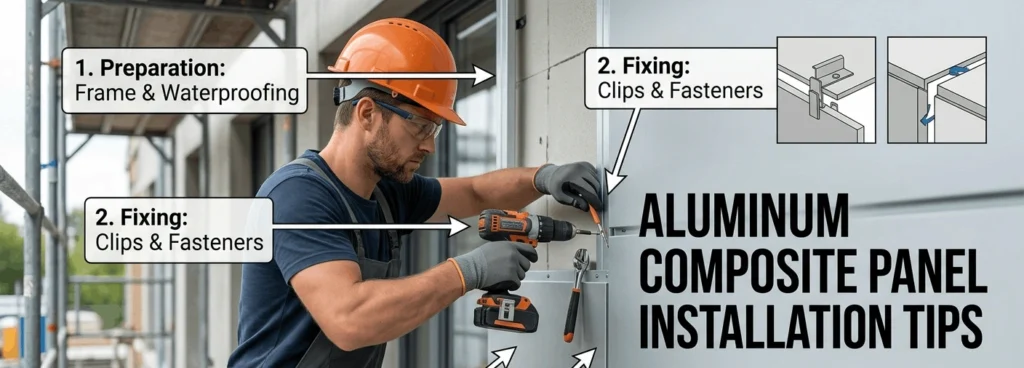
Fixing Aluminum Composite Panels
There are two main methods for fixing ACPs to the sub-frame:
1. Screwed or Riveted Method
- Drill holes carefully without damaging the panel.
- Use aluminum rivets or screws, preferably with caps for aesthetic finish.
- Ensure fasteners are tight but not over-screwed to allow for thermal expansion.
2. Concealed or Hidden Fastening Method
- Uses clips or brackets fixed to the back of the panel and frame.
- Provides a clean, seamless appearance with no visible screws.
- Often preferred for commercial buildings and high-end projects.
Always maintain consistent spacing and alignment to achieve a uniform look.
Sealing and Finishing Joints
Sealing is critical for weather protection and durability:
- Use high-quality silicone or weatherproof sealant in all joints.
- Ensure vertical and horizontal gaps allow for expansion but are fully sealed to prevent water ingress.
- Pay extra attention to corners and edges where water can accumulate.
Proper sealing enhances longevity and prevents moisture damage, especially for exterior ACP installations.
Safety Tips During Installation
Safety should always be a priority:
- Wear protective gloves, goggles, and masks while cutting or drilling.
- Lift panels carefully; ACPs are lightweight but large sheets can cause injury if dropped.
- Use scaffolding or ladders safely when working at heights.
- Keep the work area clean and free of obstacles to avoid accidents.
Following safety protocols ensures smooth installation without accidents.
Common Installation Mistakes to Avoid
- Ignoring Expansion Gaps: Leads to buckling or warping of panels.
- Improper Surface Preparation: Uneven walls can cause visible gaps.
- Over-Tightening Screws: Can deform the Aluminum Composite Panel surface.
- Skipping Sealing: Water ingress may cause corrosion or staining.
- Poor Sub-Frame Alignment: Leads to misaligned panels and poor aesthetic finish.
Avoiding these mistakes ensures a professional, long-lasting installation.
Maintenance Tips for Long-Term Performance
Even after installation, proper maintenance keeps ACPs looking new:
- Clean Panels Regularly: Use mild detergent and soft cloths; avoid abrasive materials.
- Inspect Joints: Check sealants annually and reapply if needed.
- Check Fasteners: Ensure rivets and screws remain tight.
- Monitor for Damage: Repair dents, scratches, or water damage immediately.
Regular maintenance ensures your Aluminum Composite Panel system retains both beauty and durability.
Why Choose Aluminum Composite Panels
- Aesthetic Flexibility: ACPs are available in multiple colors, finishes, and textures.
- Lightweight: Easier to handle and reduces structural load.
- Durable: Resistant to weather, corrosion, and UV rays.
- Fire-Retardant Options: Safe for commercial and residential buildings.
- Energy Efficiency: Can improve building insulation and energy performance.
These features make ACPs a preferred choice for architects, contractors, and property owners.
Conclusion
Installing Aluminum Composite Panel systems correctly is essential for durability, safety, and visual appeal. From proper planning and surface preparation to precise cutting, sub-frame installation, and careful panel fixing, every step matters. By following the tips in this guide, you can ensure that your ACP installation is professional, long-lasting, and aesthetically pleasing.
Whether for building façades, interior walls, or signage, understanding the material, using the right tools, and following best practices will save time, reduce waste, and produce a result that looks exceptional. Remember to plan carefully, work safely, and maintain your panels regularly for years of beautiful performance.
A well-installed Aluminum Composite Panel system not only enhances the visual appeal of your property but also adds value, durability, and efficiency—making it a smart investment for any construction or renovation project.