

Blogs
Polycarbonate Sheets for Industrial Roofing: What You Need to Know

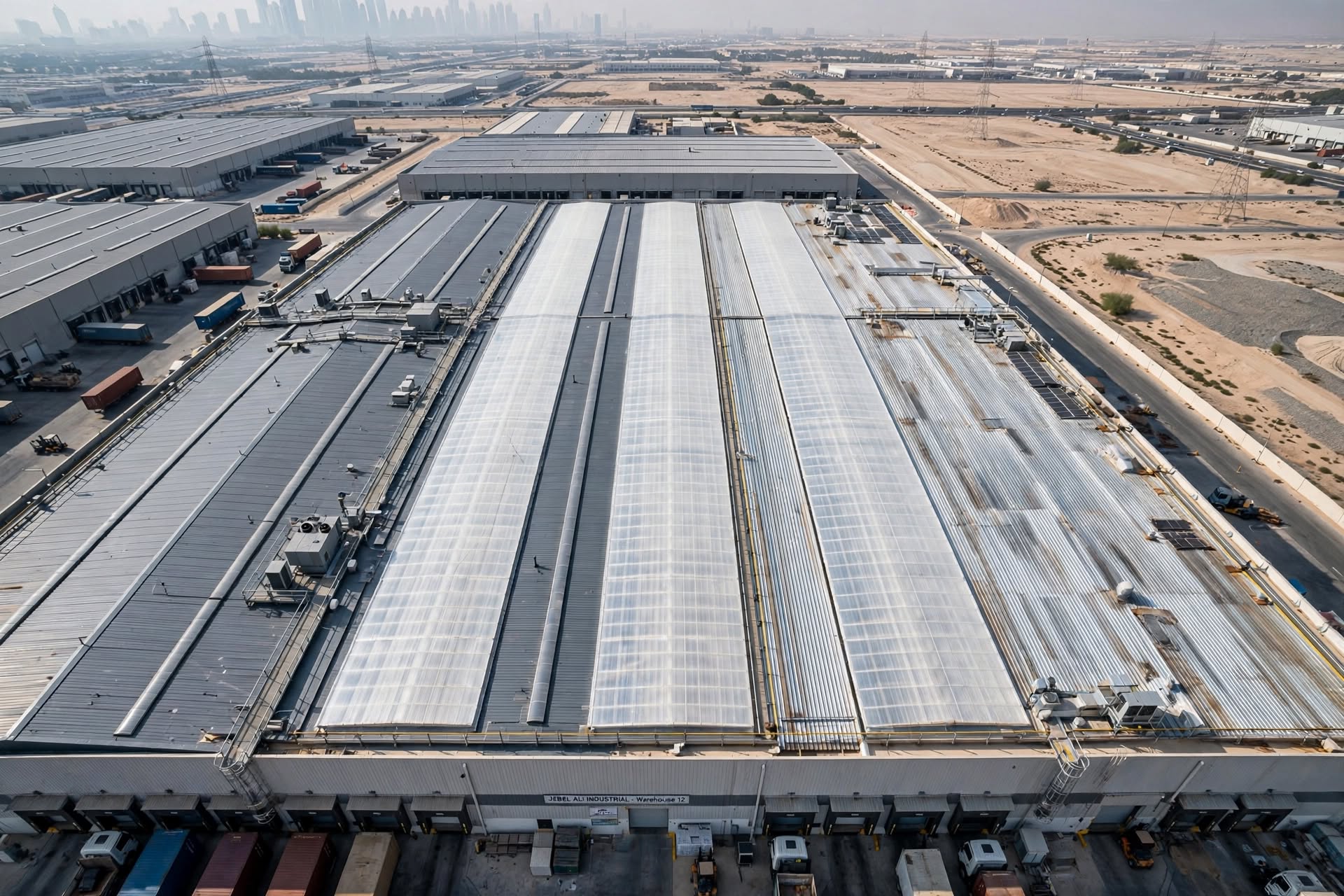
Industrial roofing needs to perform under demanding conditions. Warehouses, factories, workshops, logistics centres, manufacturing facilities, agricultural structures, and distribution buildings often have large roof areas exposed to intense sunlight, heat, dust, wind, and occasional heavy rainfall. Choosing the right roofing material therefore requires more than considering appearance or initial purchase price.
Polycarbonate sheets have become a practical roofing solution for many industrial applications because they combine relatively low weight with high impact resistance, natural light transmission, weather resistance, and fabrication flexibility. They can be used as complete roofing systems in suitable applications or integrated with metal roofing to introduce daylight into large industrial spaces.
For projects in Dubai and the wider UAE, material selection is particularly important. Industrial roofs can experience substantial solar exposure and elevated temperatures, while warehouses and factories may need natural daylight to reduce dependence on artificial lighting during working hours.
This guide explains what businesses, contractors, architects, facility managers, and property owners should consider when specifying polycarbonate sheets for industrial roofing.
What Are Polycarbonate Roofing Sheets?
Polycarbonate is a thermoplastic material known for its combination of impact resistance, lightweight construction, transparency, and weather resistance.
Polycarbonate roofing products are available in different structures and profiles, including:
Solid polycarbonate sheets, twinwall sheets, multiwall sheets, corrugated sheets, structured sheets, and specialty roofing panels.
Each type has different performance characteristics.
Solid sheets provide a dense, relatively glass-like panel, while multiwall products contain internal chambers that can improve thermal insulation while reducing overall weight.
Corrugated polycarbonate sheets can be suitable for certain roofing and cladding applications where profile compatibility and drainage are important.
The correct product depends on the building design, structural requirements, climate, light-transmission requirements, and intended service environment.
Why Polycarbonate Is Used for Industrial Roofing
Industrial buildings often have very large floor areas. Providing adequate natural light across these spaces can be challenging.
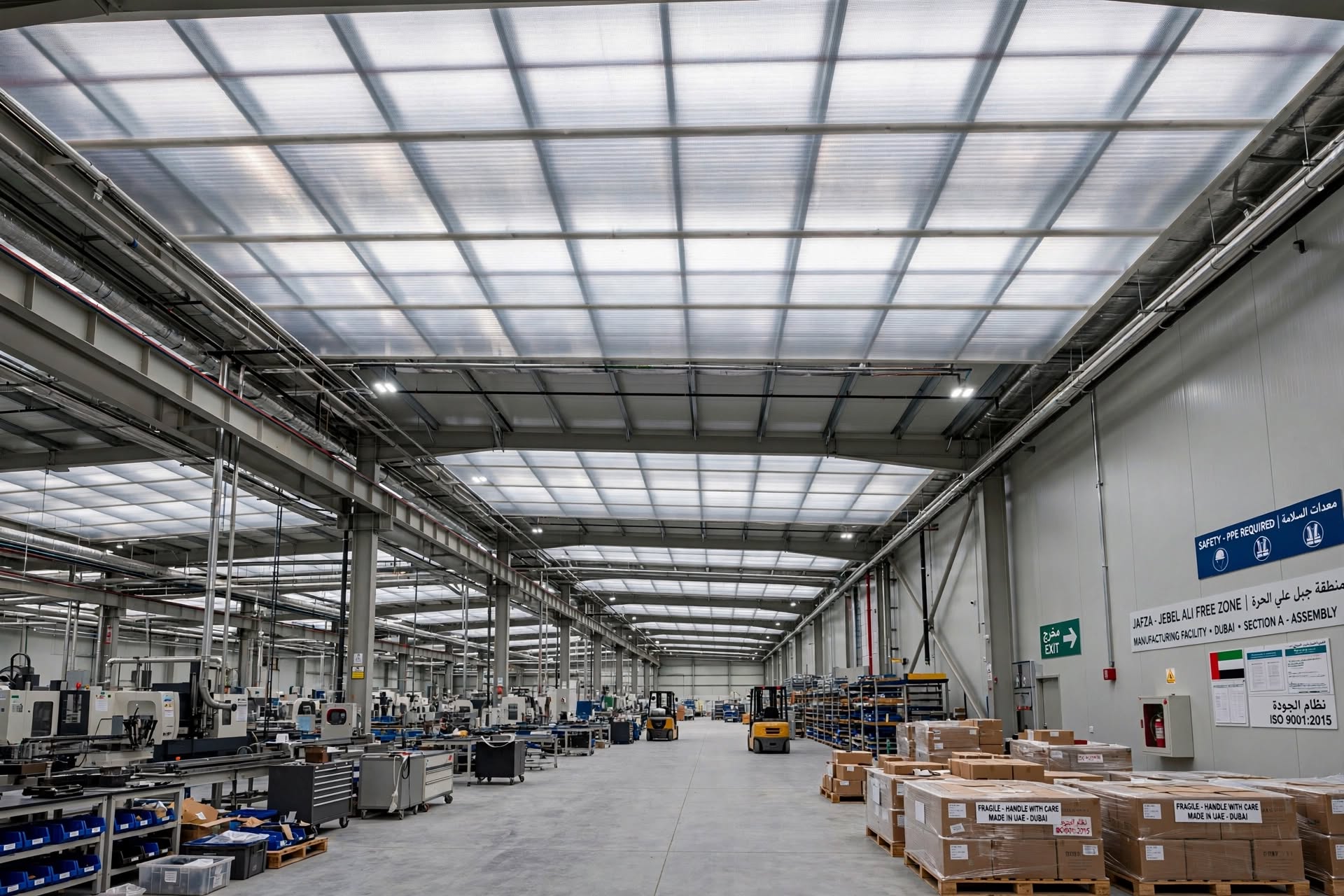
Polycarbonate roofing panels can introduce daylight without requiring conventional glass skylights throughout the structure.
This can provide several potential benefits:
Natural daylight, impact resistance, lower structural weight, design flexibility, thermal options, and reduced dependence on artificial lighting during daylight hours.
However, polycarbonate should not automatically be considered a replacement for every industrial roofing material.
The most appropriate solution depends on the project.
Natural Daylight in Warehouses and Factories
One of the strongest advantages of translucent polycarbonate roofing is daylight transmission.
Large warehouses often depend heavily on artificial lighting because of their deep floor plates and limited windows.
Strategically positioned translucent roofing panels can distribute daylight into interior areas.
This may improve the working environment while potentially reducing daytime lighting energy consumption.
The actual energy benefit depends on factors such as:
Panel transparency, roof configuration, building orientation, lighting controls, occupancy schedules, and daylight availability.
A professional daylighting design should therefore consider the complete building rather than simply adding as many transparent panels as possible.
Polycarbonate Roofing for Dubai’s Climate
Industrial buildings in Dubai and the UAE experience demanding environmental conditions.
These include:
High solar radiation, elevated temperatures, dust, humidity, wind exposure, and occasional intense rainfall.
Polycarbonate roofing systems should therefore be specified with the local climate in mind.
UV protection is particularly important for outdoor roofing applications.
Quality UV-protected polycarbonate products are designed to provide improved resistance against long-term ultraviolet exposure.
The manufacturer’s technical specifications should be reviewed to confirm the intended outdoor application and UV protection.
UV Protection in Industrial Roofing
Long-term exposure to ultraviolet radiation can affect some plastics.
UV-protected polycarbonate sheets are designed to provide better resistance against the effects of sunlight.
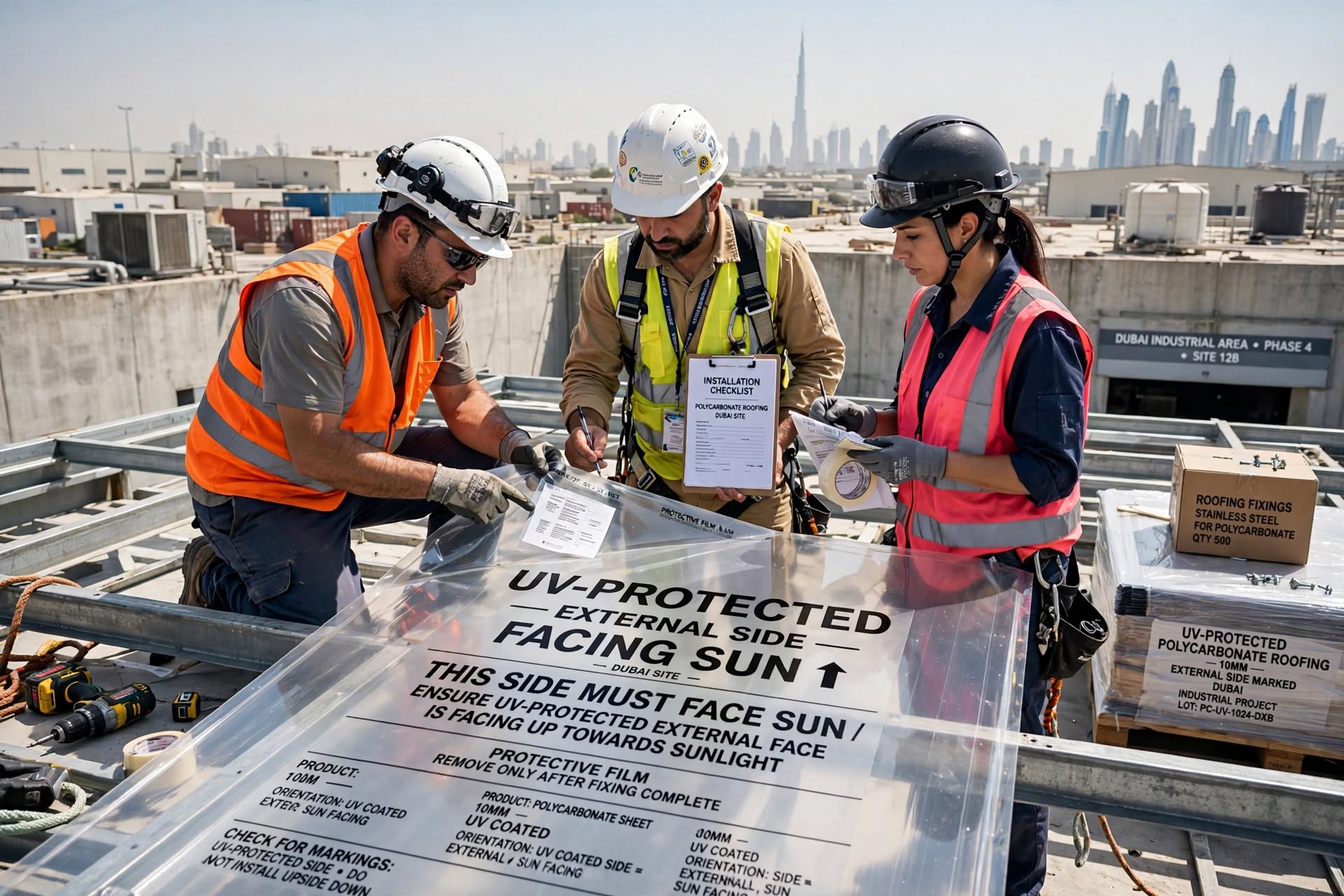
When installing a UV-protected panel, the correct orientation is critical.
Some products have a specifically treated external surface.
Installing the panel incorrectly can compromise its intended performance.
The protective film and product markings should therefore be checked before installation.
Solid Polycarbonate vs Multiwall Polycarbonate
Industrial roofing projects can use different polycarbonate structures.
Solid Polycarbonate
Solid polycarbonate is a dense sheet with a relatively uniform structure.
It may be selected where:
Impact resistance, transparency, appearance, and rigidity are important considerations.
Multiwall Polycarbonate
Multiwall panels contain internal chambers.
These chambers can provide:
Reduced weight, improved thermal insulation, and efficient daylight transmission.
They are frequently considered for applications where both daylight and thermal performance are important.
Corrugated Polycarbonate
Corrugated sheets follow a profiled shape and can be used with compatible roofing systems.
Their profile may allow them to integrate with certain metal roofing configurations.
The correct choice depends on structural design, span, support spacing, and the manufacturer’s specifications.
Thermal Performance and Industrial Buildings
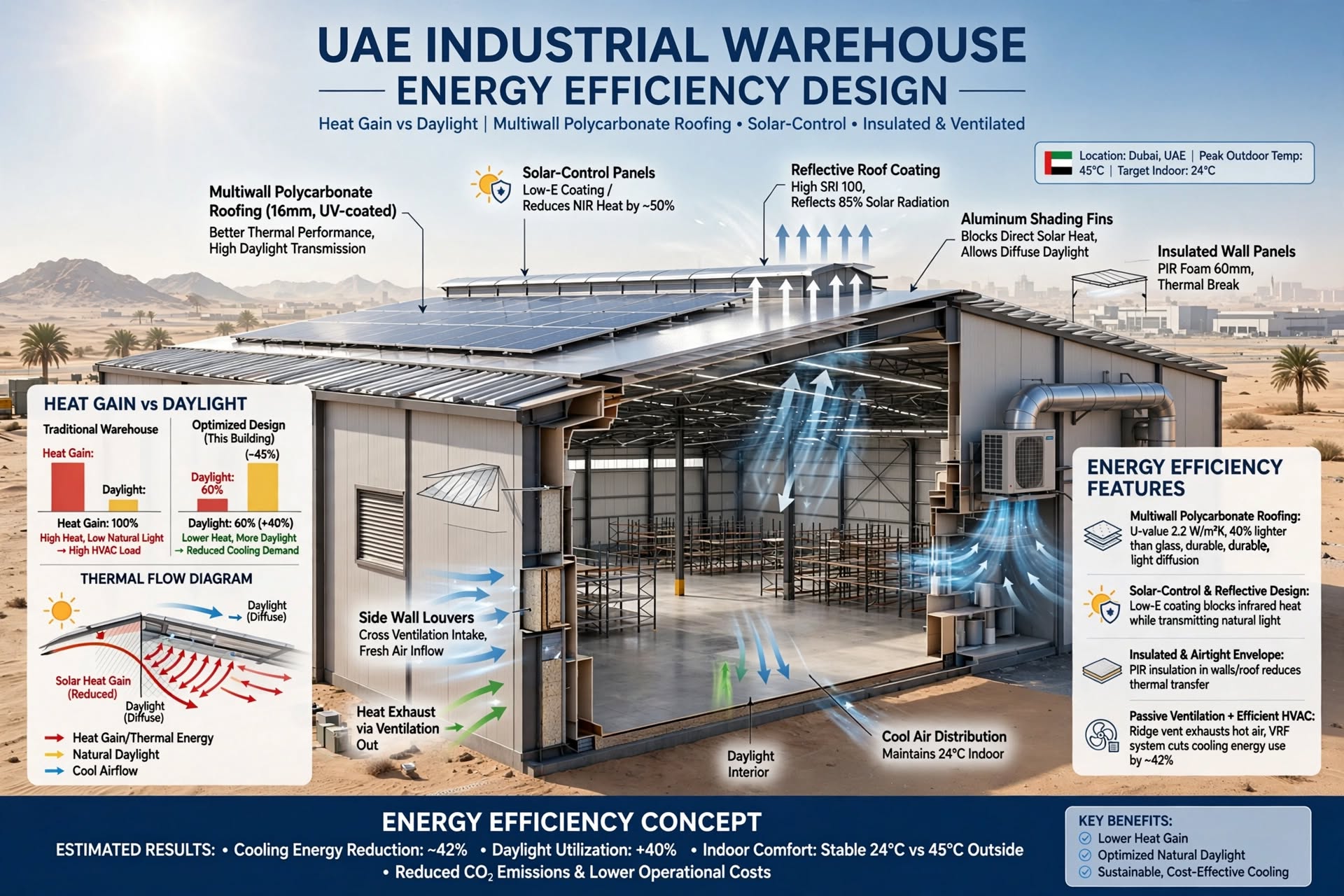
Heat gain is a major consideration for industrial buildings in the UAE.
A large translucent roof area can increase solar heat entering a building if the product and design are not appropriately selected.
This is why thermal performance needs to be evaluated alongside daylight transmission.
Multiwall polycarbonate can provide better thermal performance than some simple single-layer translucent sheets.
Additional design strategies may include:
Solar-control products, appropriate panel ratios, shading, ventilation, insulation, reflective roofing materials, and efficient HVAC systems.
The goal is to achieve useful daylight without creating unnecessary cooling loads.
Polycarbonate Roofing and Energy Efficiency
Natural daylight can reduce the need for artificial lighting during certain periods.
However, energy efficiency should be assessed at building level.
For example, daylight-responsive lighting controls can automatically reduce artificial lighting when sufficient daylight is available.
This creates a relationship between:
Roofing + daylight + LED lighting + sensors + controls + building energy management.
An industrial facility that simply installs translucent panels but keeps all artificial lights operating at full output may not achieve the full potential energy benefit.
Industrial Applications for Polycarbonate Roofing
Polycarbonate roofing can be considered for many types of industrial and commercial structures.
Applications may include:
Warehouses, factories, workshops, logistics centres, loading areas, agricultural facilities, covered walkways, production facilities, storage buildings, parking structures, and industrial extensions.
It can also be used selectively within metal roofing systems.
For example, a warehouse may have predominantly insulated metal panels with strategically positioned translucent polycarbonate sections.
This approach can introduce daylight without making the entire roof transparent.
Polycarbonate Skylight Strips
One common industrial application is the integration of translucent polycarbonate strips into metal roofing.
These strips can act as daylighting elements.
The layout should be carefully planned to avoid excessive solar heat gain while distributing light effectively.
Important factors include:
Roof orientation, building depth, panel spacing, light transmission, insulation, roof pitch, structural support, and internal lighting requirements.
A daylight simulation or professional lighting assessment can be valuable for larger facilities.
Impact Resistance
Industrial environments can expose roofing materials to accidental impacts.
Polycarbonate is known for high impact resistance compared with many traditional transparent materials.
This can be valuable in locations where maintenance activity, equipment movement, or environmental conditions could expose roof panels to impact.
However, impact resistance does not mean the panel is indestructible.
Thickness, product structure, support spacing, temperature, fixing details, and loading conditions all affect performance.
Lightweight Roofing Material
Polycarbonate sheets are relatively lightweight compared with glass.
Lower material weight can simplify handling and may reduce demands on supporting structures, depending on the overall design.
This can be particularly useful for:
Large roof areas, retrofit projects, extensions, canopies, and structures where minimizing additional dead load is important.
However, structural calculations should still be completed for the complete roofing system.
A lightweight sheet does not eliminate the need to consider wind loads, fixing forces, support spacing, and structural stability.
Wind Loads and Industrial Roofing
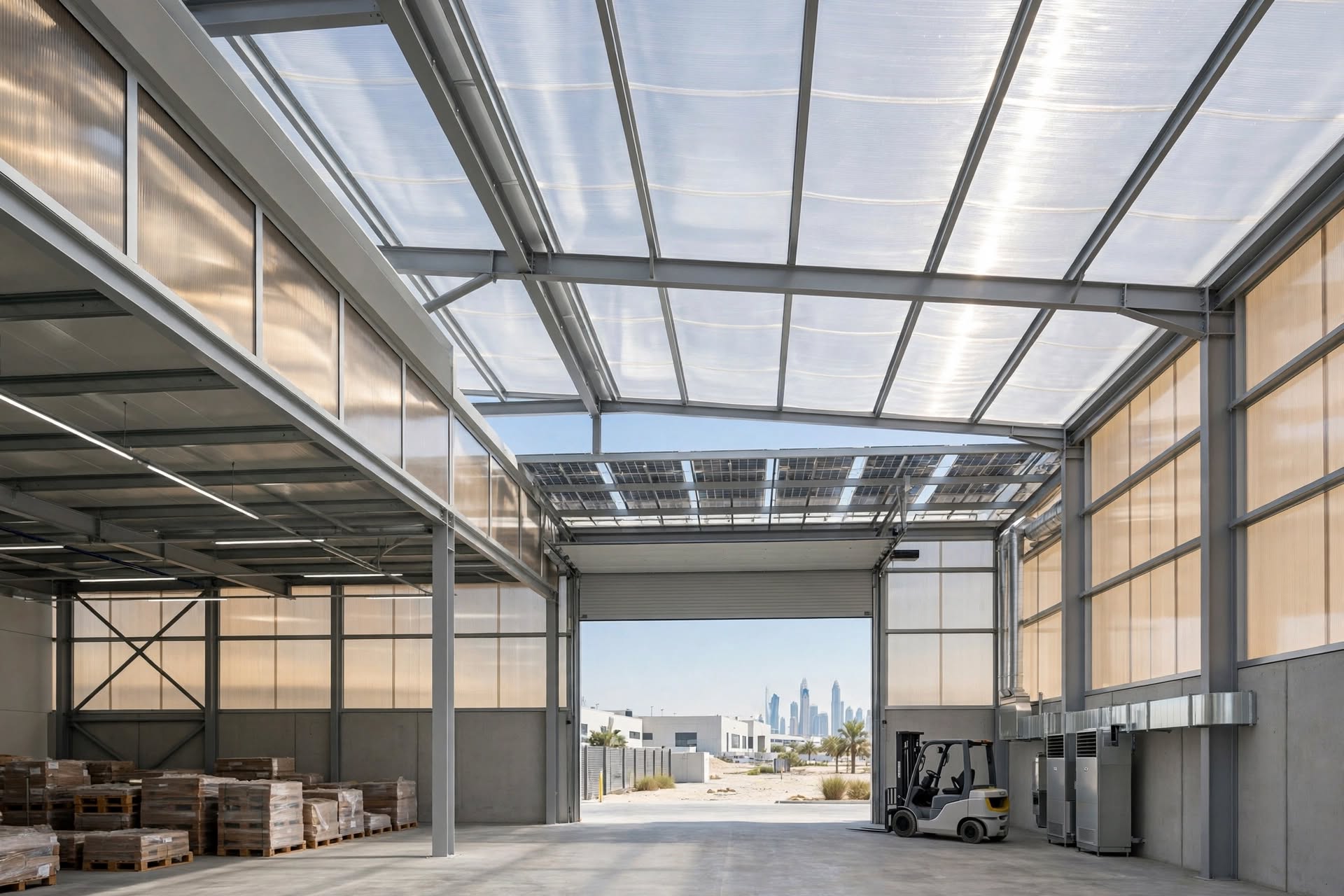
Industrial roofs in exposed locations can experience significant wind forces.
Polycarbonate panels must be correctly fixed to their supporting structure.
The design needs to account for:
Wind pressure, suction, panel dimensions, fixing spacing, support conditions, roof geometry, and edge zones.
The roof perimeter can experience different wind pressures from central areas.
Therefore, generic fixing patterns should not automatically be applied to large industrial structures.
Project-specific engineering requirements should determine the appropriate fixing system.
Thermal Expansion
One of the most important characteristics to understand when installing polycarbonate is thermal movement.
Polycarbonate expands and contracts as temperatures change.
Industrial roofs in Dubai can experience substantial temperature variation between different operating and environmental conditions.
If panels are fixed too rigidly without adequate movement allowance, stresses can develop.
Potential problems include:
Buckling, cracking, deformation, leakage, distorted fixing holes, and joint failure.
Professional installation should therefore follow the manufacturer’s expansion requirements.
Correct Fixing Systems
Polycarbonate roofing requires appropriate fasteners and sealing components.
Depending on the system, installation may use:
Self-drilling screws, compatible washers, EPDM sealing washers, aluminium profiles, roofing bars, flashing, end profiles, and manufacturer-approved sealants.
Fasteners should not be over-tightened.
Excessive pressure can deform the sheet around the fixing point.
The objective is to secure the panel while allowing appropriate thermal movement.
Roof Pitch and Drainage
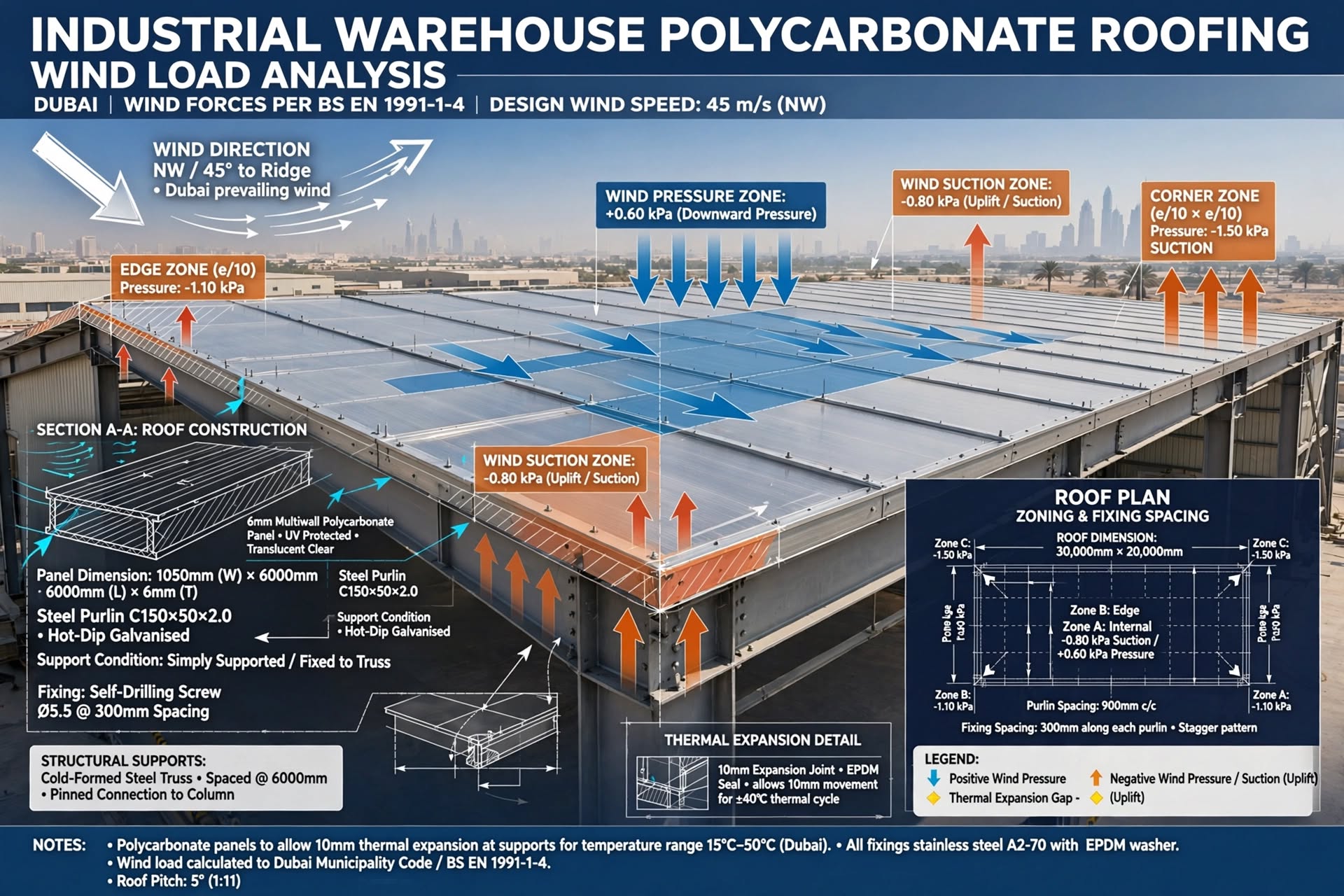
Water management is another essential consideration.
Industrial roofing should provide appropriate drainage toward gutters and downpipes.
Polycarbonate panels should be installed according to the manufacturer’s recommended minimum slope.
Poor drainage can contribute to:
Standing water, dirt accumulation, leakage, seal deterioration, and increased maintenance requirements.
Even in Dubai’s relatively dry climate, heavy rainfall events can occur, making effective roof drainage important.
Sealing Multiwall Polycarbonate
Multiwall panels contain internal chambers.
These channels require appropriate treatment at the ends.
Depending on the manufacturer’s system, this may involve:
Breather tape, solid tape, end profiles, drainage profiles, or other approved components.
The objective is to manage moisture and prevent unwanted dust and insects from entering the internal structure.
The correct method depends on the specific product and orientation.
Condensation Management
Condensation can occur when temperature and humidity conditions cause moisture to form inside or around roofing components.
This does not necessarily indicate a defective polycarbonate sheet.
It can be influenced by:
Internal humidity, ventilation, temperature differences, roof design, channel sealing, and building use.
Industrial facilities with high internal humidity may require more careful ventilation and moisture management.
Fire Performance
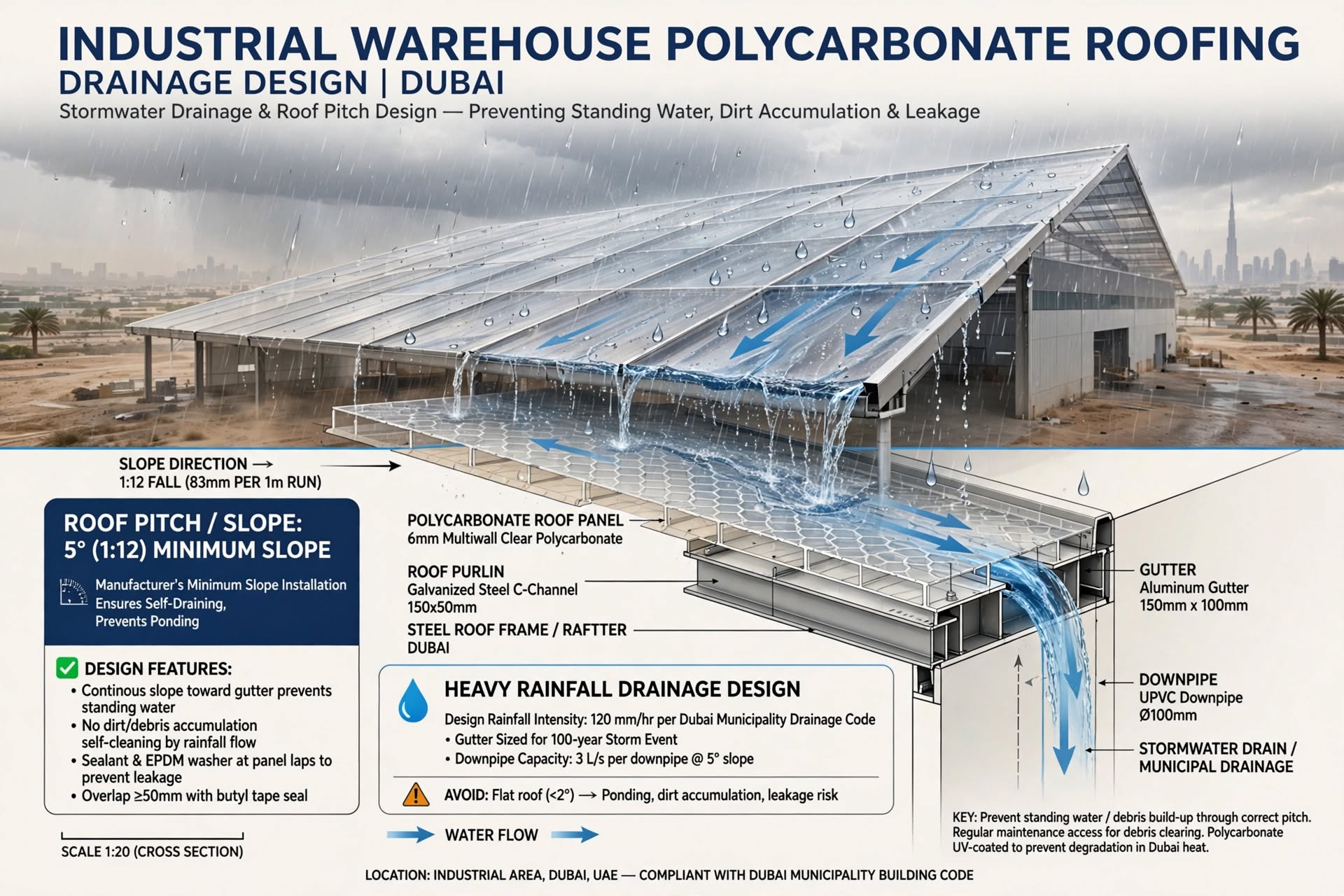
Fire performance should always be considered for industrial buildings.
Different polycarbonate products can have different fire characteristics.
The appropriate specification depends on the building type, application, local regulations, and project requirements.
Architects, consultants, and contractors should review the relevant technical documentation and applicable fire-safety requirements before selecting the material.
Do not assume that all polycarbonate sheets have identical fire performance.
Maintenance Requirements
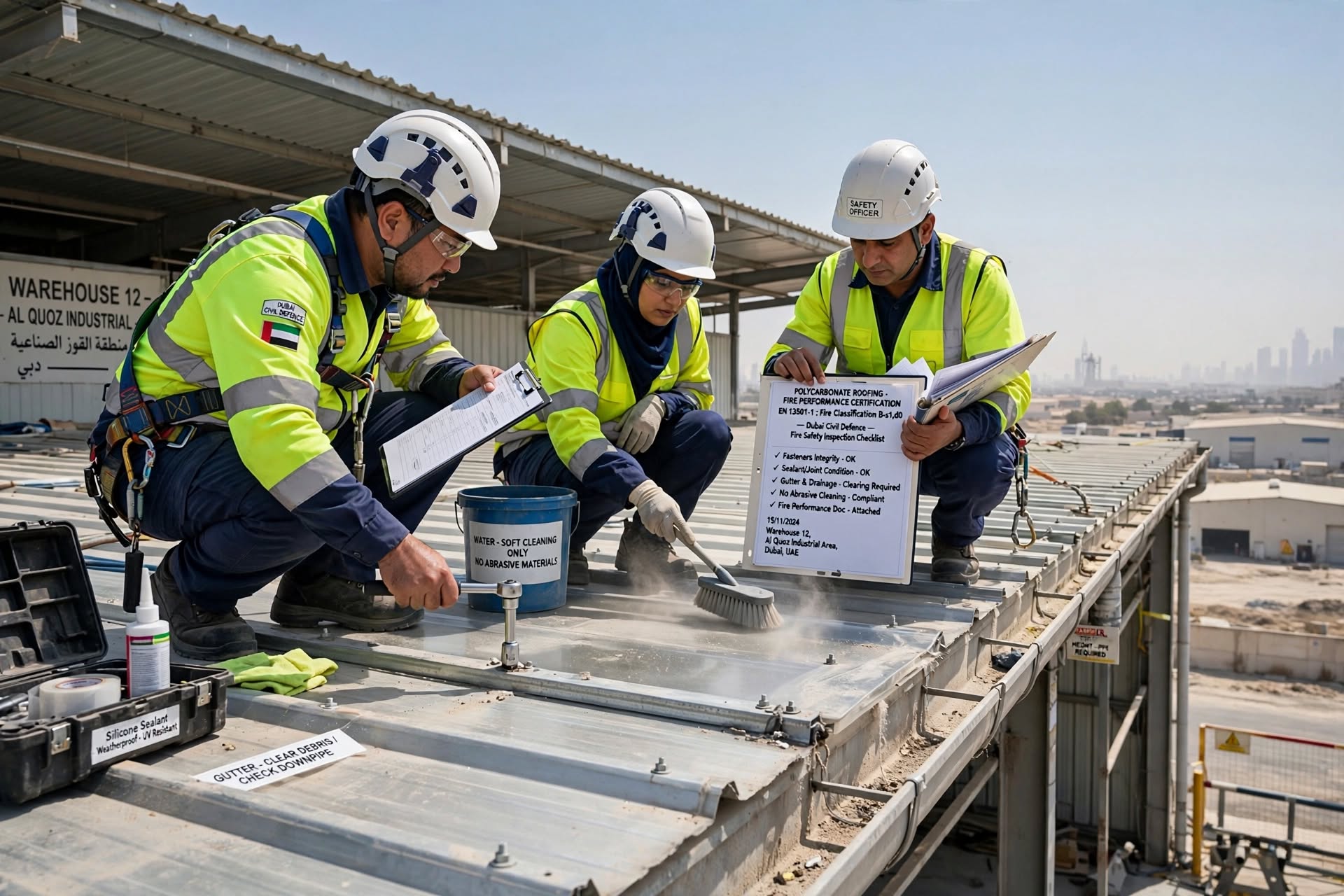
Polycarbonate roofing is relatively low-maintenance, but it still requires periodic inspection.
Maintenance can include:
Surface cleaning, checking fasteners, inspecting seals, clearing gutters, checking profiles, examining joints, and looking for damage or discoloration.
Dust can accumulate quickly in the UAE.
Regular cleaning can help maintain light transmission and overall appearance.
When cleaning polycarbonate, abrasive materials and incompatible chemicals should be avoided.
Manufacturer-approved cleaning methods should be followed.
Cleaning Industrial Polycarbonate Roofing
Industrial roofs can collect:
Dust, sand, bird deposits, construction debris, pollution, and other contaminants.
Cleaning methods should be selected according to the manufacturer’s recommendations.
Harsh solvents, abrasive brushes, and aggressive pressure washing can potentially damage the surface.
For large industrial facilities, maintenance teams should establish a safe roof-access procedure before cleaning.
Workers should never assume that a polycarbonate roof is suitable for direct foot traffic.
Combining Polycarbonate With Metal Roofing
Polycarbonate does not necessarily need to cover the entire industrial roof.
A common strategy is combining translucent polycarbonate panels with:
Insulated metal panels, standing seam roofing, corrugated steel, aluminium roofing, or other industrial roof systems.
This can provide a balance between:
Daylight + thermal performance + structural requirements + cost + durability.
The proportion of translucent roofing should be determined according to the building’s daylighting and thermal requirements.
Polycarbonate Roofing for Warehouses
Warehouses can benefit from strategically designed daylighting.
Storage buildings may have large internal spaces where artificial lighting consumes considerable energy.
Translucent roof sections can introduce daylight into aisles and working areas.
However, warehouse operators should consider the stored products.
Certain goods may be sensitive to:
UV radiation, heat, temperature changes, or excessive daylight.
In these cases, the specification may require controlled light transmission or alternative roof configurations.
Polycarbonate Roofing for Factories
Factories have more varied requirements because manufacturing processes can generate:
Heat, humidity, dust, chemicals, vibration, and airborne contaminants.
The roofing specification should therefore be compatible with the internal industrial environment.
Where chemicals or aggressive atmospheric conditions exist, product compatibility should be confirmed with the manufacturer.
The roofing system should also coordinate with ventilation, exhaust, HVAC, and smoke-control systems.
Polycarbonate Roofing for Workshops
Workshops often need good natural visibility while maintaining durable overhead protection.
Polycarbonate can provide daylight in suitable workshop applications.
However, activities involving:
Welding, sparks, high heat, solvents, or specialized industrial processes
may require specific roofing materials and fire-performance considerations.
The application should always be evaluated according to the actual workshop activity.
Industrial Roofing in Dubai and the UAE
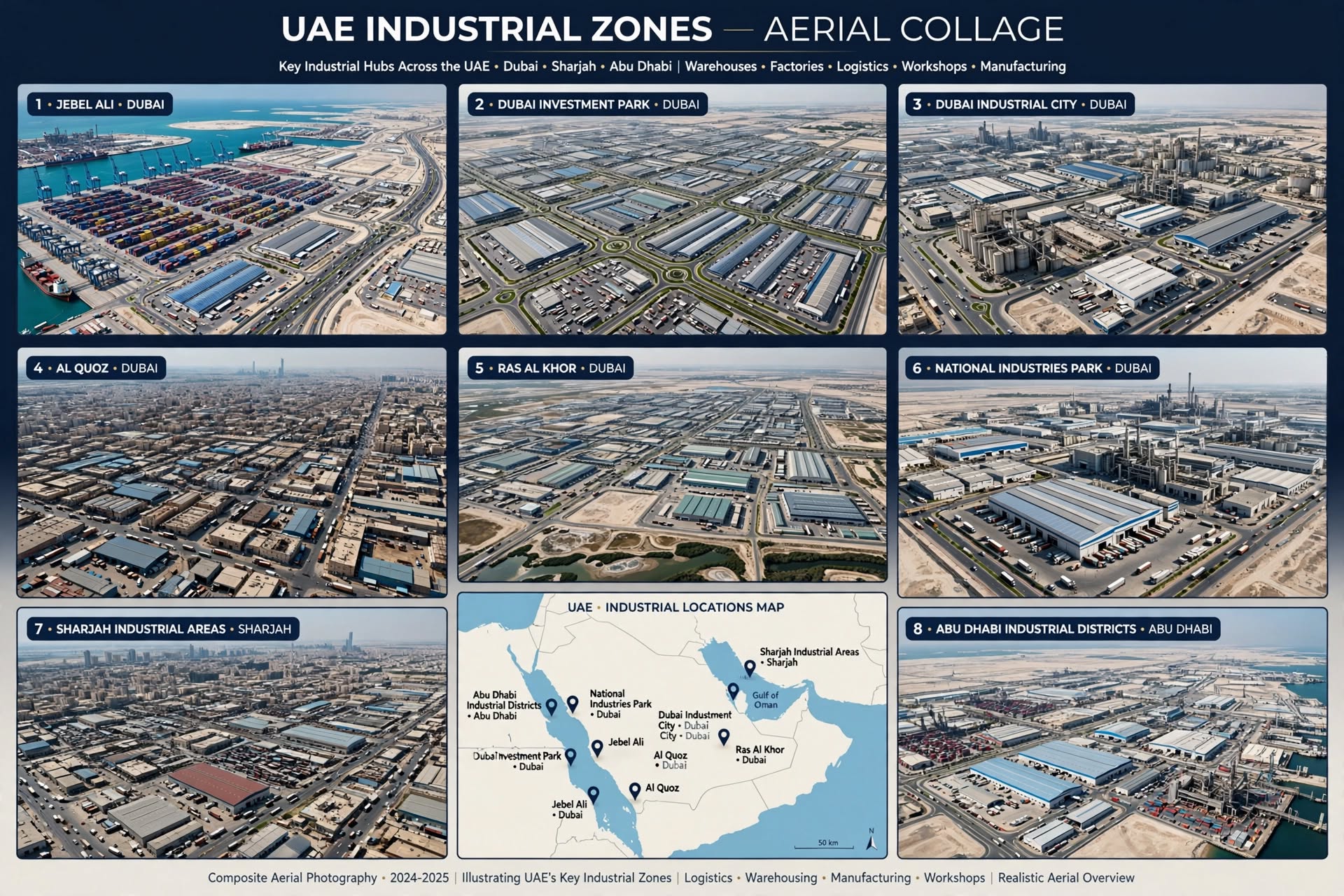
Industrial zones across Dubai and the UAE include Jebel Ali, Dubai Investment Park, Dubai Industrial City, Al Quoz, Ras Al Khor, National Industries Park, Sharjah Industrial Areas, and Abu Dhabi industrial districts.
These locations contain a wide range of warehouses, factories, logistics facilities, workshops, and commercial structures.
Roofing specifications can vary significantly between these applications.
A logistics warehouse may prioritize daylight and thermal efficiency, while a manufacturing plant may place greater emphasis on ventilation, durability, and environmental resistance.
Choosing the Right Polycarbonate Thickness
Thickness is an important specification, but thicker does not automatically mean better.
The correct thickness depends on:
Panel structure, span, support spacing, wind loading, application, thermal requirements, and manufacturer recommendations.
For example, a multiwall sheet and a solid sheet with the same nominal thickness may have very different structural and thermal characteristics.
Therefore, product structure should be evaluated alongside thickness.
Choosing the Right Supplier
Industrial roofing projects often require significant quantities of material and consistent product specifications.
A supplier should be able to provide:
Technical datasheets, product specifications, UV information, available thicknesses, colours, profiles, accessories, warranties, and application guidance.
For projects requiring polycarbonate roofing materials in Dubai, businesses can evaluate suitable Roof Polycarbonate sheets in Dubai according to the required application, thickness, structure, and finish.
The supplier’s ability to provide matching accessories can also be important because the roofing system involves more than the sheet itself.
Cost Considerations
The cost of an industrial polycarbonate roof depends on several variables.
These include:
Sheet type, thickness, quantity, colour, UV protection, profile, accessories, structural requirements, installation complexity, and project location.
A lower purchase price may not represent the lowest long-term cost.
A better evaluation considers:
Initial material cost + installation + energy implications + maintenance + expected service life + replacement requirements.
For large industrial projects, lifecycle cost analysis can provide a better basis for decision-making.
Polycarbonate Roofing and Sustainability
Polycarbonate roofing can contribute to sustainable building strategies when used appropriately.
Natural daylight can reduce artificial lighting requirements.
Lightweight construction can simplify material handling.
Long service life can reduce replacement frequency.
However, sustainability depends on the entire system.
A transparent roof that significantly increases cooling demand may not provide an overall energy advantage.
The most effective solution balances daylight, solar heat gain, insulation, HVAC efficiency, lighting controls, and building orientation.
Common Industrial Roofing Mistakes
Several installation mistakes can reduce the performance of polycarbonate roofing.
Common examples include:
Ignoring thermal expansion, using unsuitable fasteners, installing the UV-protected side incorrectly, insufficient roof slope, blocking multiwall channels, over-tightening screws, poor sealing, incorrect support spacing, and using incompatible sealants.
Another frequent mistake is treating all polycarbonate products as identical.
Different products require different installation details.
The manufacturer’s installation instructions should always be followed.
Polycarbonate Roofing vs Glass
Glass remains an important architectural material, but polycarbonate offers advantages in applications where:
Low weight, impact resistance, fabrication flexibility, and reduced handling complexity are priorities.
Polycarbonate can also be easier to work with for large industrial daylighting applications.
However, glass may offer different optical, acoustic, scratch-resistance, and long-term surface characteristics.
The choice should therefore be based on project requirements rather than assuming one material is universally superior.
Polycarbonate Roofing vs Metal Roofing
Metal roofing provides strength, durability, and excellent weather protection.
Polycarbonate provides the additional benefit of light transmission.
This is why combining the two materials can be effective.
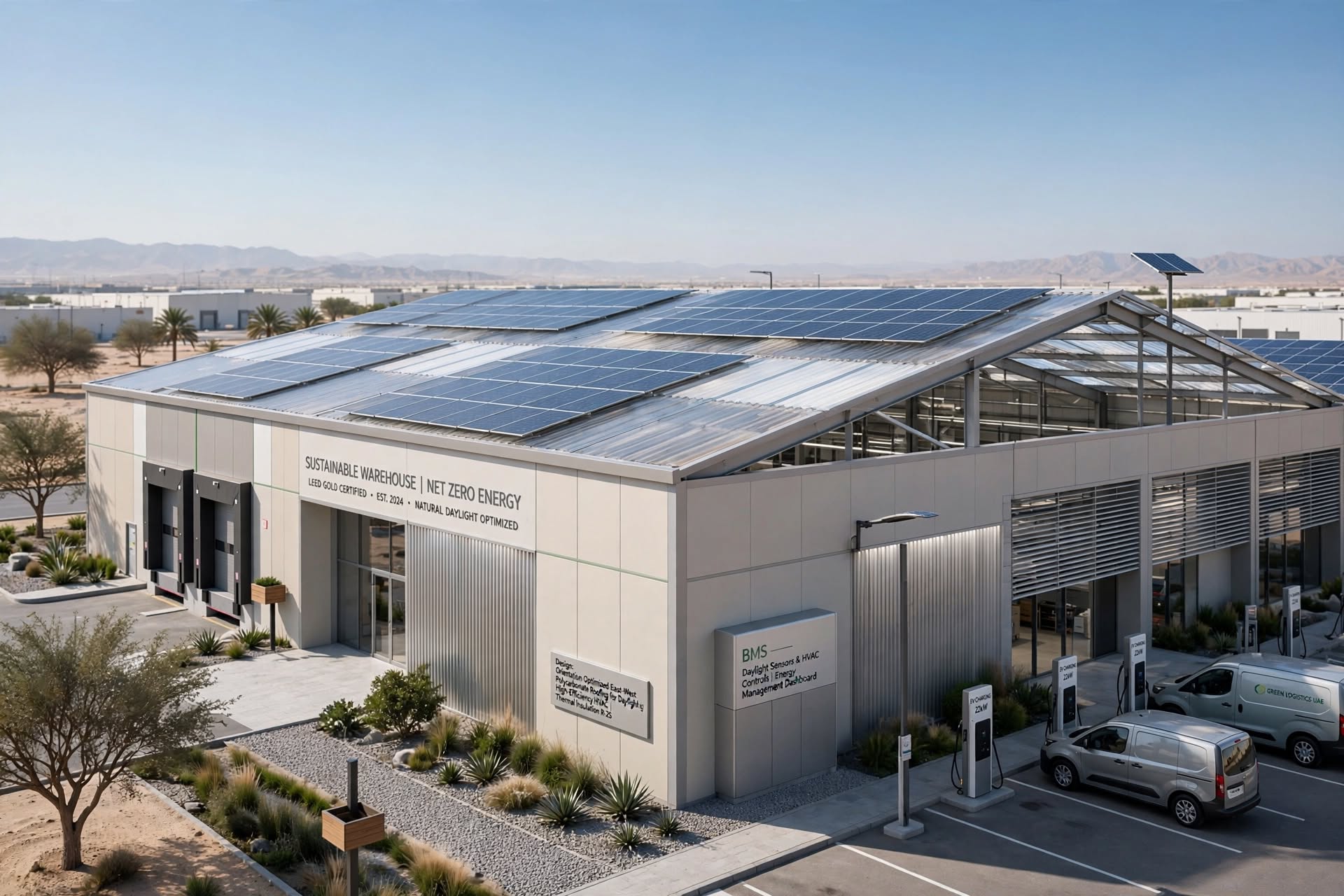
An industrial building can use metal roofing for most of the roof surface and polycarbonate sections where daylight is needed.
This hybrid strategy can provide a practical balance between protection, daylight, thermal control, and cost.
Planning an Industrial Polycarbonate Roofing Project
A successful project should begin with a clear specification.
The process may include:
Building assessment → daylight analysis → material selection → structural design → thermal assessment → roof detailing → fixing design → drainage planning → installation → inspection → maintenance planning.
For large industrial projects, the roofing contractor, architect, structural engineer, MEP consultant, and material supplier should coordinate early.
This reduces the likelihood of design conflicts during construction.
Frequently Asked Questions
Are polycarbonate sheets suitable for industrial roofs?
Yes. Polycarbonate can be suitable for industrial roofing, skylights, daylighting strips, canopies, warehouses, factories, and workshops when the correct product and installation system are selected.
Can polycarbonate roofing withstand Dubai’s heat?
Suitable UV-protected polycarbonate products can be used in outdoor applications in hot climates, but the exact product should be selected according to its temperature, UV, and environmental specifications.
Do polycarbonate sheets reduce warehouse lighting costs?
They can potentially reduce daytime artificial lighting requirements by introducing natural daylight. The actual savings depend on building design, panel placement, lighting controls, occupancy, and daylight availability.
Are multiwall polycarbonate sheets suitable for industrial roofing?
Multiwall sheets can be suitable where daylight transmission and thermal performance are important. The exact product should be selected based on structural and environmental requirements.
Does polycarbonate roofing need maintenance?
Yes. Regular inspection, cleaning, gutter maintenance, seal inspection, and checking of fasteners can help maintain long-term performance.
Can polycarbonate roofing be combined with metal roofing?
Yes. Combining translucent polycarbonate sections with metal roofing is a common strategy for introducing natural daylight into industrial buildings.
Is polycarbonate roofing completely maintenance-free?
No. Although it can require relatively little maintenance, industrial roofs still need periodic inspection and cleaning.
Conclusion
Polycarbonate sheets can be a valuable roofing solution for industrial buildings when they are correctly specified, engineered, installed, and maintained.
Their combination of lightweight construction, impact resistance, daylight transmission, UV protection, thermal options, and design flexibility makes them suitable for many warehouses, factories, workshops, logistics facilities, and commercial structures.
For Dubai and the wider UAE, successful specification requires particular attention to solar exposure, thermal expansion, UV protection, heat gain, wind loading, drainage, dust, humidity, and maintenance.
The best industrial roofing solution is not necessarily the thickest or most expensive sheet. It is the product and system that appropriately matches the building’s structural requirements, environmental conditions, daylight objectives, thermal performance, and operational needs.
When polycarbonate is combined strategically with metal roofing, insulated panels, efficient LED lighting, daylight controls, and appropriate ventilation, it can contribute to a more functional and energy-conscious industrial building.
Ultimately, industrial roofing should be viewed as a complete system rather than simply a sheet material. Panel structure, thickness, UV protection, fixing method, profiles, sealing, drainage, support spacing, thermal movement, and maintenance all contribute to long-term performance.
For industrial property owners, architects, contractors, warehouse operators, and facility managers, careful planning before installation can prevent common problems and help achieve a durable, practical, and well-performing polycarbonate roofing system.