

Blogs
Thermoforming of Plastics: A Comparison Between Polycarbonate and Acrylic

Introduction
Thermoforming is one of the most versatile plastic manufacturing processes used to produce three-dimensional components from thermoplastic sheets. It is widely used for protective covers, machine guards, lighting components, retail displays, architectural features, equipment housings, automotive parts, industrial enclosures, and custom fabricated products.
Among the many thermoplastic materials available for thermoforming, polycarbonate (PC) and acrylic (PMMA) are two of the most frequently considered options. Both can be heated and shaped into complex forms, but their performance characteristics are significantly different.
The important question is therefore not simply whether a sheet can be thermoformed. The better engineering question is: Which material provides the right combination of thermoforming behavior, optical performance, impact resistance, chemical resistance, dimensional stability, surface appearance, and cost for the intended application?
Polycarbonate is generally selected when impact resistance, toughness, and safety are priorities. Acrylic is often preferred when optical clarity, surface appearance, weatherability, and UV resistance are more important.
For manufacturers, signage companies, architects, fabricators, product designers, and industrial businesses across Dubai, Abu Dhabi, Sharjah, and the wider UAE, understanding these differences is essential for choosing the correct sheet before production begins.
What Is Thermoforming?
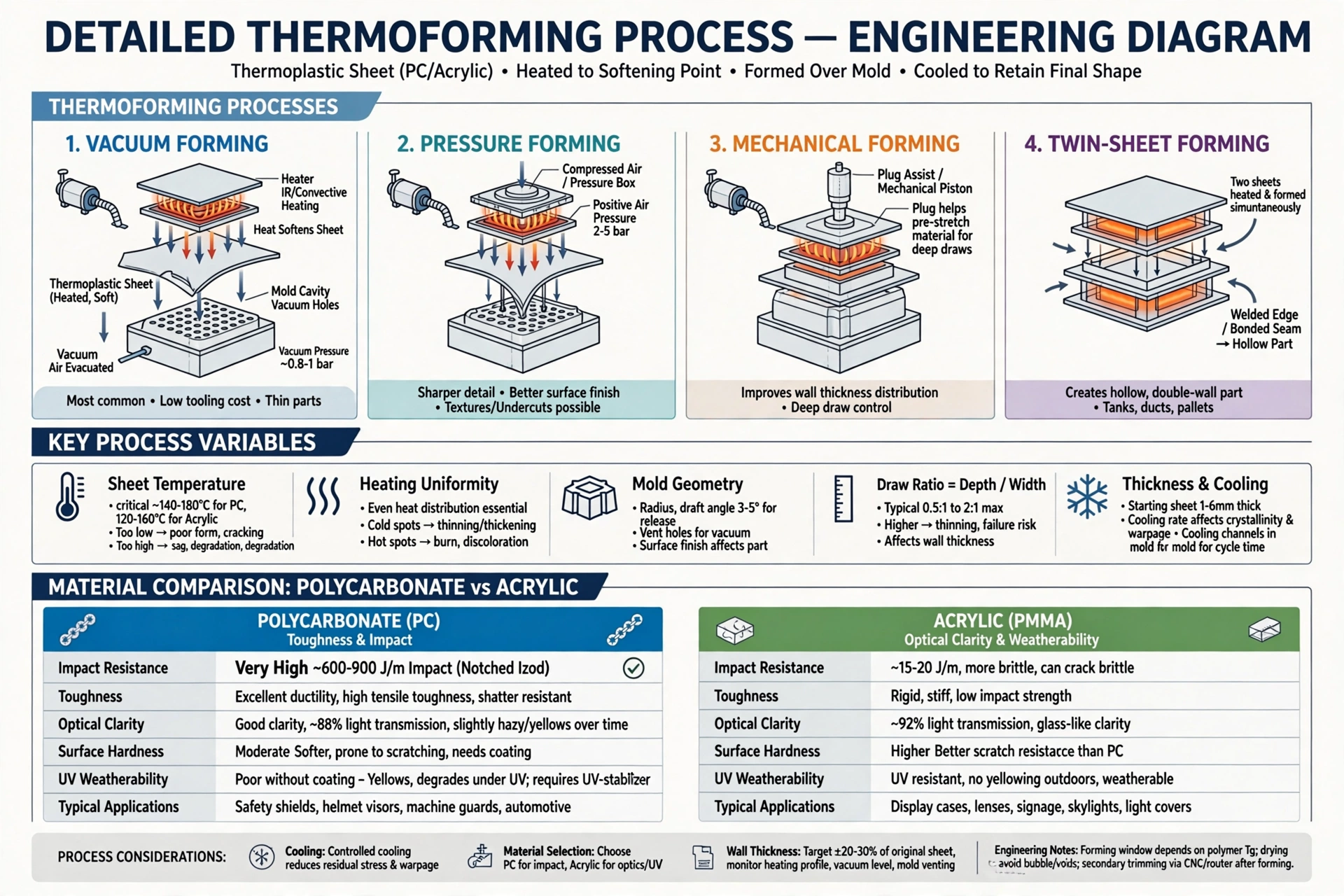
Thermoforming is a manufacturing technique in which a thermoplastic sheet is heated until it becomes sufficiently soft and then formed over or into a mold. Once the material cools, it retains the shape of the mold.
Unlike thermosetting plastics, thermoplastics can be softened through controlled heating and formed into different geometries. This makes thermoforming particularly useful for producing relatively large components without the tooling costs associated with some injection molding processes.
Common thermoforming methods include vacuum forming, pressure forming, twin-sheet forming, and mechanical forming.
During vacuum forming, the heated sheet is positioned over a mold and vacuum pressure draws the material against the mold surface. Pressure forming adds compressed air to improve definition and reproduce finer details.
The quality of the finished component depends on several variables, including sheet temperature, heating uniformity, mold geometry, draw ratio, material thickness, cooling rate, vacuum or air pressure, and the thermoforming characteristics of the polymer.
Polycarbonate vs Acrylic: What Is the Main Difference?
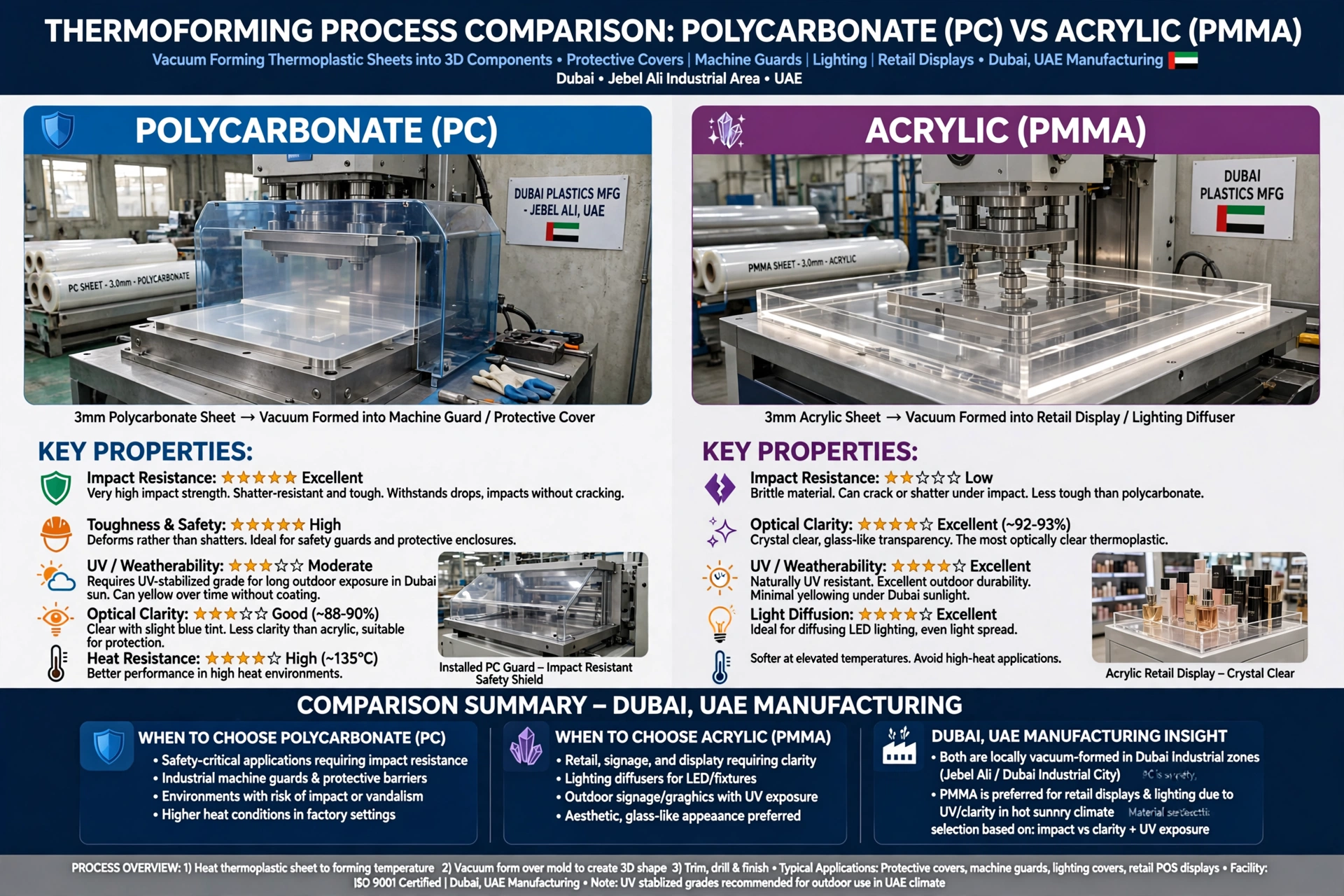
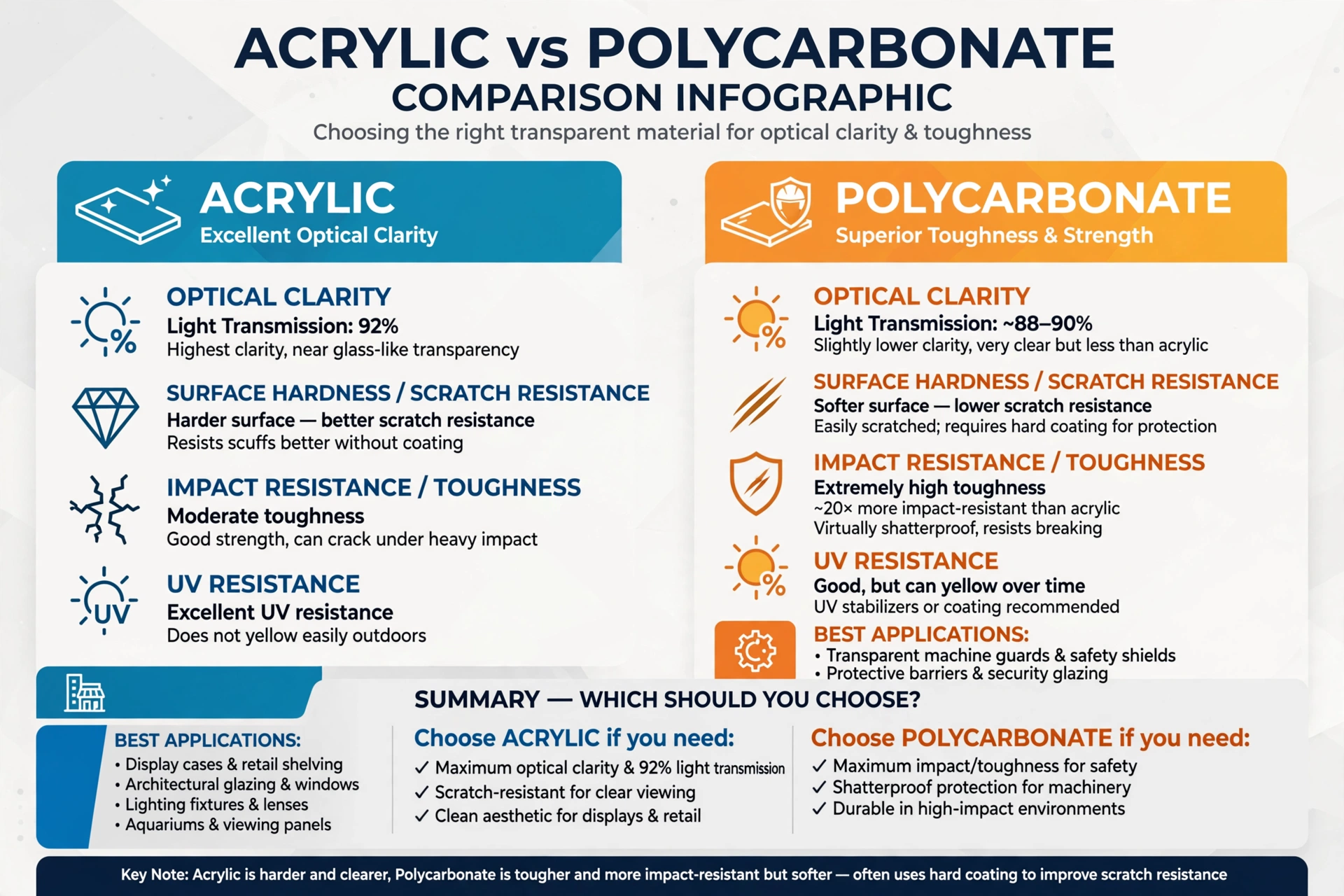
The fundamental difference between polycarbonate and acrylic is their balance of toughness versus optical and surface performance.
Polycarbonate is an engineering thermoplastic recognized for exceptional impact resistance, toughness, and resistance to mechanical stress. It is frequently used where the formed component must withstand impacts or demanding operating conditions.
Acrylic, chemically known as polymethyl methacrylate (PMMA), is a transparent thermoplastic valued for excellent optical clarity, surface hardness, UV resistance, weatherability, and attractive appearance.
Both materials can be produced in transparent, translucent, opaque, colored, textured, and specialty grades. However, their behavior during heating and forming is different enough that processing parameters must be adjusted according to the material.
For a fabricator, substituting one material for another without reviewing the engineering requirements can result in cracking, distortion, optical defects, inadequate impact resistance, or premature product failure.
Difference in Thermoforming Temperature and Processing
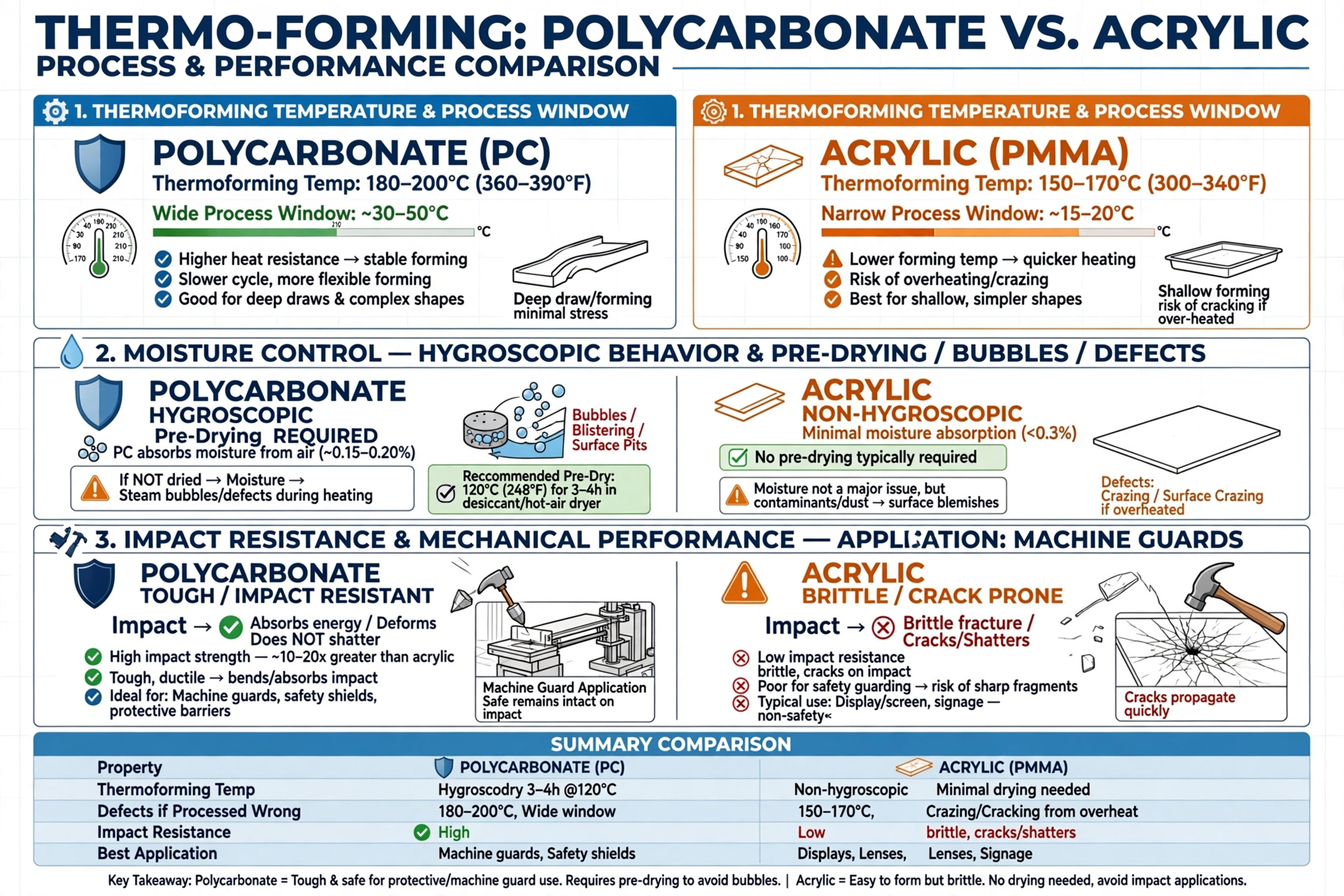
One of the most important practical considerations is the temperature window used during thermoforming.
Polycarbonate requires controlled heating to reach the appropriate forming condition. Moisture control is particularly important because polycarbonate is hygroscopic and can absorb moisture from the atmosphere. If a wet sheet is heated too quickly, moisture can generate bubbles, surface defects, or reduced optical quality.
Proper pre-drying is therefore an important part of professional polycarbonate thermoforming.
Acrylic also requires controlled heating, but its forming behavior is different. Excessive heating can affect surface appearance, cause unwanted deformation, or introduce residual stresses.
Professional fabricators should always follow the technical data provided for the specific sheet grade rather than relying on a generic temperature value.
The exact forming temperature depends on sheet thickness, grade, mold design, heating equipment, and forming method.
Difference in Impact Resistance
Impact resistance is one of the clearest advantages of polycarbonate.
Polycarbonate is substantially tougher than acrylic and is capable of absorbing significant mechanical impact without shattering. This makes it suitable for machine guards, protective screens, safety glazing components, industrial covers, sports equipment, and applications where accidental impact is possible.
Acrylic is comparatively more brittle. Although it provides excellent rigidity and surface appearance, it can crack or fracture under severe impact more readily than polycarbonate.
This distinction becomes particularly important for products installed in public areas, manufacturing facilities, transportation environments, and industrial workplaces.
If the component needs to withstand repeated mechanical impact, polycarbonate is generally the safer engineering choice.
Difference in Optical Clarity
Acrylic has a major advantage in optical applications because of its excellent light transmission and visual clarity.
High-quality acrylic can provide extremely clear transparent surfaces with excellent light transmission and low visual distortion. This makes it popular for display cases, architectural glazing, lighting components, retail displays, aquariums, decorative panels, and transparent covers.
Polycarbonate can also provide excellent optical performance, but its primary engineering advantage is toughness rather than maximum optical clarity.
For applications where appearance is the dominant requirement, acrylic can therefore be highly attractive.
For applications where transparency must be combined with exceptional impact resistance, polycarbonate offers a stronger overall solution.
Difference in Surface Hardness and Scratch Resistance
Acrylic generally has a harder surface than standard polycarbonate. This gives acrylic an advantage in applications where the finished surface will frequently be touched, cleaned, or viewed at close range.
Polycarbonate is comparatively more susceptible to surface scratching unless it has a specialized hard coating.
For this reason, polycarbonate products used in demanding environments may benefit from abrasion-resistant or hard-coated grades.
The choice becomes particularly important for transparent machine guards, display panels, protective screens, and architectural components where scratches can affect appearance.
Manufacturers should therefore consider not only initial material performance but also the expected cleaning method and environmental exposure.
Difference in UV Resistance and Outdoor Performance
Outdoor exposure is a major consideration in the UAE.
Acrylic naturally provides excellent resistance to ultraviolet radiation and weathering. High-quality outdoor acrylic can retain its optical properties and appearance for extended periods when appropriately specified.
Polycarbonate can also be used outdoors, but UV protection depends heavily on the grade and surface treatment. UV-protected polycarbonate sheets are available and can provide significantly improved weathering performance.
For outdoor signage, architectural features, skylights, illuminated displays, and exposed components, manufacturers should confirm whether the selected polycarbonate sheet includes UV protection.
Dubai’s intense solar radiation makes this specification particularly important. A material designed for indoor use should not automatically be assumed to be suitable for prolonged outdoor exposure.
Difference in Chemical Resistance
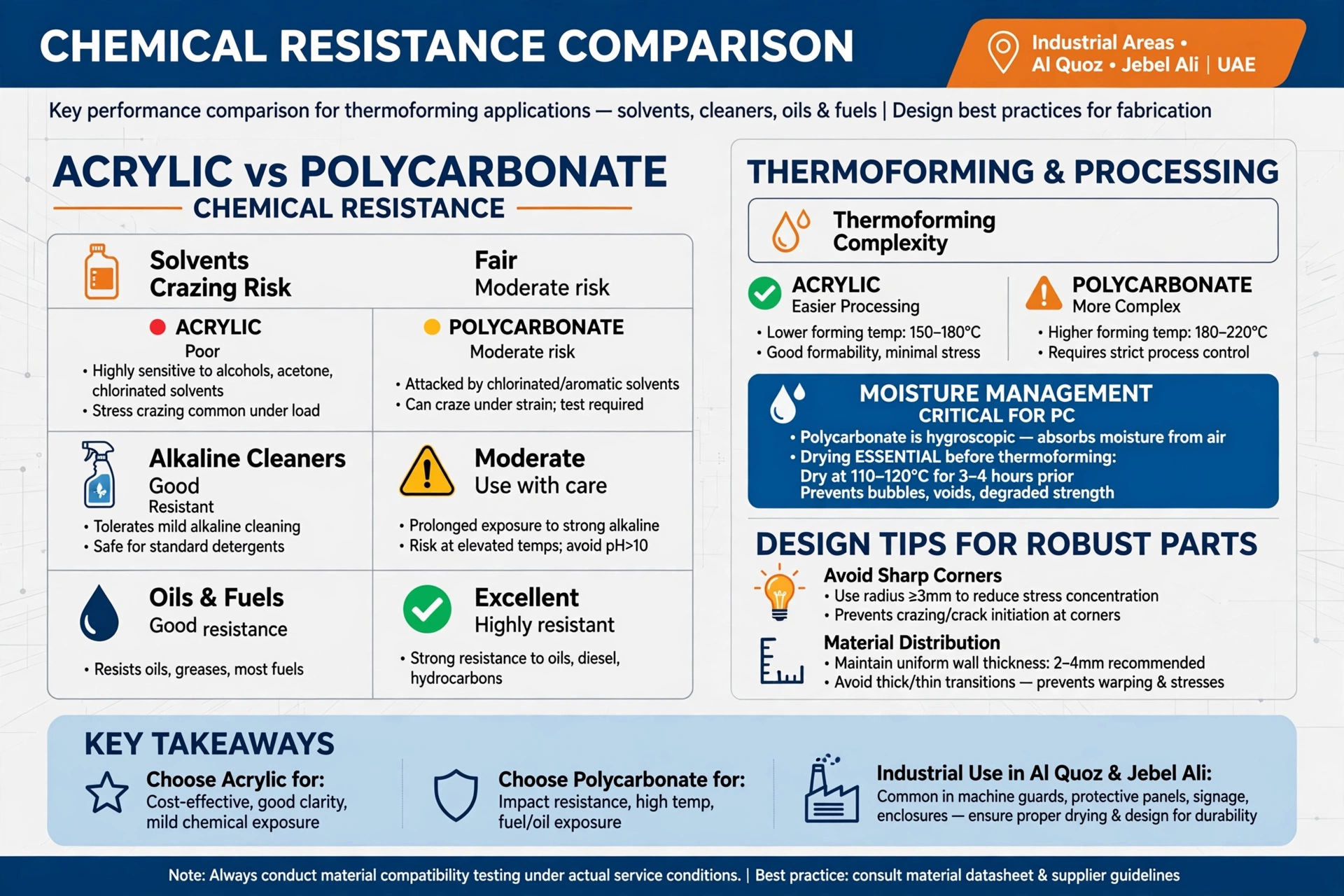
Acrylic generally provides good resistance to many environmental conditions and common chemicals, but certain solvents can cause crazing or surface damage.
Polycarbonate also has chemical resistance limitations and can be vulnerable to certain solvents, alkaline cleaners, and aggressive chemicals.
The correct material should therefore be selected according to the actual chemical environment.
Industrial facilities in Al Quoz, Jebel Ali, Abu Dhabi industrial areas, and Sharjah may expose fabricated plastic components to oils, cleaning agents, solvents, fuels, or process chemicals.
In these environments, the chemical compatibility of the specific sheet grade should be verified before production.
Difference in Thermoforming Complexity
Both materials can be thermoformed, but their processing requirements differ.
Polycarbonate provides excellent toughness during forming and can produce durable complex components when properly processed. However, moisture management is critical. Drying the sheet before forming is often an essential production step.
Acrylic can produce highly attractive formed components with excellent optical characteristics, but designers must consider material thickness, mold geometry, heating uniformity, and residual stress.
Sharp corners should generally be avoided because they can create localized thinning and stress concentration.
Good thermoforming design distributes material evenly throughout the finished component rather than forcing the sheet to stretch excessively in one area.
Difference in Material Thickness After Thermoforming
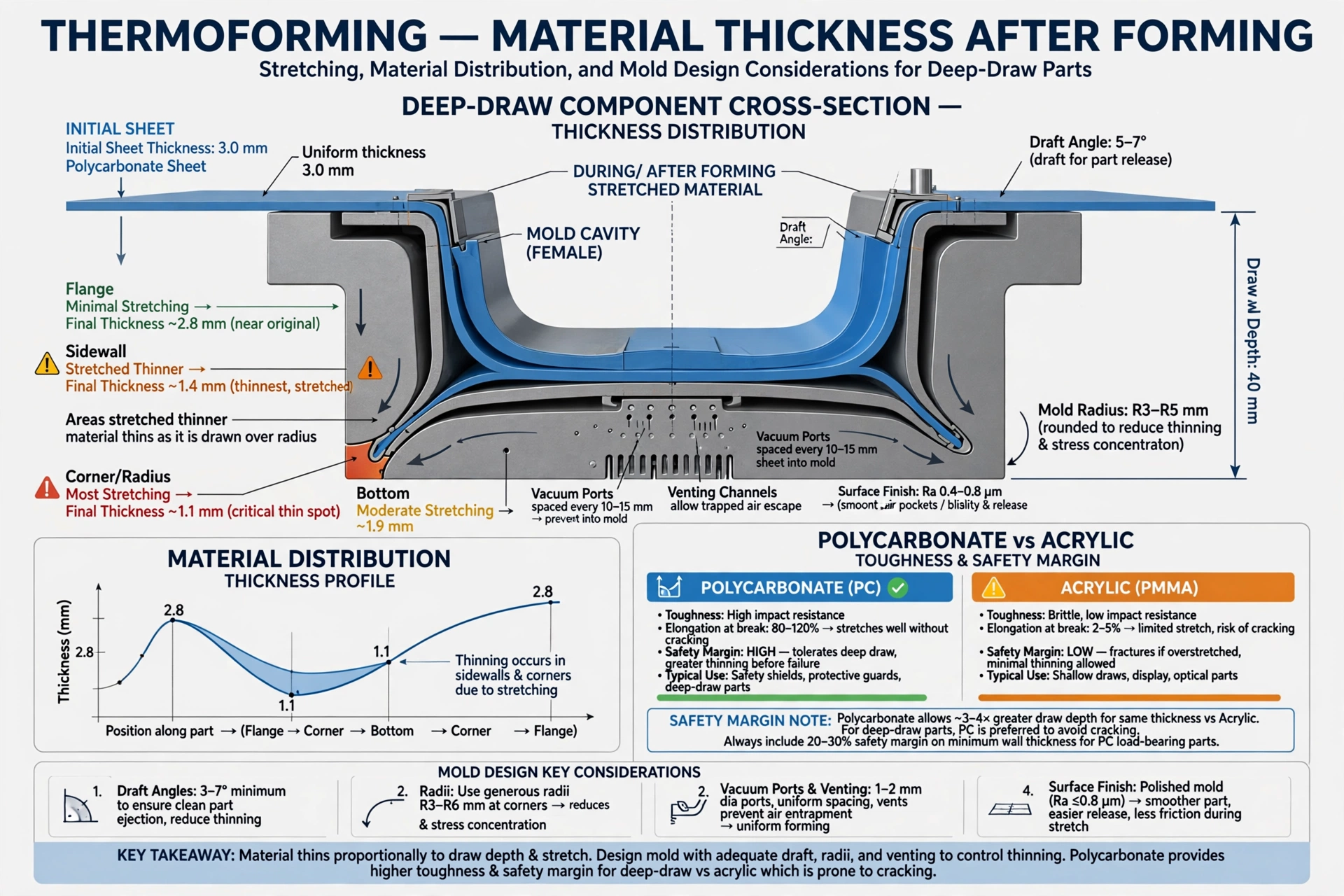
Thermoforming stretches the original sheet, meaning the final component does not necessarily have uniform wall thickness.
Areas experiencing greater stretching become thinner than areas close to the original sheet plane.
This is particularly important when designing deep-draw components.
Engineers should consider:
Initial sheet thickness → draw depth → mold geometry → material distribution → final wall thickness
A component that appears adequately thick before forming may become significantly thinner in its most stretched areas.
Polycarbonate’s toughness provides additional safety margin in some applications, but material distribution still needs to be considered carefully.
Acrylic also requires careful thickness selection because excessive thinning can affect structural performance, optical appearance, and resistance to cracking.
Difference in Mold Design Requirements
Mold design has a direct influence on thermoformed plastic quality.
Successful molds require appropriate draft angles, radii, vacuum ports, surface finishes, and venting. Sharp corners can prevent uniform material distribution and increase the risk of stress concentrations.
For vacuum forming, the mold must allow air to escape efficiently as the heated sheet is pulled against the surface.
Pressure forming can provide greater detail reproduction and sharper features than basic vacuum forming, making it useful for applications requiring textured surfaces, logos, ribs, or fine geometry.
The mold material itself may be aluminum, epoxy, wood, composite, or another suitable tooling material depending on production volume, temperature requirements, and dimensional accuracy.
Difference in Stress and Crazing
Residual stress is an important consideration when thermoforming transparent plastics.
Improper heating, uneven cooling, excessive stretching, or incorrect forming parameters can introduce internal stresses into the finished component.
Acrylic is particularly sensitive to stress-related crazing when exposed to certain chemicals. Fine cracks may develop over time if residual stress combines with chemical exposure.
Polycarbonate can also develop stress-related defects under unsuitable processing or chemical conditions.
Professional thermoforming therefore requires controlled heating and cooling rather than simply heating a sheet until it becomes soft.
Polycarbonate vs Acrylic for Lighting Applications
Lighting applications often require a balance between optical transmission, heat resistance, impact protection, and appearance.
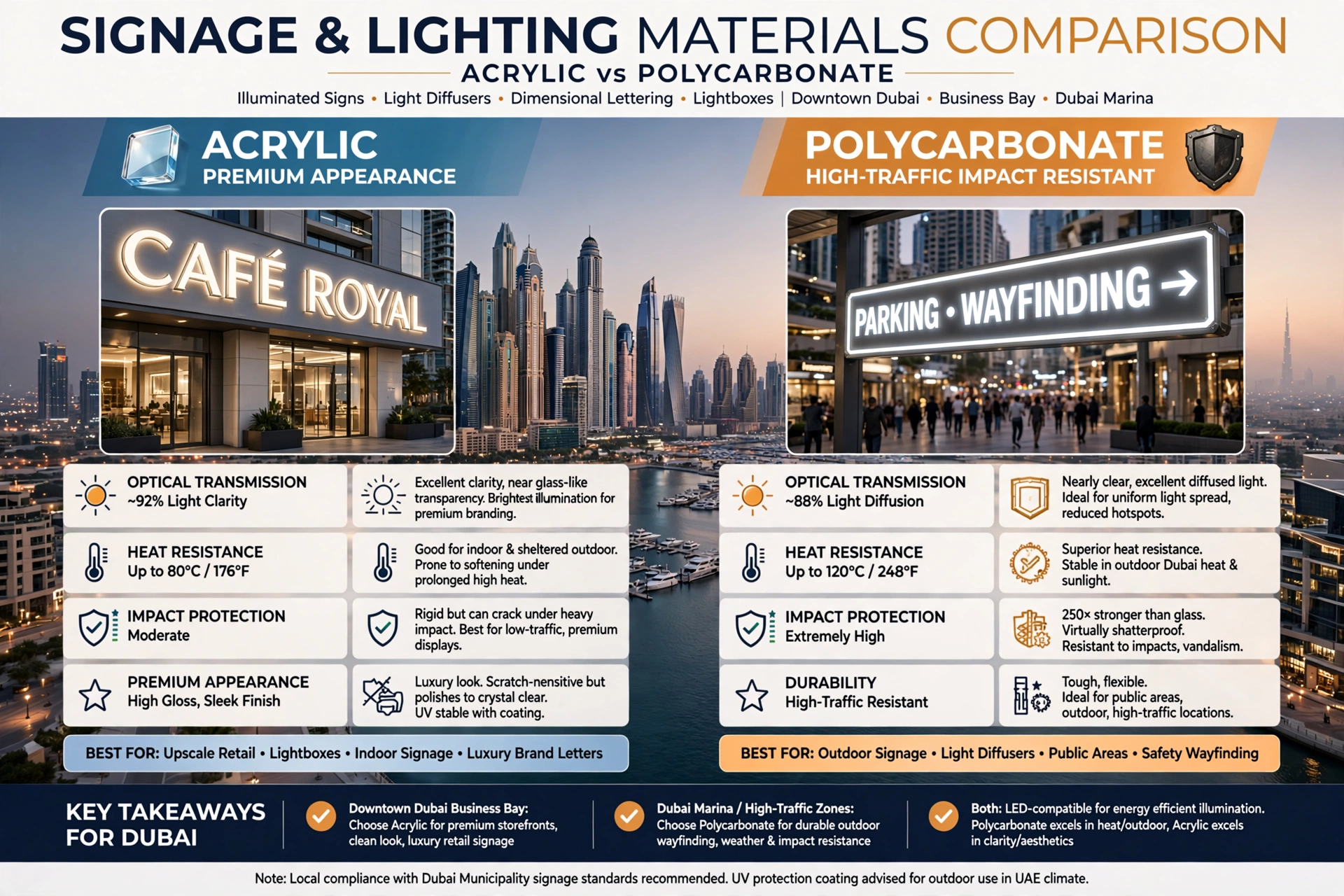
Acrylic is widely used for light diffusers, illuminated signage, architectural lighting components, and decorative fixtures because of its excellent optical properties.
Polycarbonate can be advantageous where the lighting component needs increased impact resistance or mechanical durability.
In commercial developments around Downtown Dubai, Business Bay, Dubai Marina, and Abu Dhabi, fabricated acrylic and polycarbonate components can be found in illuminated signs, decorative installations, retail displays, and architectural features.
The correct choice depends on the light source, operating temperature, UV exposure, required transparency, and mechanical requirements.
Polycarbonate vs Acrylic for Signage
Both materials are extensively used in signage, but they serve different purposes.
Acrylic is particularly popular for premium illuminated signs, dimensional lettering, display panels, lightboxes, and decorative branding because of its excellent appearance and optical clarity.
Polycarbonate is valuable where signage requires greater impact resistance, especially in high-traffic locations or exposed environments.
Acrylic can also be fabricated, polished, routed, drilled, thermoformed, and bonded into complex signage structures.
For signage companies in Dubai and Abu Dhabi, the choice should consider whether the sign is indoor or outdoor, illuminated or non-illuminated, exposed to physical contact, and expected to remain installed for several years.
Difference in Fabrication and Machining
Thermoforming is only one stage of plastic fabrication. Both materials can be cut, drilled, routed, polished, bonded, and fabricated using suitable equipment.
Acrylic can produce excellent polished edges and is widely used where edge appearance is part of the finished design.
Polycarbonate is easier to justify where impact resistance is important, although machining parameters must be carefully controlled to prevent stress and surface damage.
CNC routing allows manufacturers to create accurate shapes, mounting holes, slots, and decorative patterns before or after forming depending on the design.
Fabricators should avoid excessive mechanical stress during machining, especially near formed areas.
Difference in Cost
Material cost varies depending on sheet thickness, color, transparency, coating, manufacturer, grade, and quantity.
In general, acrylic is often more economical than engineering-grade polycarbonate for comparable transparent applications. Polycarbonate’s additional impact performance and engineering characteristics can justify its higher cost when those properties are genuinely required.
The cheapest material is not necessarily the lowest-cost solution.
If an acrylic component repeatedly breaks and requires replacement, the total lifecycle cost may exceed that of a more expensive polycarbonate component.
Conversely, specifying polycarbonate for a simple indoor decorative display may provide little practical benefit while increasing material costs.
The correct approach is to evaluate initial material cost + fabrication cost + installation cost + expected service life + maintenance + replacement risk.
Polycarbonate vs Acrylic: Practical Comparison
| Property | Polycarbonate | Acrylic |
|---|---|---|
| Impact resistance | Excellent | Moderate |
| Optical clarity | Excellent | Excellent to exceptional |
| Surface hardness | Moderate | Better |
| Scratch resistance | Moderate without coating | Better |
| UV resistance | Grade dependent | Excellent |
| Outdoor weathering | Good to excellent with suitable grade | Excellent |
| Thermoforming | Excellent | Excellent |
| Chemical resistance | Moderate | Moderate to good |
| Weight | Lightweight | Lightweight |
| Rigidity | Excellent | Excellent |
| Complex forming | Excellent | Excellent |
| Cost | Generally higher | Generally lower |
| Safety applications | Excellent | Limited compared with PC |
| Premium visual applications | Excellent | Excellent |
| Protective applications | Excellent | Less suitable |
How UAE Businesses Should Choose Between the Two
For projects in Dubai, Abu Dhabi, Sharjah, Ajman, Ras Al Khaimah, and other UAE locations, material selection should begin with the application’s actual requirements.
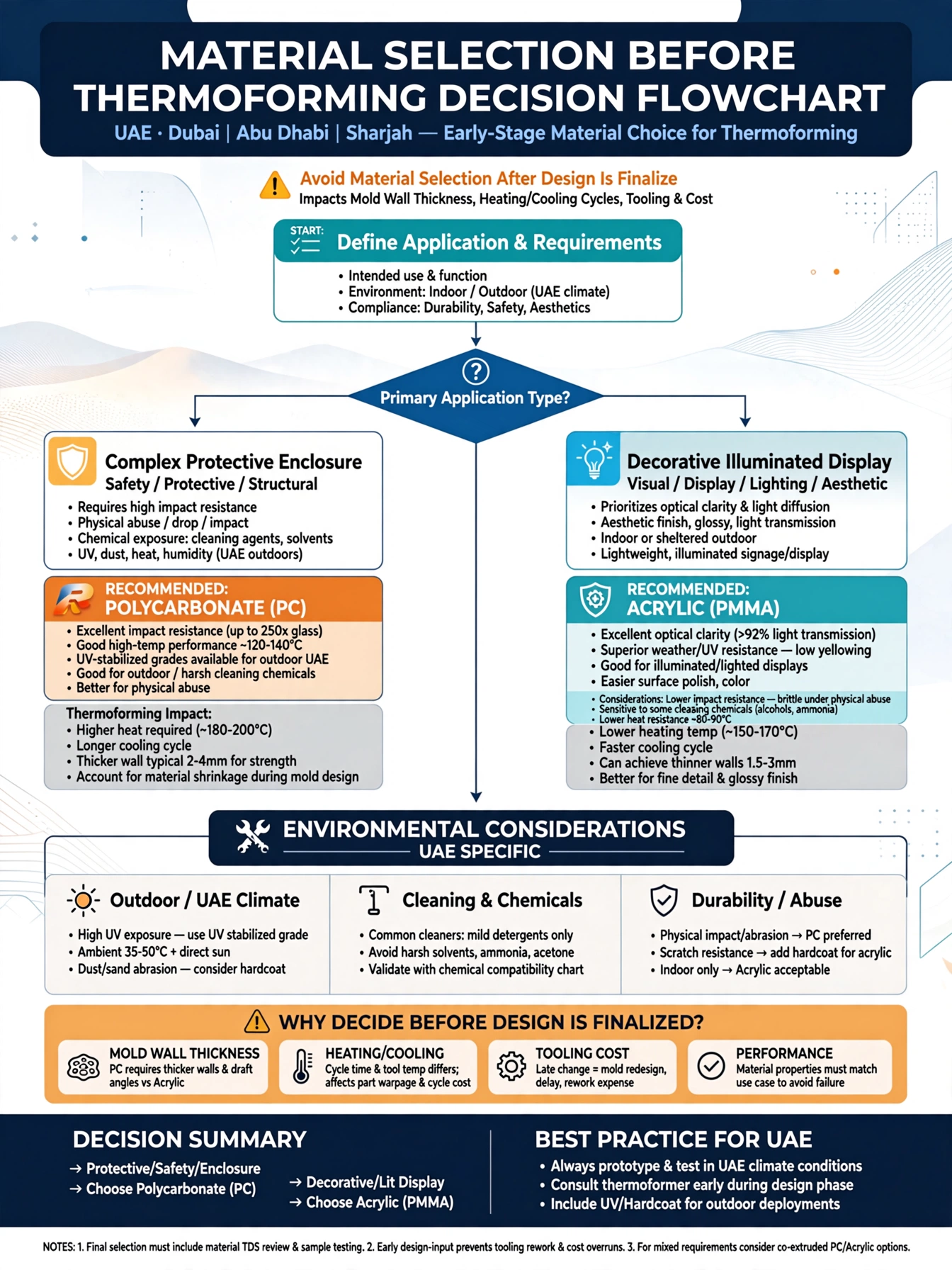
If impact resistance and mechanical toughness are the primary requirements, polycarbonate should be strongly considered.
If optical clarity, surface appearance, UV resistance, and premium aesthetics are the main priorities, acrylic can be the more appropriate material.
If the component will be thermoformed into a complex protective enclosure, polycarbonate may provide greater safety.
If the component is a decorative illuminated display with high visual requirements, acrylic may provide the desired appearance at a lower material cost.
The decision should also consider whether the application is indoor or outdoor, how the component will be cleaned, whether it will encounter chemicals, and how much physical abuse it is expected to withstand.
Why Material Selection Should Happen Before Thermoforming
One of the most expensive mistakes in plastic fabrication is selecting the material after the design has already been finalized.
Material characteristics affect mold design, wall thickness, heating requirements, forming depth, cooling behavior, machining, joining, and final performance.
An experienced fabricator evaluates these factors during the design stage.
For example, a deep-drawn component may require a thicker starting sheet because of material thinning during forming. A transparent component may require additional attention to heating uniformity to avoid optical distortion. An outdoor component may require UV-resistant material or protective coatings.
Selecting the right thermoplastic before tooling begins reduces production problems and helps ensure the finished component meets its intended performance requirements.
Choosing the Right Sheets for Thermoforming Projects
When sourcing transparent and rigid thermoplastic materials, businesses should evaluate sheet thickness, dimensions, surface finish, color, optical characteristics, UV protection, impact requirements, and thermoforming compatibility.
For projects requiring both materials for comparison or different components within the same project, businesses can review Polycarbonate sheets and Acrylic sheets to determine which material best matches their fabrication requirements.
The correct sheet specification should always be verified against the manufacturer’s technical data, particularly for demanding applications involving outdoor exposure, safety requirements, chemical contact, or significant mechanical loads.
Common Thermoforming Mistakes to Avoid
Poor heating is one of the most common causes of thermoforming defects. If a sheet is heated unevenly, some areas may become too soft while others remain too rigid, producing inconsistent material distribution.
Insufficient drying can cause moisture-related defects in polycarbonate. Excessive forming depth can produce severe wall thinning. Sharp mold corners can create stress concentrations. Inadequate venting can prevent the material from accurately reproducing mold details.
Cooling the component too quickly or unevenly can also introduce distortion.
Another common mistake is selecting sheet thickness based solely on the original component dimensions rather than calculating how much the sheet will stretch during forming.
Professional thermoforming requires control of the entire process from material storage and drying through heating, forming, cooling, trimming, and final inspection.
Final Verdict: Polycarbonate or Acrylic?
There is no universal winner between polycarbonate and acrylic. Both are highly capable thermoplastics, but they solve different engineering problems.
Choose polycarbonate when impact resistance, toughness, safety, and mechanical durability are the priority.
Choose acrylic when optical clarity, surface appearance, UV resistance, weatherability, and aesthetic performance are more important.
For thermoforming, both materials can produce excellent three-dimensional components when the process is properly controlled. The final result depends on material grade, sheet thickness, mold design, heating uniformity, forming method, cooling, and fabrication quality.
For UAE applications, environmental exposure should also be considered carefully. The intense sunlight and high temperatures experienced in Dubai, Abu Dhabi, Sharjah, and other Emirates make UV stability, thermal behavior, and material durability particularly important.
The most reliable approach is to select the material based on performance requirements rather than price alone. When engineers, designers, fabricators, and signage professionals evaluate impact resistance, optical performance, forming depth, outdoor exposure, chemical compatibility, surface durability, and lifecycle cost together, they can select the thermoplastic that provides the best overall value for the finished product.
That engineering-led approach produces better thermoformed components, reduces material failures, and ensures that polycarbonate and acrylic are each used where their specific strengths provide the greatest practical advantage.