

Blogs
How to Showcase Food Machinery at an Exhibition


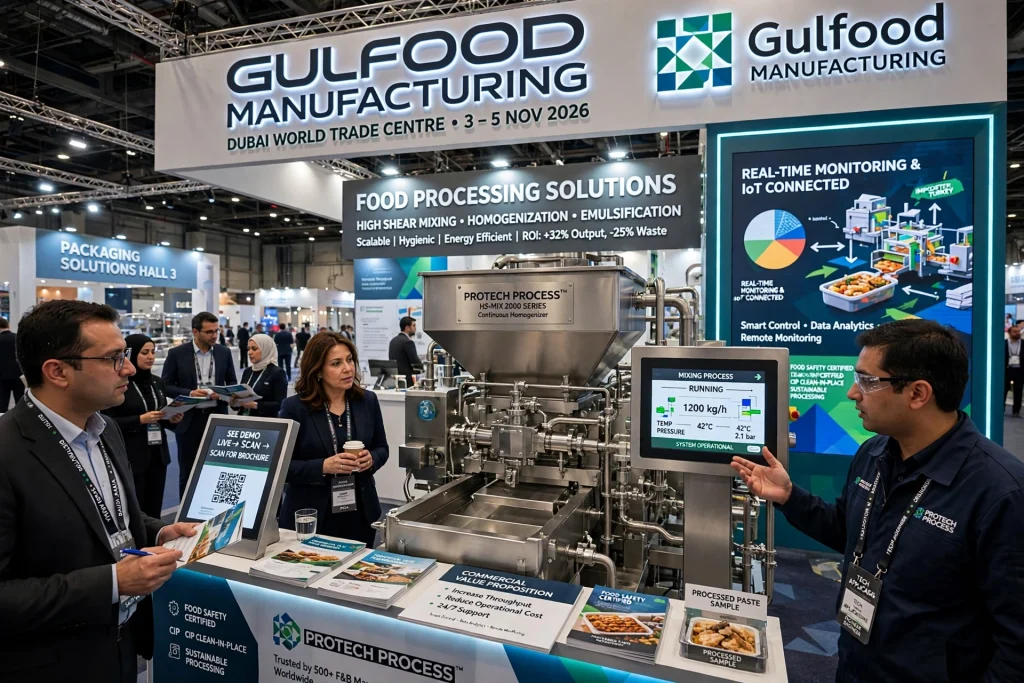
Food machinery is often difficult to demonstrate at an exhibition because large equipment can be technical, heavy and visually complex. A machine may have excellent engineering, automation and production capabilities, but visitors need to understand those advantages quickly while walking through a busy exhibition hall.
A successful food machinery exhibition stand should therefore do more than display equipment. It should demonstrate what the machine does, explain its commercial value and give visitors a clear reason to start a conversation with the exhibitor. The right combination of machinery demonstrations, product information, lighting, graphics, video and interactive displays can turn a large machine into an engaging exhibition experience.
This is particularly important at major UAE trade events such as Gulfood Manufacturing and other food processing, packaging and hospitality exhibitions held at Dubai World Trade Centre. International buyers, distributors, manufacturers, food producers and hospitality professionals often compare several suppliers during the same event, making clear presentation essential.
Start With the Main Purpose of the Machine
Before designing the exhibition stand, identify what the food machinery actually solves. Visitors should not have to study a technical specification sheet to understand its main application.
For example, a filling machine may help increase production speed, improve portion consistency or reduce manual labour. A packaging machine may improve sealing consistency and support higher production volumes. A commercial bakery machine may reduce preparation time while maintaining consistent results.
The exhibition presentation should make this primary benefit immediately visible. The machine itself should become the central demonstration rather than simply being positioned as a large object inside the booth.
Choose the Right Food Machinery to Display
Large machinery can consume a significant amount of exhibition floor space. Exhibitors should therefore select equipment based on its ability to attract the right audience rather than trying to display their entire product range.
A manufacturer may have dozens of machines but only a few may be relevant to the visitors expected at a particular event. A food-processing exhibition may justify displaying production equipment, while a hospitality-focused event may require smaller commercial kitchen or food-preparation machinery.
The selected equipment should represent the company’s strongest capabilities and create a natural starting point for sales conversations.
Make the Machine the Visual Focal Point
Visitors should be able to identify the main machine from several metres away. Avoid hiding important equipment behind excessive graphics, counters or decorative structures.
The exhibition stand layout should provide sufficient viewing space around the machine. Visitors need to see its operating components, controls, material flow and finished output where applicable.
Large machinery can naturally become the hero element of a booth when supported by clear branding and appropriate lighting. The stand should frame the equipment rather than compete with it.
Use Demonstrations Instead of Static Displays
A static machine can attract attention, but a working demonstration can communicate its value much faster. Movement helps visitors understand how the equipment operates and gives sales teams a natural opportunity to explain the process.
Where the venue permits operation, exhibitors can demonstrate a complete or partial production cycle. Depending on the machinery, this may involve filling, mixing, cutting, sealing, labelling, weighing, conveying or packaging.
If live operation is not practical because of safety, hygiene, noise or venue restrictions, a recorded demonstration can provide a useful alternative.
Show the Production Process
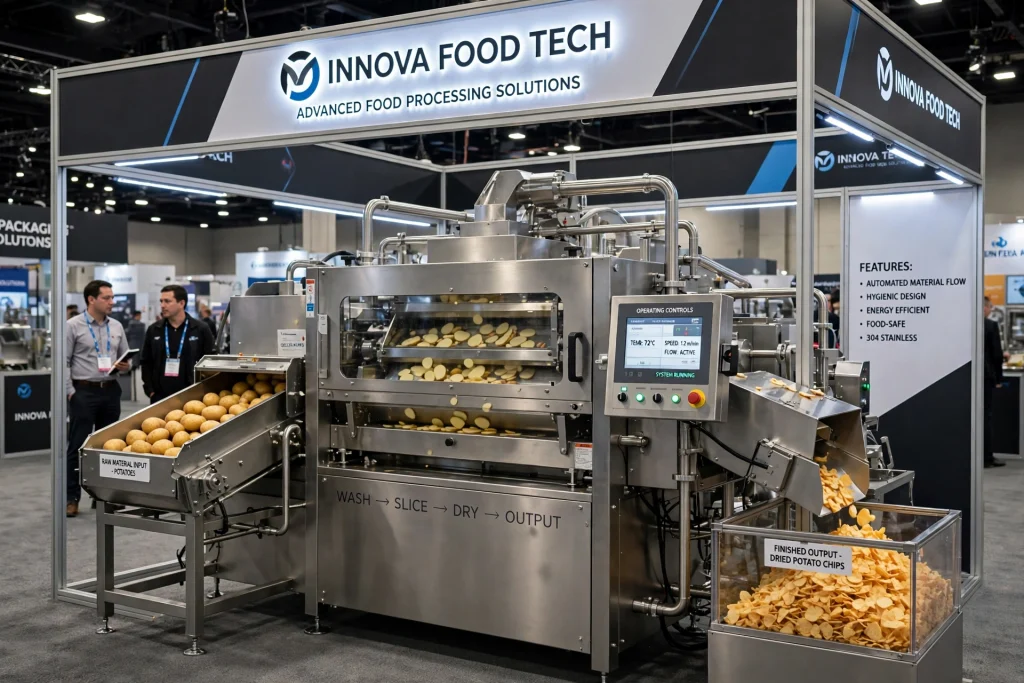
Visitors often want to understand where the machine fits within their existing production line. A demonstration should therefore explain the process before and after the equipment.
For example, a packaging machine can be presented alongside the product input, packaging material and finished package. A conveyor system can be shown as part of a wider production flow rather than as an isolated component.
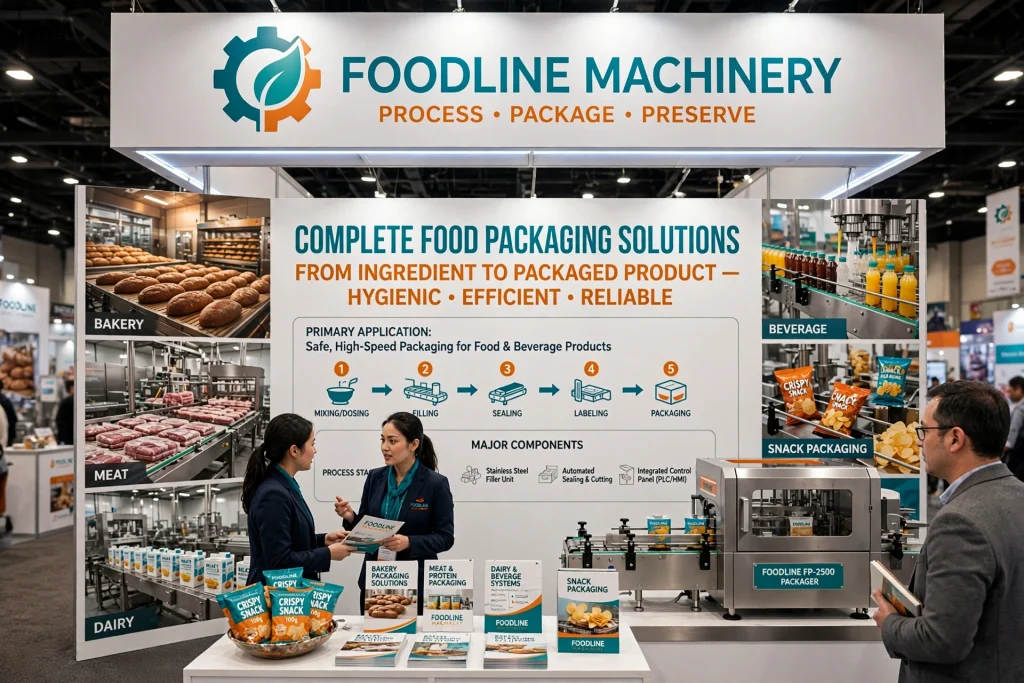
Simple process graphics can help explain how individual machines connect with equipment such as mixers, conveyors, fillers, sealers, labellers and inspection systems.
Display the Finished Product
Showing the output of a food machine can make the demonstration much easier to understand. Visitors can immediately see what the equipment produces and assess the quality of the finished result.
For packaging machinery, display samples of completed packages. For processing equipment, show suitable finished products or representative production samples where permitted.
The finished product should be positioned close to the machine so visitors can connect the equipment with the commercial result.
Use Video to Explain Complex Machinery
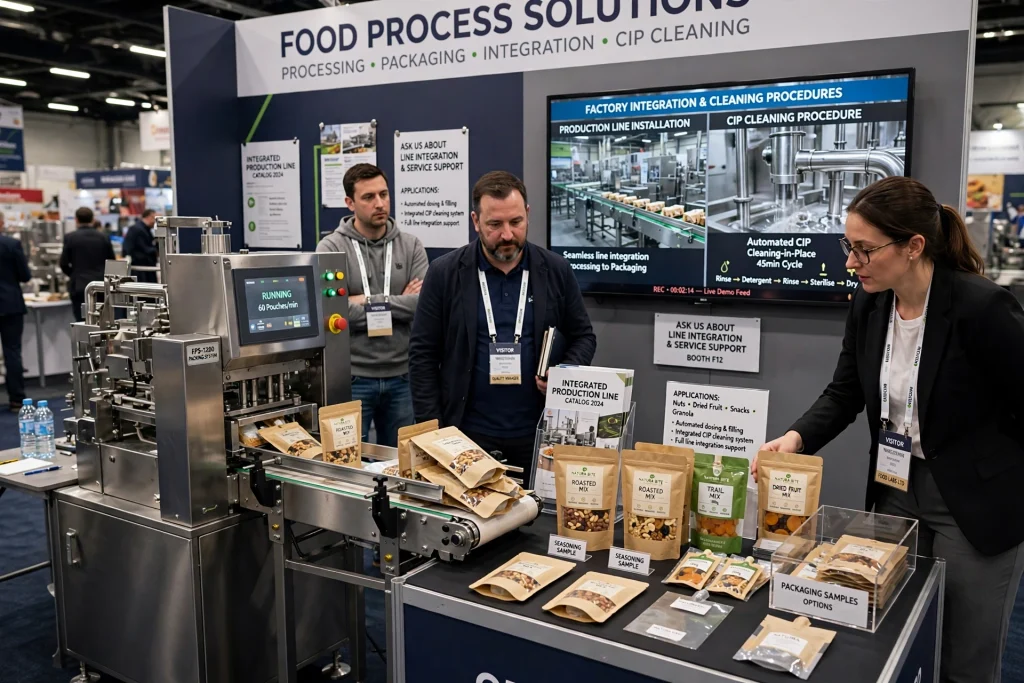
Some food machinery processes are difficult to demonstrate continuously at an exhibition. Video can solve this problem by showing the complete operation without requiring the machine to run throughout the event.
A short video can show factory installation, production-line integration, machine operation, cleaning procedures, changeovers and finished products.
Instead of creating a long corporate presentation, focus on practical footage. Visitors should be able to understand the machine’s application within a few seconds.
Use Digital LED Screens for Machinery Demonstrations
Large-format displays can extend the visual impact of a food machinery stand without requiring additional physical equipment. Digital LED Screens can show production videos, machine demonstrations, factory footage, product applications and branded content from a highly visible position.
This is particularly useful when the machinery is too large to demonstrate fully or when the exhibitor wants to show multiple applications using a single physical machine.
An LED display can also help attract visitors from the exhibition aisle. Once they approach the stand, the content can transition from attention-grabbing visuals to more detailed information about the machinery.
Keep Technical Information Easy to Understand
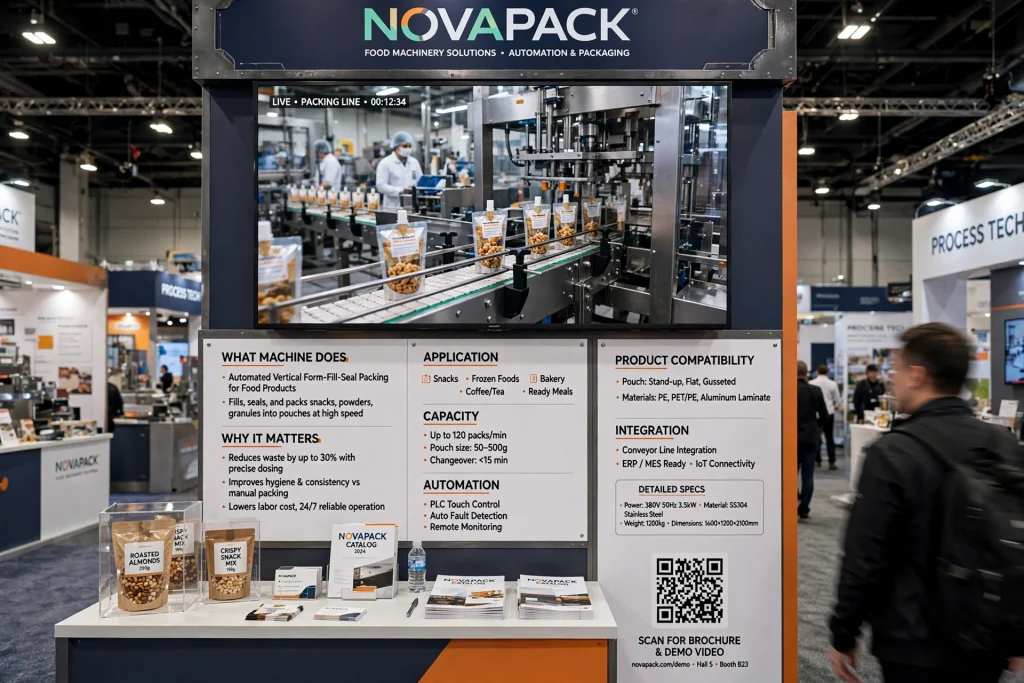
Food machinery buyers may understand technical specifications, but visitors should not need to read a long specification sheet before understanding the basic value of the equipment.
Present key information using short sections such as machine application, production capacity, automation features, product compatibility and integration options.
Technical information can then be provided in greater depth through brochures, QR codes, product screens or conversations with technical representatives.
The objective is to create a clear information hierarchy: first explain what the machine does, then show why it matters, and finally provide detailed specifications for qualified buyers.
Highlight Automation Features
Automation is an important selling point for many modern food-processing and packaging systems. If the machine includes PLC controls, sensors, automated feeding, weighing, filling, sealing or quality inspection, these features should be demonstrated rather than merely listed.
A screen showing the control interface can help visitors understand how operators interact with the equipment.
Where appropriate, explain how automation can support production consistency, reduce repetitive manual tasks and improve process control. Avoid making unsupported claims about specific productivity improvements unless the manufacturer can substantiate them.
Demonstrate Machine Controls
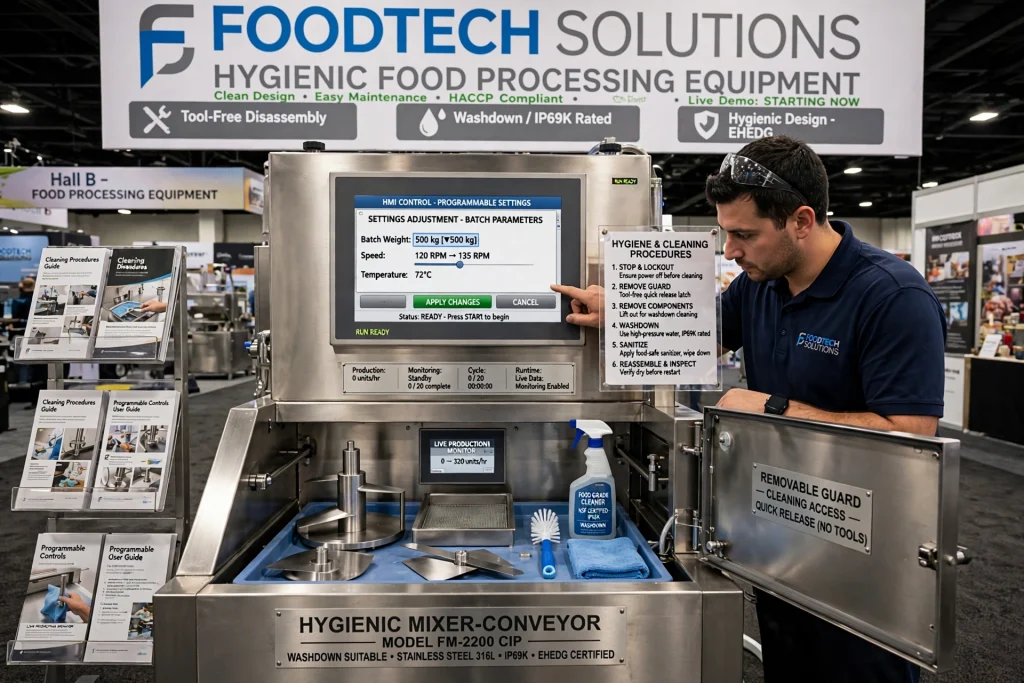
Visitors often want to know how difficult a machine is to operate. A control panel or human-machine interface can provide a useful demonstration point.
Show how an operator starts the machine, changes settings, monitors production or responds to basic operating conditions.
Touchscreen controls, digital displays and programmable settings can be highlighted where they provide genuine operational benefits. If the machine supports multiple recipes or product formats, showing a simple changeover can be particularly effective.
Show Hygiene and Cleaning Features
Food machinery must be designed with hygiene and maintenance in mind. Buyers may be interested in stainless-steel construction, accessible components, removable parts, washdown suitability and cleaning procedures.
These features can become an important part of the exhibition demonstration.
Instead of simply stating that a machine is easy to clean, show visitors which components can be removed, where cleaning access is provided and how the equipment is designed for food-processing environments.
The presentation should always follow the manufacturer’s actual specifications and applicable food-safety requirements.
Explain Maintenance Requirements
Industrial buyers want to understand what happens after purchasing a machine. Maintenance information can therefore help establish confidence.
Display information about routine inspections, consumable components, cleaning requirements and service support. If the manufacturer provides spare parts and technical assistance, make those services visible.
A food machinery exhibition stand should communicate that the supplier is capable of supporting the equipment beyond the initial sale.
Create a Clear Visitor Journey
A good exhibition stand should guide visitors naturally from attraction to understanding and then to action.
From the aisle, visitors should first notice the brand and primary machine. Once inside, they should quickly understand the machine’s application and benefits. Technical information can then answer more detailed questions.
Finally, visitors should have a clear way to request a quotation, arrange a demonstration, scan a QR code, exchange contact information or speak with a sales representative.
A cluttered booth can make this journey difficult. Keep the main pathways open and avoid filling every available wall with information.
Use Exhibition Graphics Strategically
Graphics should support the machinery rather than overwhelm it. Large photographs of food products, production environments and finished packaging can provide context.
A strong headline can explain the machine’s primary application in simple language. Supporting graphics can identify major components or process stages.
If the company serves different industries, use graphics to show relevant applications such as bakery production, meat processing, dairy processing, beverage production, snack manufacturing or food packaging.
Make Branding Visible From the Aisle
Exhibition halls are visually crowded. Visitors need to identify the company quickly from a distance.
The company logo should be positioned high enough to remain visible above people and equipment. Brand colours, typography and messaging should remain consistent across the booth.
The most important message should not be buried in small text. A visitor walking past should be able to understand the company’s business category and primary offering almost immediately.
Use Professional Exhibition Lighting
Lighting affects how machinery appears and how visitors move through the stand. Large industrial equipment can look flat under general exhibition-hall lighting.
Focused lighting can highlight controls, product samples, moving components and important machine features. Linear LED lighting can provide clean architectural illumination around the stand structure.
Avoid excessive glare on screens and reflective stainless-steel surfaces. The lighting should improve visibility without making technical displays difficult to read.
Build a Clean Industrial Aesthetic
Food machinery often has stainless-steel surfaces, technical components and industrial forms. The exhibition stand can complement this appearance with a modern, clean design.
Neutral architectural finishes, structured graphics and carefully positioned lighting can create a professional environment.
For food-processing equipment, cleanliness is particularly important to the visual presentation. Avoid unnecessary decorative elements that make the booth look crowded or disconnected from the machinery.
Include Real Food Products Where Appropriate
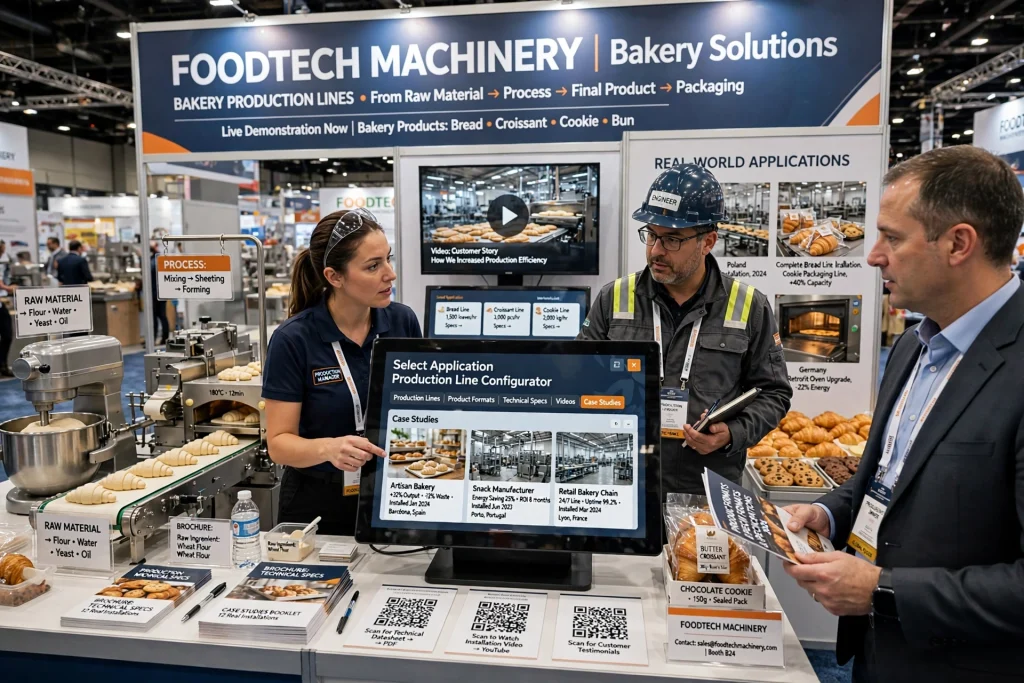
Food products can make machinery demonstrations more relatable. Visitors can see the relationship between the raw material, machine process and final product.
For example, a bakery equipment supplier could display representative baked products, while a packaging machinery company could show finished packages.
Any food handling, preparation or tasting at the exhibition should comply with the venue’s hygiene, safety and food-service requirements.
Add Interactive Touchpoints
Interactive elements can increase visitor engagement. Touchscreens can allow visitors to select different machine applications, production lines or product formats.
A digital interface can also show technical specifications, videos and case studies without requiring large amounts of printed material.
QR codes can provide access to product brochures, technical datasheets, videos and enquiry forms. Make sure the landing pages are mobile-friendly because most visitors will scan codes using smartphones.
Prepare for Different Types of Buyers
Not every visitor has the same priorities. A production manager may focus on throughput and reliability, while a technical engineer may ask about integration and controls.
A procurement professional may be more interested in pricing, lead time and warranty. A business owner may want to understand return on investment and operational benefits.
Exhibition staff should therefore be prepared to adjust the conversation according to the visitor’s role and requirements.
Use Case Studies to Build Confidence
Real-world applications can help buyers understand how machinery performs outside the exhibition environment.
Where permitted, display brief case studies showing the customer’s industry, application, machine type and implementation outcome.
Avoid vague claims such as “best machine” or “number one technology.” Specific and verifiable information generally provides more value to serious buyers.
Photographs or videos from actual installations can be especially useful because they demonstrate how the equipment operates in a real production environment.
Design the Stand for Lead Generation
Attracting visitors is only one part of exhibition marketing. The stand should also make it easy to capture qualified leads.
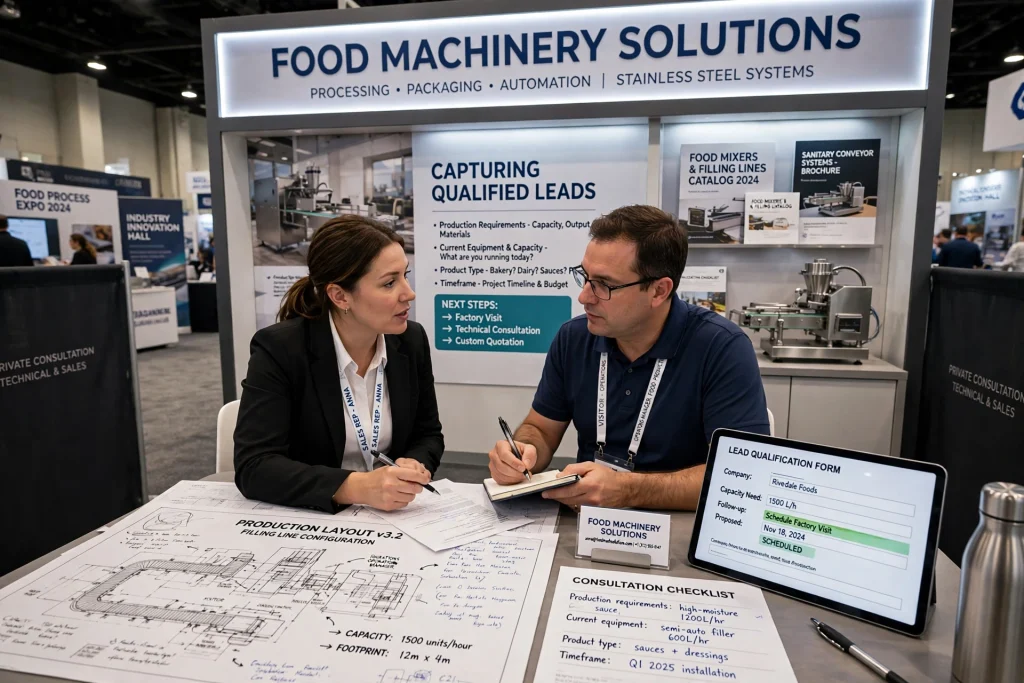
Instead of collecting contact details from everyone, sales representatives can ask practical questions about production requirements, current equipment, desired capacity, product type and purchasing timeframe.
A visitor interested in a particular machine should leave with a clear next step, such as a factory visit, technical consultation, quotation or follow-up demonstration.
Offer a Live Technical Consultation
Food machinery purchases often involve more than choosing a product from a catalogue. Buyers may need assistance with production capacity, layout, utilities, automation and integration.
Having a technical representative available at the exhibition can turn a general conversation into a serious commercial opportunity.
If possible, provide a small consultation area within the stand where technical drawings, production layouts and machine specifications can be discussed privately.
Consider Noise and Safety
Operating industrial machinery inside an exhibition hall introduces safety and visitor-experience considerations. Equipment should only be operated where permitted by the event organiser and venue regulations.
Moving components should have appropriate guarding, and visitors should not be allowed to enter unsafe operating zones.
Noise should also be considered. A very loud demonstration may attract attention but can make conversations difficult and affect neighbouring exhibitors.
Prepare the Machine Before the Exhibition
A machine should arrive at the exhibition clean, complete and professionally presented. Scratches, exposed cables, temporary packaging and unfinished components can undermine an otherwise strong presentation.
Test the equipment before opening day. Confirm that demonstration materials, electrical connections, controls, videos and displays work correctly.
A backup plan should also be prepared in case the machine cannot operate during the event. Recorded demonstrations can keep the presentation running even if live equipment becomes unavailable.
Plan for Dubai Exhibition Venues
Dubai hosts major trade exhibitions at venues such as Dubai World Trade Centre, Dubai Exhibition Centre and other specialised event facilities. Exhibition regulations can differ depending on the event, stand location and equipment type.
Food machinery exhibitors should confirm requirements for power supply, machinery operation, rigging, floor loading, demonstrations, food handling, waste management and safety before finalising the stand.
Early coordination with the exhibition organiser and stand contractor can prevent expensive last-minute changes.
Stand Design for Gulfood Manufacturing
Gulfood Manufacturing attracts professionals from food processing, packaging, ingredients, logistics and related manufacturing sectors. Machinery exhibitors therefore need to communicate technical capabilities quickly.
A machine-focused stand with live or recorded demonstrations can work particularly well because visitors are actively looking for production technologies and equipment.
The stand should explain the machinery’s application, integration potential and commercial value while giving qualified visitors enough technical information to continue the conversation.
Stand Design for Food and Hospitality Exhibitions
Not every food exhibition attracts industrial production buyers. Hospitality-focused events may include restaurant operators, chefs, hotel managers and food-service professionals.
For these audiences, the presentation should focus more strongly on usability, output consistency, space requirements, cleaning and day-to-day operation.
Showing the finished food product alongside the machine can make the equipment more relevant to visitors who are not engineers or production specialists.
Measure Exhibition Performance
After the event, evaluate more than the number of visitors to the stand. Measure qualified leads, product enquiries, demonstrations requested, quotations generated and follow-up meetings.
Identify which machine attracted the most attention and which demonstrations generated the strongest conversations.
If digital screens or interactive content were used, review which videos and product presentations received the most engagement. This information can improve the next exhibition stand.
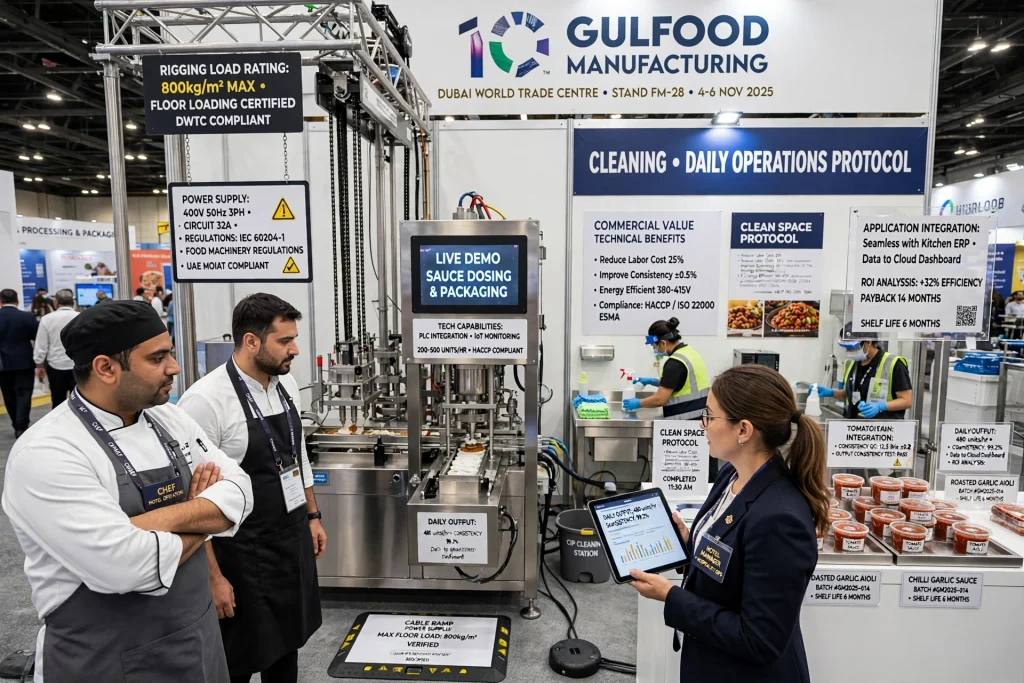
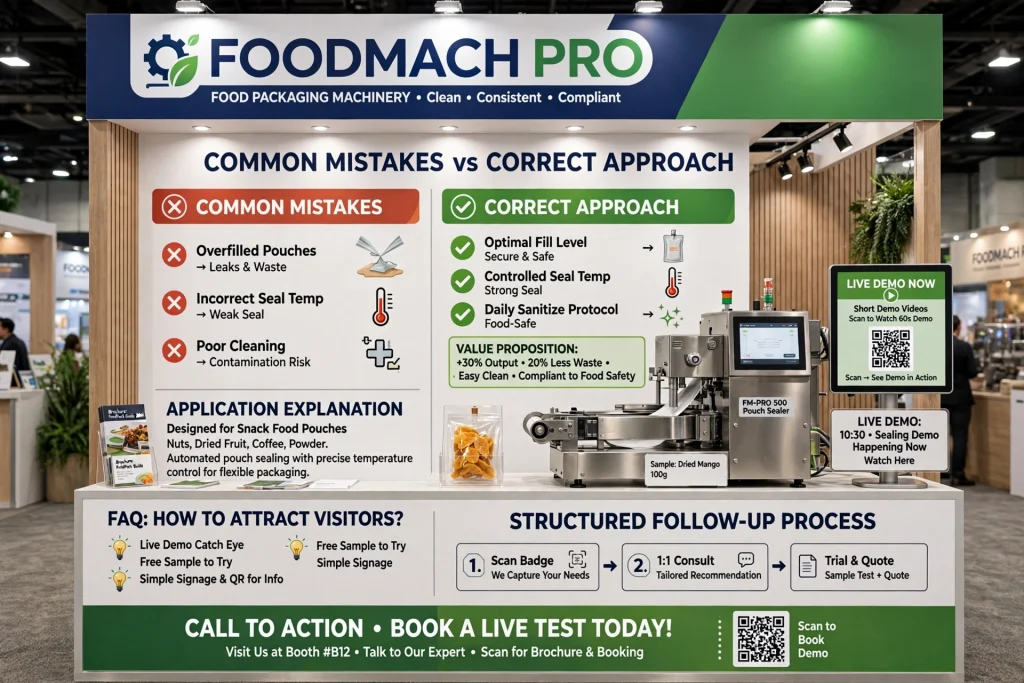
Common Mistakes When Showcasing Food Machinery
One of the biggest mistakes is displaying equipment without explaining its application. Visitors may see an impressive machine but still not understand what problem it solves.
Another mistake is overwhelming the booth with technical text. Specifications are important, but they should be presented after the basic value proposition is clear.
Poor lighting, complicated navigation, inactive demonstrations and unclear calls to action can also reduce the effectiveness of the stand.
Finally, collecting leads without a structured follow-up process wastes much of the investment made in the exhibition.
Frequently Asked Questions
How do you attract visitors to a food machinery exhibition stand?
Use a clearly visible machine, strong branding, professional lighting, short demonstration videos and a simple message explaining the machine’s primary application. Live demonstrations can attract additional attention where venue rules permit.
Should food machinery be operated at an exhibition?
Live operation can be highly effective, but it depends on venue regulations, machinery safety, power requirements, noise and hygiene considerations. Always confirm the requirements with the event organiser.
How can LED displays help a machinery exhibition stand?
Large LED displays can show machine demonstrations, factory footage, production processes, applications and product information. They are particularly useful when a machine cannot be operated continuously.
What information should be displayed beside food machinery?
Focus on the machine’s application, key capabilities, production requirements, automation features, compatible products and relevant technical specifications. Keep detailed information available through brochures or digital resources.
How do you showcase a large food-processing machine?
Make the machine the central visual element, maintain clear viewing space around it and use graphics or video to explain the production process. If the machine is too large to demonstrate completely, use video to show its operation.
What should visitors see during a food machinery demonstration?
Ideally, visitors should see the input material, key processing stages and finished output. Controls, automation and changeover procedures can also be demonstrated where appropriate.
How can exhibitors generate better leads?
Train staff to ask relevant questions about the visitor’s application, production capacity, current equipment, requirements and purchasing timeline. Follow up qualified leads promptly after the exhibition.
Final Thoughts
Showcasing food machinery at an exhibition is not simply about putting expensive equipment on a stand. The objective is to make complex technology understandable, demonstrate its practical value and create meaningful conversations with potential buyers.
A strong exhibition strategy combines the physical machinery with demonstrations, finished products, technical information, professional lighting, clear graphics and digital content. Large-format displays can extend the demonstration beyond what is physically possible on the stand, while interactive content can help visitors explore different applications.
For exhibitors attending major events in Dubai, including Gulfood Manufacturing and trade shows at Dubai World Trade Centre, careful planning is essential. The best stand is one where visitors can quickly understand what the machine does, why it matters to their operation and what the next step should be.