

Blogs
Selecting the Best Display Banners for Events: Materials and Tips

aEvents and exhibitions play a crucial role in marketing, brand visibility, and audience engagement. Whether it’s a trade show, corporate conference, festival, or promotional campaign, the right display banners can make the difference between standing out and getting lost in the crowd. Understanding the materials, design considerations, and practical tips for banners ensures your investment delivers maximum impact.
In this guide, we’ll dive into everything you need to know about selecting the best display banners for events, covering material types, durability, portability, visual design, and cost-efficiency. This article is crafted for event organizers, marketers, and business owners who want to approach banners with expertise and authority.
Why Choosing the Right Banner Matters
The success of an event often relies on first impressions. A poorly designed or flimsy banner can create a negative perception, even if your product or service is excellent. The right banner communicates professionalism, brand identity, and clarity of message.
Key Benefits of Using High-Quality Display Banners
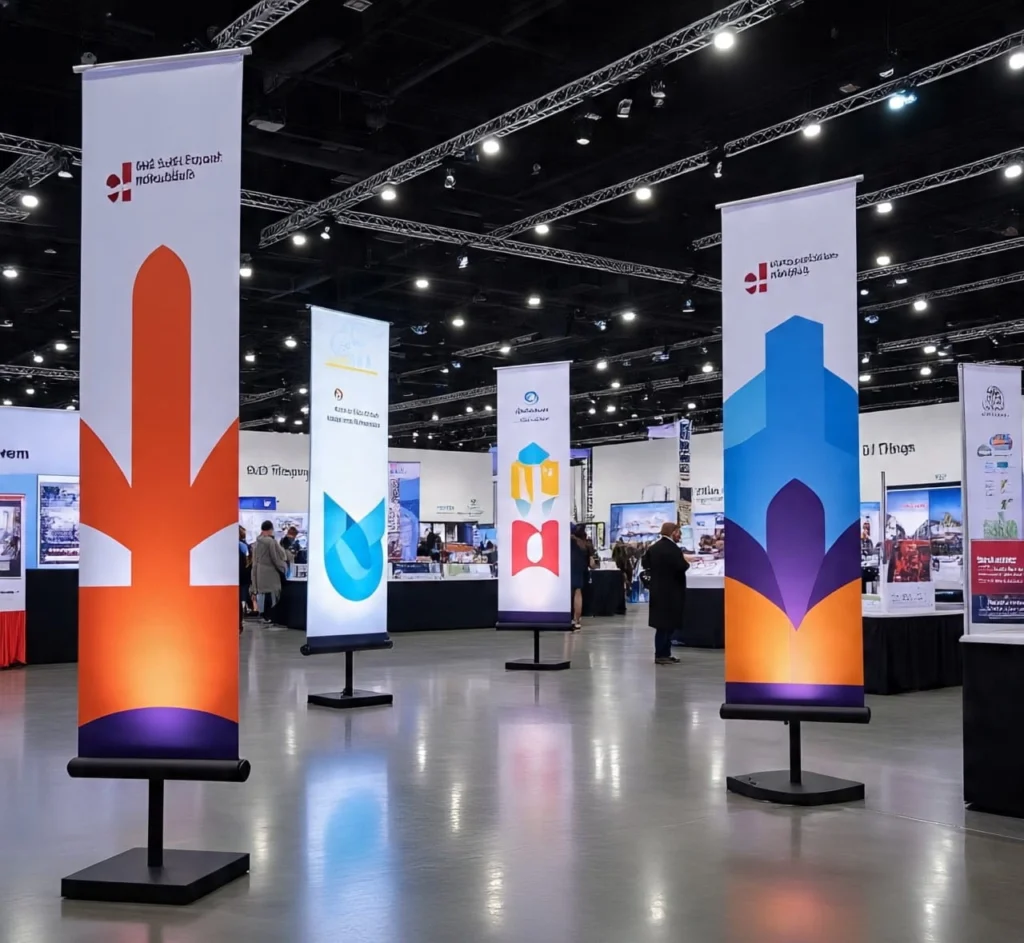
- Brand Visibility: Banners act as a visual ambassador for your brand, drawing attention from attendees.
- Information Delivery: They convey important messages, offers, or event directions quickly and clearly.
- Durability: Quality materials ensure your banners withstand repeated use or outdoor exposure.
- Cost-Effectiveness: A well-chosen banner offers long-term utility, saving money on replacements.
- Professional Appeal: High-quality graphics and materials project a premium image.
Selecting the best banner requires understanding both the environment of use and the types of materials available.
Understanding Banner Materials
Banner materials influence durability, print quality, and suitability for indoor or outdoor use. Below are the most common types:
1. Vinyl Banners
Vinyl is the most popular material for display banners, thanks to its strength, versatility, and high-quality print output.
Features:
- Durable and tear-resistant
- Water-resistant for outdoor use
- Can handle UV exposure (with UV lamination)
- Smooth surface for sharp graphics
Best For: Trade shows, outdoor promotions, exhibitions, and long-term branding campaigns.
Tips: Choose a heavier vinyl (13–18 oz) for outdoor use to prevent flapping in the wind. For indoor events, lighter vinyl is sufficient and more cost-effective.
2. Fabric Banners
Fabric banners are made of polyester or satin materials. They offer a luxurious feel and are ideal for high-end indoor events.
Features:
- Lightweight and portable
- Wrinkle-resistant fabrics available
- Excellent color reproduction with dye-sublimation printing
- Non-reflective surface avoids glare under bright lights
Best For: Indoor conferences, award ceremonies, exhibitions, and corporate launches.
Tips: Fabric banners are best paired with retractable or tensioned stands to maintain a professional look.
3. Mesh Banners
Mesh banners are perforated vinyl sheets that allow wind to pass through. They are suitable for outdoor events in windy areas.
Features:
- Strong and tear-resistant
- Perforations reduce wind resistance
- UV-coated options extend lifespan
- Prints can be slightly diffused due to mesh pattern
Best For: Outdoor concerts, festivals, building wraps, and sports events.
Tips: Use high-resolution graphics and ensure text is bold for legibility through the mesh.
4. Canvas Banners
Canvas banners give an artistic and premium feel. They are heavy and ideal for indoor branding, stage backdrops, or exhibition walls.
Features:
- High-quality print with rich colors
- Durable and reusable
- Non-reflective, matte finish for photography-friendly displays
Best For: Galleries, corporate events, weddings, and luxury exhibitions.
5. Paper & Cardstock Banners
While less durable, paper or cardstock banners are cost-effective for short-term events.
Features:
- Affordable and lightweight
- Easy to print in bulk
- Limited outdoor use due to water sensitivity
Best For: Indoor short-term events, workshops, and seminars.
Choosing the Right Banner Size
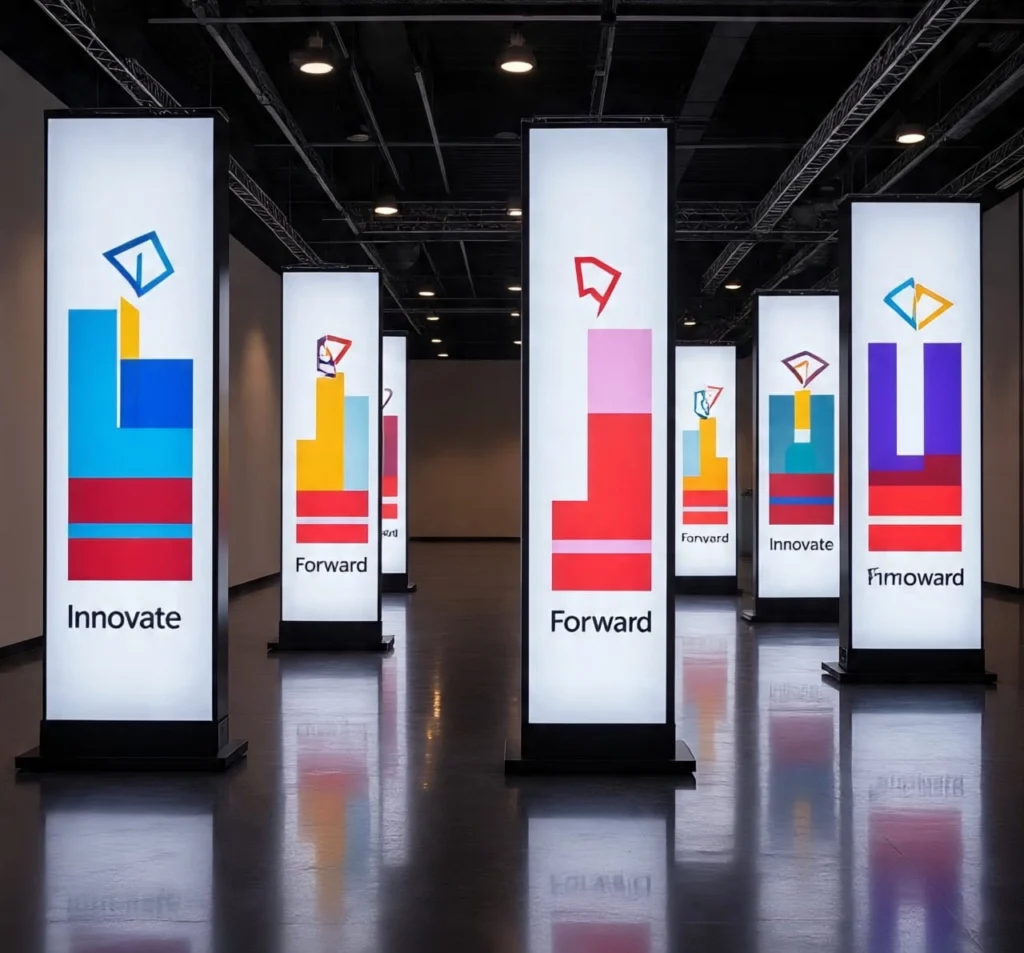
Size is critical to visibility and audience engagement. Here’s how to select the right dimensions:
- Small Events: 2–3 ft x 6 ft banners are sufficient for tabletop displays or reception areas.
- Medium Events: 4–6 ft x 8 ft banners work well for exhibition booths or corridor displays.
- Large Events: 8–10 ft wide or taller banners create impact for stages, outdoor setups, or building facades.
Tips: Ensure the banner size complements the viewing distance. Large banners require bolder fonts and simple graphics to maintain readability from afar.
Banner Types and Their Use Cases
Selecting the appropriate type of display banner is as important as choosing the material.
1. Retractable / Roll-Up Banners
- Easy to transport and install
- Ideal for trade shows, reception areas, and conferences
- Durable base protects banner during storage
- Quick setup: just pull up and secure
2. Tension Fabric Banners
- Stretched over a frame for a smooth, wrinkle-free display
- Premium look for exhibitions, gala events, or product launches
- Can be curved or straight, depending on booth design
3. Hanging / Ceiling Banners
- Suspended from ceilings for high visibility
- Perfect for exhibition halls and large conference venues
- Can use vinyl, mesh, or fabric materials
4. Outdoor / Street Banners
- Designed to withstand wind, rain, and sunlight
- Often use mesh or reinforced vinyl
- Ideal for festivals, concerts, sporting events, and roadshows
5. Step-and-Repeat Banners
- Branded backdrops for photo opportunities
- Commonly used in press events, red carpets, or corporate launches
- Typically printed on vinyl or fabric for a smooth, professional look
Design Tips for High-Impact Banners
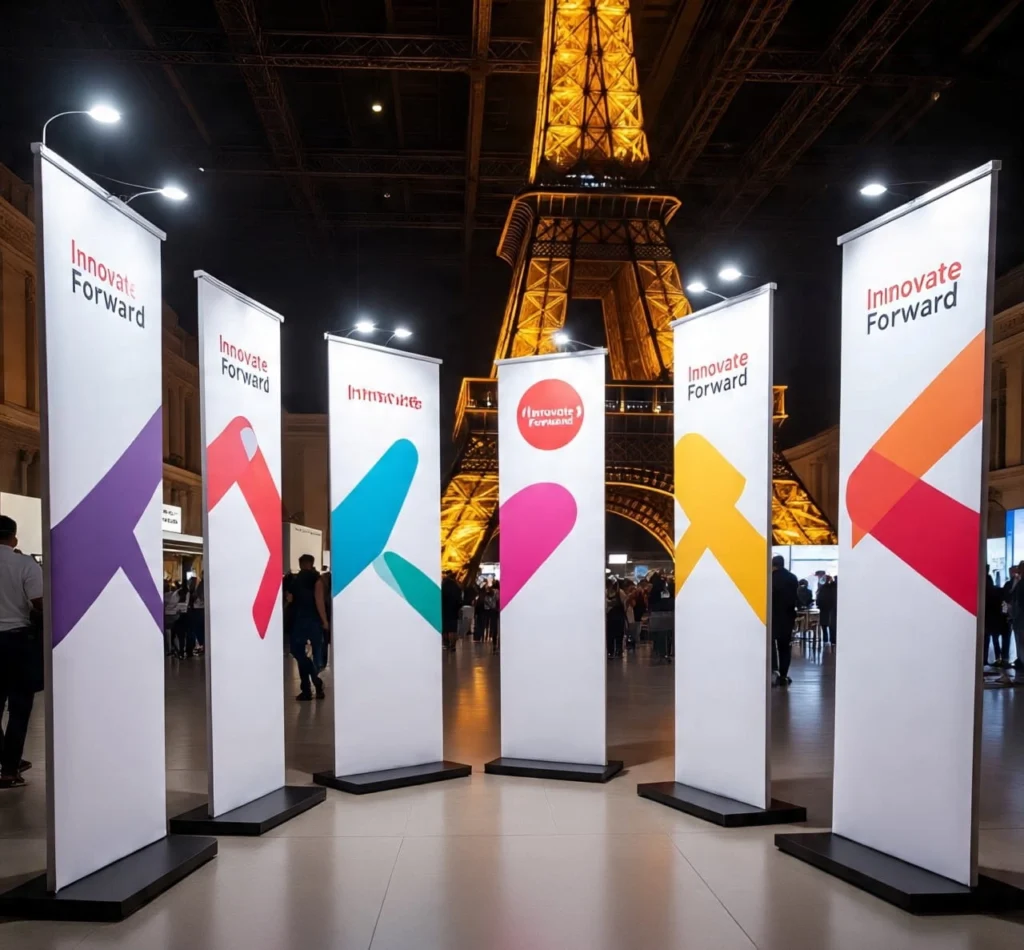
Creating a banner that grabs attention requires thoughtful design. Consider the following:
1. Clear Branding
Your logo, colors, and tagline must be prominent. Ensure brand consistency across all event materials.
2. Minimal Text
Focus on essential information only. Attendees typically glance at banners for a few seconds.
Tip: Use short, bold statements or calls-to-action.
3. High-Quality Graphics
Pixelated images reduce professionalism. Use high-resolution files (300 dpi) and ensure colors match your brand guidelines.
4. Readable Fonts
Use bold, sans-serif fonts for maximum readability. Avoid script or decorative fonts that are hard to read from a distance.
5. Contrasting Colors
Ensure text stands out against the background. Strong contrast improves visibility in both bright and dim environments.
6. Use of White Space
Avoid clutter. White space allows the message to breathe and improves overall aesthetics.
Practical Tips for Event Banner Usage
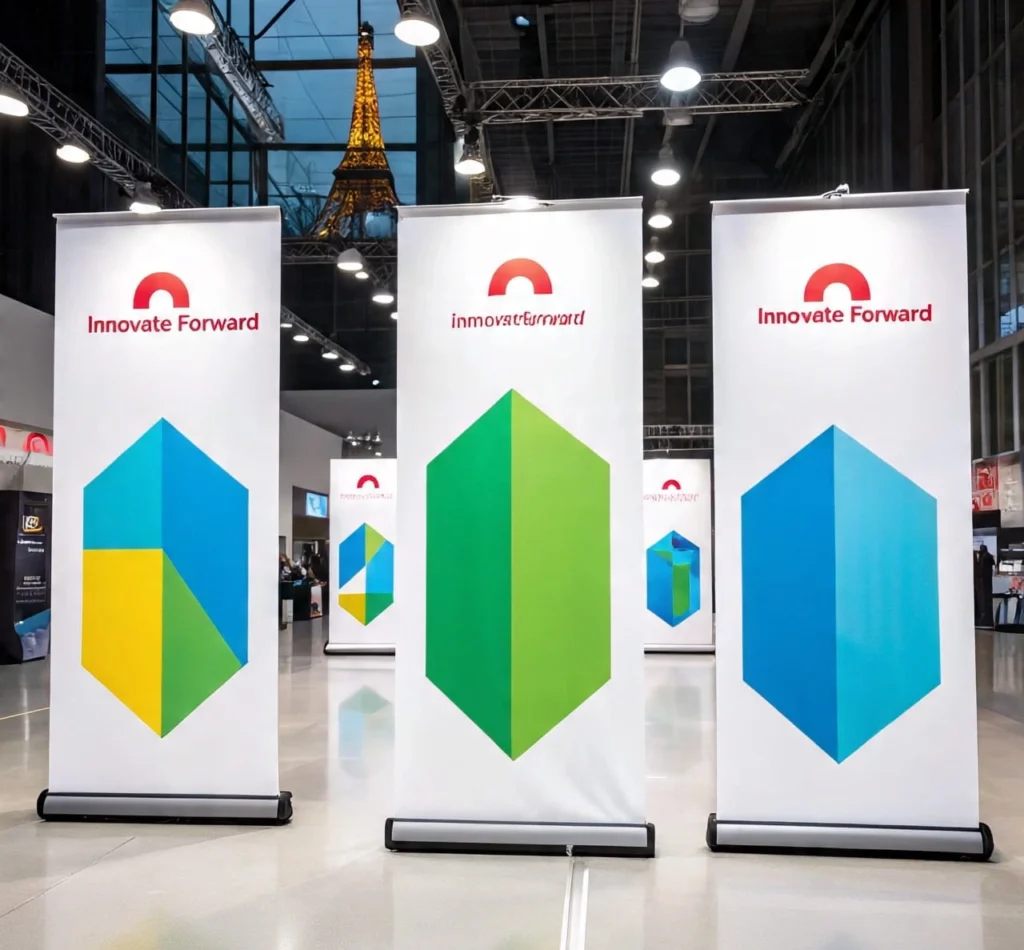
- Placement: Position banners where foot traffic is highest. Consider entry points, stage areas, and food courts for maximum visibility.
- Lighting: Use focused lighting for indoor banners. Avoid reflective surfaces that cause glare.
- Portability: For traveling events, choose lightweight materials like fabric or retractable banners.
- Maintenance: Keep banners clean and free of wrinkles or creases to maintain a professional look.
Cost Considerations
Banner costs depend on material, size, and printing method. Here’s a quick guide:
| Material | Cost Range | Durability | Use Case |
|---|---|---|---|
| Vinyl | AED 150–600 | High | Indoor/outdoor |
| Fabric | AED 200–800 | Medium-High | Indoor events |
| Mesh | AED 300–900 | High | Outdoor, windy locations |
| Canvas | AED 400–1200 | High | Premium indoor events |
| Paper/Cardstock | AED 50–200 | Low | Short-term, indoor |
Tip: Investing in slightly more expensive, durable materials ensures longer-term usability and reduces replacement costs.
Sustainable and Eco-Friendly Banner Options
With sustainability becoming increasingly important, consider:
- Recyclable vinyl
- Eco-friendly fabrics
- Reusable banner frames
- Water-based printing inks
These options allow businesses to reduce environmental impact while maintaining professional presentation.
Mistakes to Avoid When Selecting Event Banners
- Choosing too small a banner for the venue
- Overloading banners with text or images
- Using low-resolution graphics
- Ignoring environmental conditions (wind, sunlight, rain)
- Neglecting portability for traveling events
- Failing to match banners with overall event branding
Avoiding these mistakes ensures your banners deliver maximum impact.
Why Professional Guidance Matters
Working with an experienced display banners provider ensures:
- Material and size selection suited to event type
- Correct installation methods
- Professional design assistance for maximum visibility
- Advice on long-term banner use and storage