

Blogs
Sign Materials for High-Wind Areas: Expert Guide from Real Installation Experience

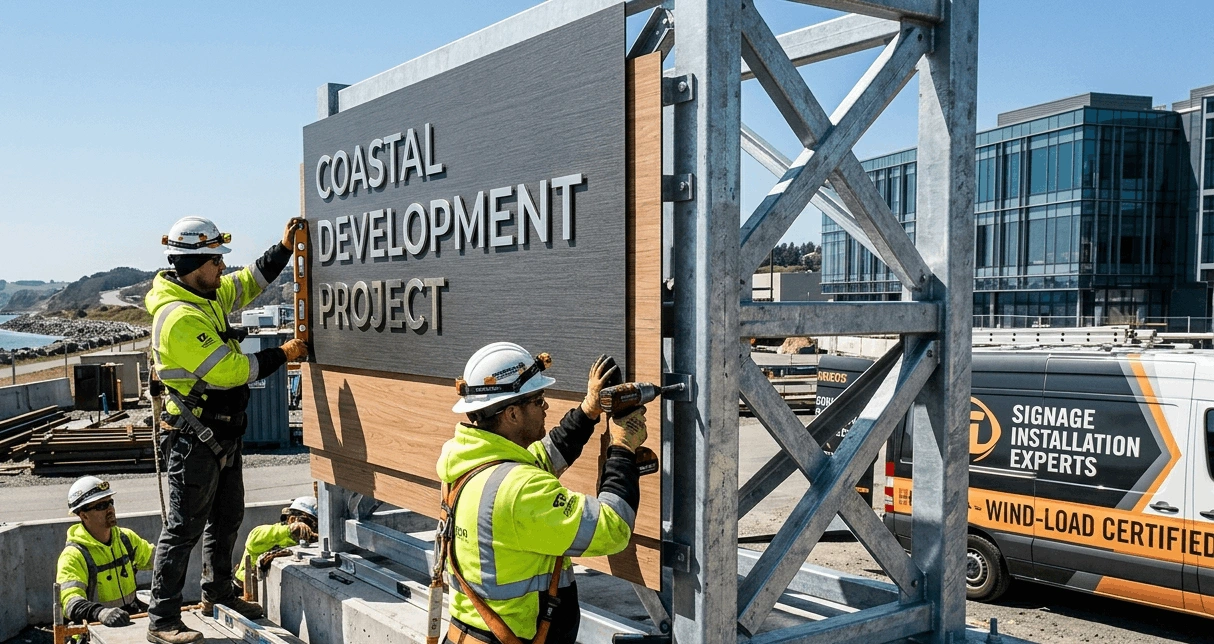
On one of our outdoor signage projects near the coastal highway between Dubai and Abu Dhabi, we installed a large illuminated sign for a roadside business. The structure looked solid on paper, good design, proper dimensions, and standard materials.
But within weeks, after a period of strong desert winds and coastal gusts, we started seeing issues:
- Slight panel bending
- Vibrations in the frame
- Noise coming from loose sections
Nothing failed completely, but it was clear:
“The materials were not fully optimized for high-wind conditions.”
We redesigned the structure using different materials and mounting techniques. The second installation performed perfectly — even during peak wind conditions.
This is where real expertise matters.
Why High-Wind Areas Need Special Sign Materials
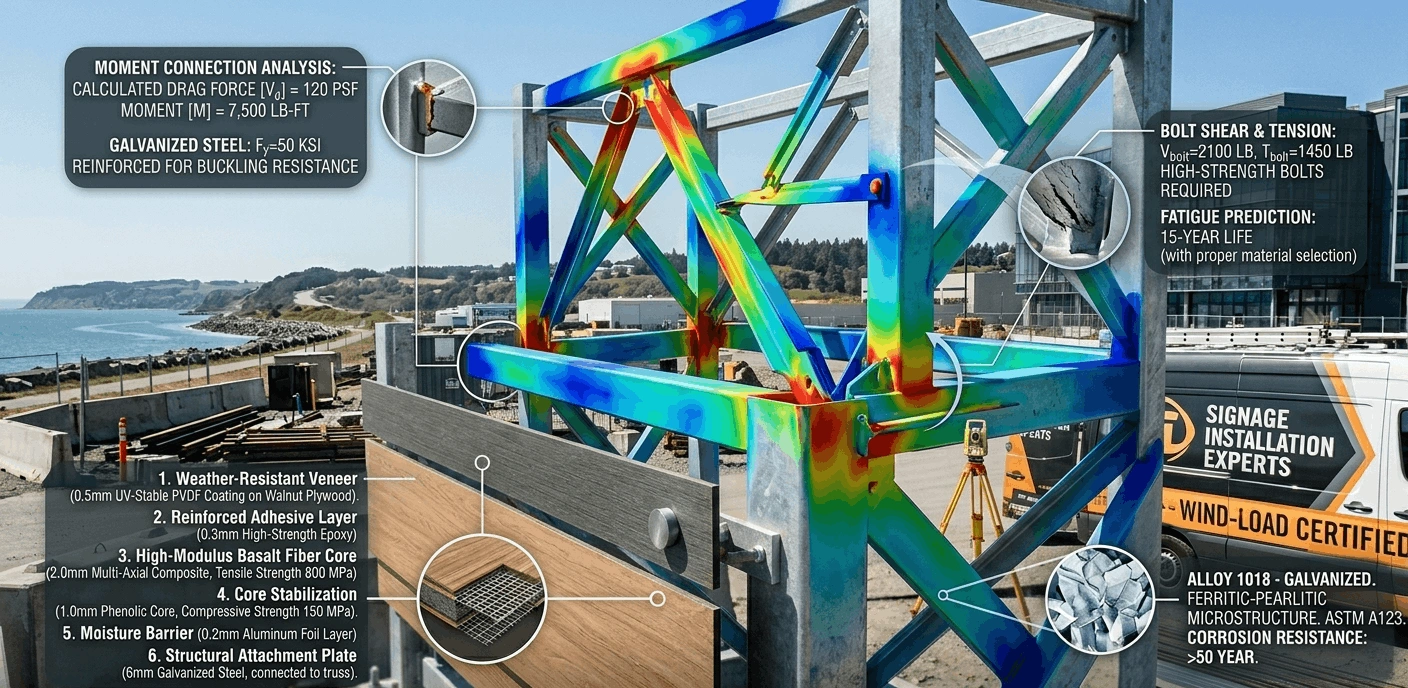
High-wind environments create continuous stress on signage. It’s not just about one strong storm; it’s about constant pressure, vibration, and fatigue over time.
In regions like coastal UAE, open highways, or industrial zones, wind can:
- Apply uneven pressure on surfaces
- Cause structural vibration
- Loosen fasteners
- Increase wear and tear
If the wrong materials are used, even a well-designed sign can fail early.
Key Factors That Affect Sign Performance in Wind
From real-world installations, these are the most critical factors:
1. Wind Load Pressure
Wind pushes against the surface area of the sign.
- Larger signs = more pressure
- Flat surfaces = higher resistance
This is why billboards and large panels need stronger materials.
2. Material Flexibility vs Rigidity
This is something many people misunderstand.
- Too rigid → cracks or breaks under stress
- Too flexible → bends and deforms
The ideal material should:
- Absorb pressure
- Maintain structural integrity
3. Mounting and Support System
Even the best material fails if poorly installed.
From experience:
“70% of wind-related failures are due to mounting issues, not material quality.”
4. Environmental Conditions
In UAE, you must consider:
- Heat expansion
- Sandstorms
- Humidity (coastal areas)
These factors combine with wind and increase stress on materials.
Best Sign Materials for High-Wind Areas
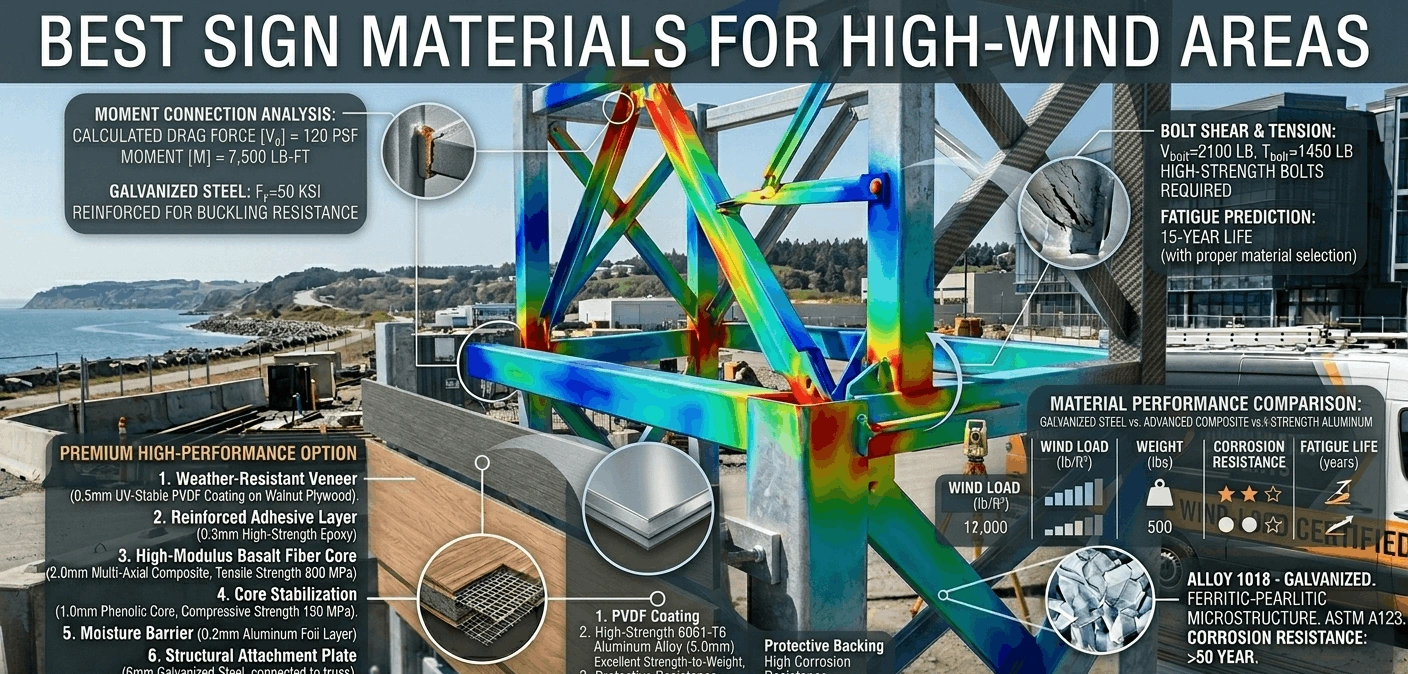
1. Aluminum (Top Choice)
Aluminum is one of the most reliable materials for high-wind signage.
Why it works:
- Lightweight (reduces load on structure)
- Strong and corrosion-resistant
- Does not crack under stress
Real Use Case:
We replaced a steel panel with aluminum composite in a roadside sign project. The difference was immediate:
- Reduced vibration
- Better long-term performance
2. Aluminum Composite Panel (ACP)
ACP is widely used in UAE signage.
Benefits:
- Lightweight with strong core
- Smooth surface for branding
- Good resistance to wind and weather
Expert Tip:
Use thicker ACP (3mm–4mm) for outdoor high-wind areas.
3. Perforated Metal Panels
This is a professional solution used in high-wind zones.
Why it’s effective:
- Allows wind to pass through
- Reduces pressure on the structure
Real Insight:
For a project near an open desert road, we used perforated panels. Wind resistance dropped significantly, and the sign remained stable even in strong gusts.
4. Polycarbonate Sheets
Better than acrylic for wind resistance.
Advantages:
- High impact resistance
- Flexible without breaking
- Suitable for illuminated signs
5. PVC Foam Board (Limited Use)
PVC is common but not ideal for high-wind areas unless properly supported.
Use only when:
- Sign size is small
- Installed in semi-protected areas
6. Steel Frames (For Structural Support)
Steel is not always used for panels but is essential for:
- Internal frames
- Support structures
Important:
Always use galvanized or coated steel to prevent corrosion.
Materials to Avoid in High-Wind Areas
Based on experience, avoid:
1. Thin Acrylic Sheets
- Cracks under pressure
- Poor flexibility
2. Low-Quality Plastic Panels
- Warps in heat
- Weak under stress
3. Thin Unreinforced PVC
- Bends easily
- Short lifespan outdoors
Design Techniques to Improve Wind Resistance
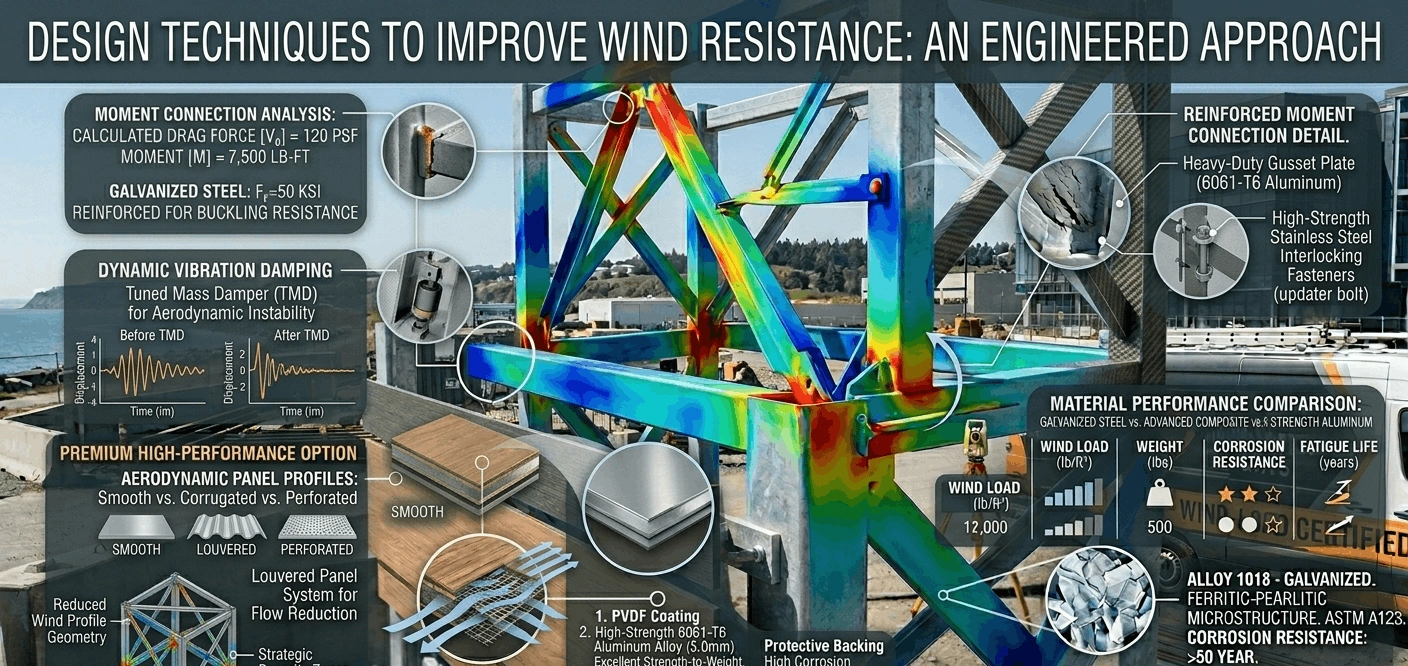
Material alone is not enough. Design plays a huge role.
1. Reduce Surface Area Pressure
- Break large signs into sections
- Use spacing between panels
2. Use Open Designs
Allow wind to pass through instead of blocking it.
3. Reinforced Back Structure
Add:
- Cross supports
- Strong brackets
- Secure anchoring
4. Rounded Edges
Sharp edges catch wind more aggressively.
Rounded designs reduce resistance.
Real Project Breakdown
Project: Highway Sign Installation
Location: Between Dubai and Abu Dhabi
Initial Setup:
- Material: Standard ACP
- Issue: Panel vibration
Improved Setup:
- Thicker ACP
- Reinforced aluminum frame
- Better anchoring system
Result:
- Stable performance
- No vibration
- Long-term durability
Installation Best Practices
From field experience, follow these rules:
1. Use High-Quality Fasteners
Cheap screws fail quickly in wind conditions.
2. Proper Anchoring
Ensure:
- Deep anchoring into structure
- Strong base support
3. Allow for Expansion
Materials expand in heat. Leave slight gaps to avoid stress.
4. Regular Maintenance
Check:
- Loose screws
- Panel alignment
- Structural integrity
Cost vs Performance
Many clients try to reduce cost by choosing cheaper materials.
But in high-wind areas:
- Cheap materials = frequent repairs
- Strong materials = long-term savings
From experience:
“Spending 15–20% more on better materials can save you 2x in maintenance costs.”
Choosing the Right Supplier
Material quality varies significantly between suppliers.
Working with a trusted Best Sign Materials supplier ensures:
- Certified materials
- Consistent quality
- Better durability
Low-quality materials may look similar but fail under real conditions.
UAE-Specific Considerations
In cities like:
- Dubai
- Abu Dhabi
You must consider:
- High temperatures
- Sandstorms
- Coastal winds
This combination makes material selection even more critical.
Expert Recommendations
Based on years of installation experience:
For Large Outdoor Signs:
- Aluminum + steel frame
- Optional perforation
For Medium Signs:
- ACP with reinforced backing
For Illuminated Signs:
- Polycarbonate with strong frame