

Blogs
Common Mistakes When Choosing Sign Materials (And How to Avoid Them)

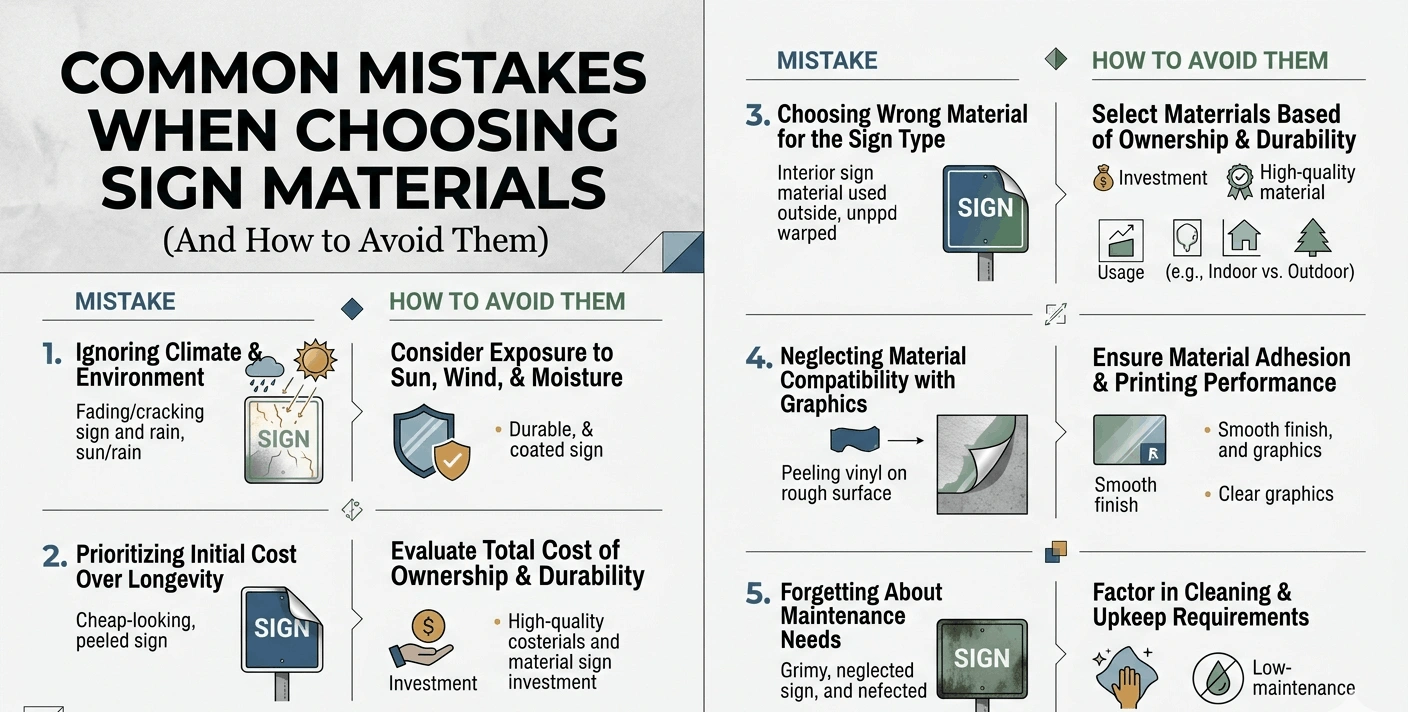
Choosing the right sign material looks simple at first, but in reality, it’s one of the biggest factors that determines whether your signage lasts for years or fails within months. Many businesses focus only on design and ignore the technical side—materials, environment, durability, and installation. This leads to fading colors, cracked surfaces, poor visibility, and ultimately wasted investment.
If you want your signage to perform well—especially in demanding environments like the UAE—you need to understand the common mistakes people make and how to avoid them. This guide breaks it down with real-world insights so you can make better decisions and get long-term value.
Ignoring Environmental Conditions
One of the biggest mistakes is choosing materials without considering where the sign will be installed. A material that works perfectly indoors may completely fail outdoors, especially in regions with extreme heat, dust, and UV exposure.
In places like Dubai, temperatures can get very high, and sunlight is intense. Materials like low-quality plastics may warp, discolor, or become brittle over time. Similarly, untreated metals can corrode due to humidity.
Always match the material to the environment. Outdoor signage requires UV-resistant, heat-resistant, and weatherproof materials. Indoor signage, on the other hand, allows more flexibility in design and material choice.
Choosing Based on Price Instead of Value
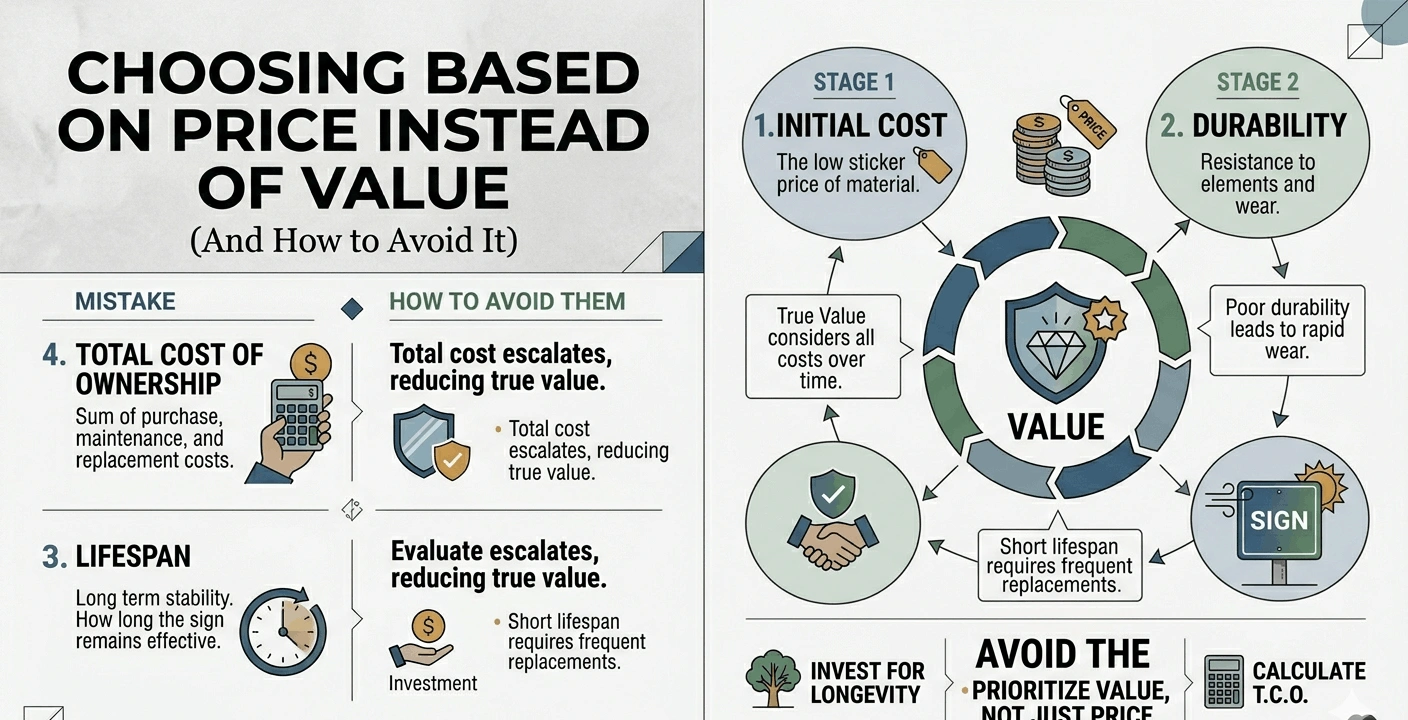
Many businesses try to cut costs by selecting the cheapest material available. While this may save money initially, it often leads to higher long-term costs due to repairs, replacements, or complete redesigns.
For example, a low-cost vinyl sign may look good for a few months but fade quickly under sunlight. In contrast, higher-quality materials like acrylic, aluminum, or polycarbonate last much longer and maintain their appearance.
Think of signage as an investment rather than an expense. Paying more upfront for quality materials ensures durability, better branding, and fewer maintenance issues.
Not Understanding Material Properties
Another common issue is not fully understanding how different materials behave. Each material has its own strengths and limitations, and choosing the wrong one can affect both appearance and performance.
Acrylic, for instance, offers a premium glass-like look but can crack under impact if not handled properly. Aluminum is lightweight and rust-resistant, making it great for outdoor use, but it may not provide the same visual depth as other materials.
Without proper knowledge, businesses often select materials that don’t match their actual needs. This is why working with an experienced sign material supplier in dubai can make a huge difference in selecting the right option.
Overlooking Thickness and Structural Strength
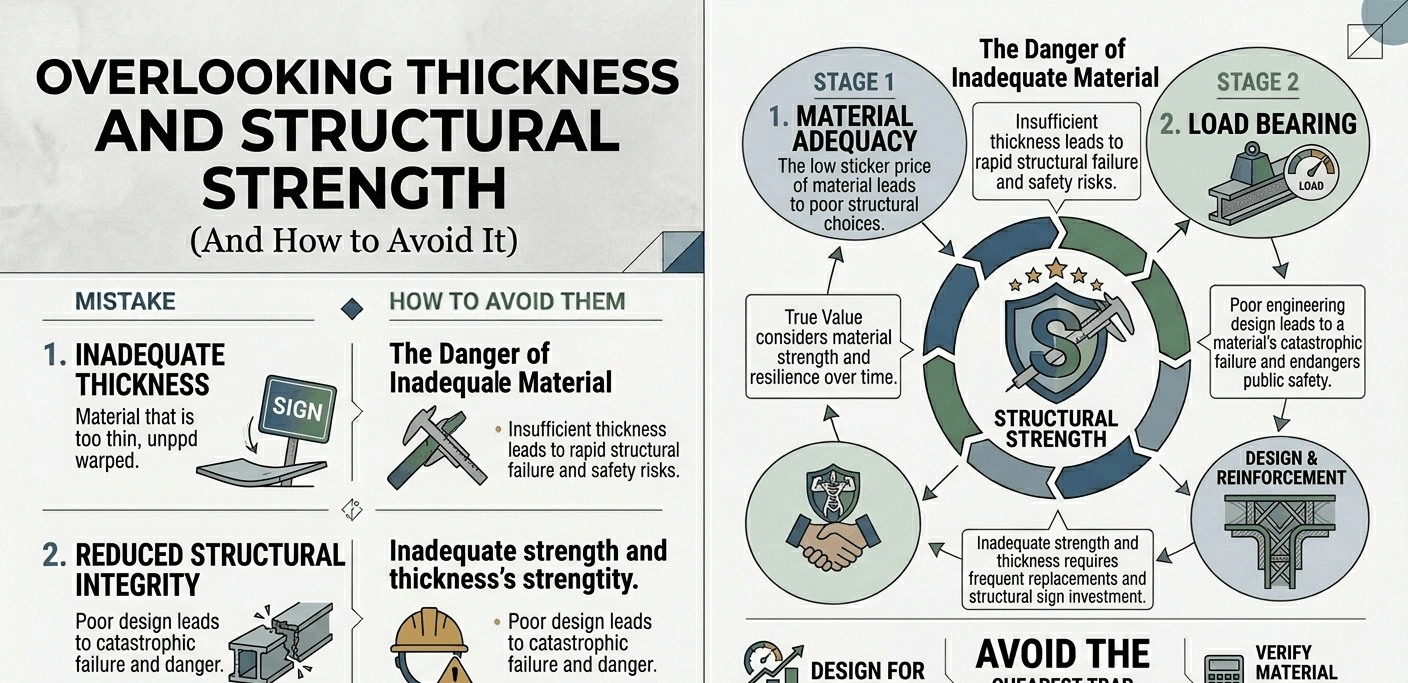
Material thickness plays a critical role in durability, but it’s often ignored. Thin materials may reduce cost but can lead to bending, warping, or breaking—especially for large signs or outdoor installations.
For example, large signboards exposed to wind require thicker and more rigid materials to maintain stability. Using thin panels in such cases can result in damage or even safety risks.
Always consider the size and placement of your signage. Larger signs need stronger materials and proper structural support to ensure long-term performance.
Ignoring UV Resistance
UV exposure is one of the biggest enemies of signage, particularly in sunny regions. Without UV protection, colors fade quickly, and materials degrade over time.
This is a common mistake with printed vinyl and low-quality plastics. Businesses often notice their vibrant signage turning dull within months.
To avoid this, always choose UV-stabilized materials or apply protective coatings. This ensures that your signage maintains its color and clarity even after prolonged exposure to sunlight.
Poor Material Compatibility with Lighting
Lighting plays a major role in signage, especially for illuminated signs. However, many people fail to choose materials that work well with lighting systems.
For example, using opaque materials for backlit signs will block light instead of diffusing it evenly. Similarly, using low-quality acrylic can result in uneven brightness and visible hotspots.
It’s important to select materials specifically designed for illuminated signage. These materials allow proper light diffusion, enhancing visibility and overall appearance.
Not Considering Maintenance Requirements
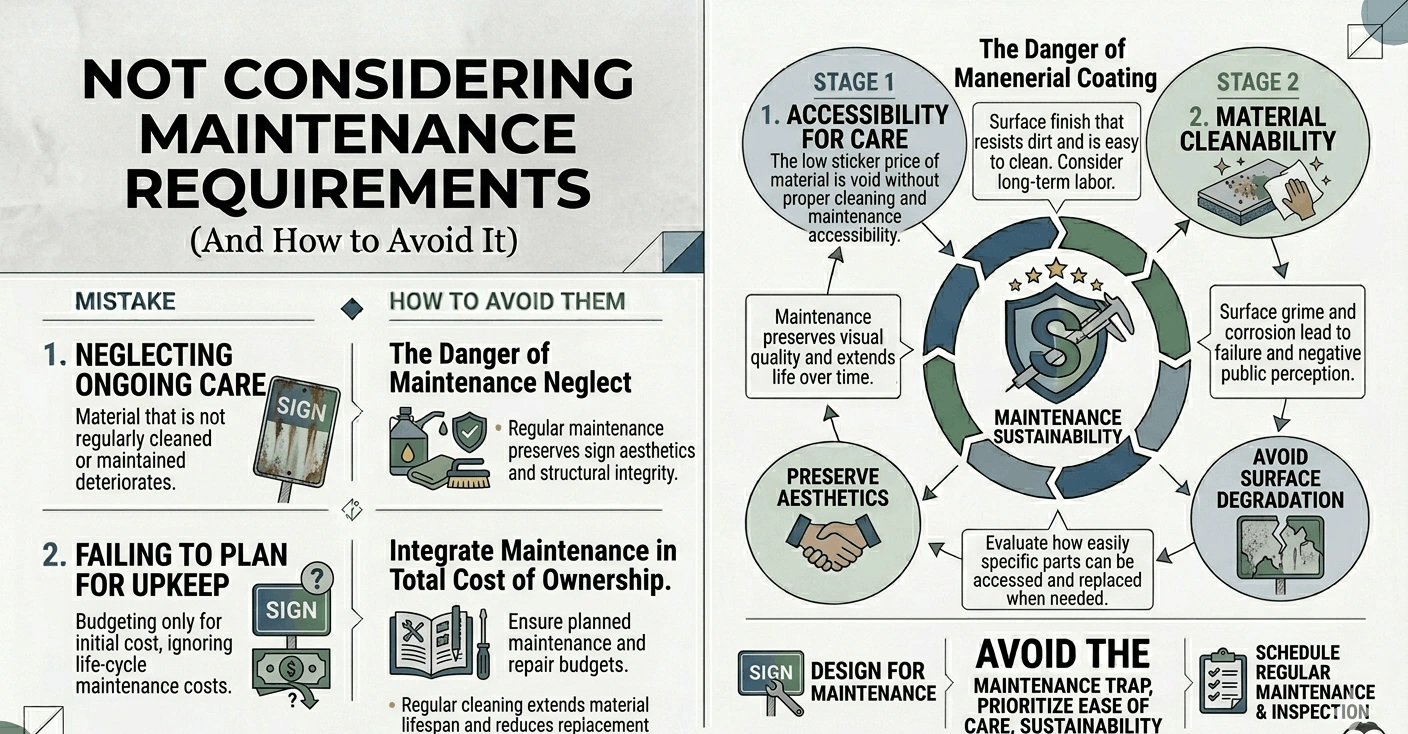
Every material has different maintenance needs, but this is often overlooked during selection. Some materials require regular cleaning, polishing, or protective treatments to maintain their look.
For instance, glass and acrylic surfaces can attract dust and fingerprints, while metal signs may need occasional polishing to prevent dullness.
If maintenance is not considered, signage can quickly lose its appeal. Choosing low-maintenance materials can save time and operational costs in the long run.
Choosing the Wrong Finish
Finish plays a big role in how your signage looks and performs. Glossy finishes may look attractive but can create glare under strong lighting, making the sign hard to read.
Matte finishes, on the other hand, reduce glare but may not provide the same visual impact. Similarly, textured finishes can add uniqueness but may trap dust and require more cleaning.
The key is to choose a finish that aligns with your environment and branding. For outdoor signage in bright areas, anti-glare finishes are often the best choice.
Ignoring Installation Factors
Even the best material can fail if not installed properly. Many businesses choose materials without considering how they will be mounted or supported.
For example, heavy materials require strong mounting systems, while lightweight materials may need reinforcement to prevent movement. Improper installation can lead to damage, safety hazards, and reduced lifespan.
Always plan the installation process alongside material selection. This ensures that your signage remains secure and performs as expected.
Not Planning for Longevity
Some businesses choose materials based on short-term needs without thinking about the future. This often leads to frequent replacements and inconsistent branding.
If your signage is meant to represent your brand for years, you should invest in durable, high-quality materials that can withstand environmental conditions and maintain their appearance.
Planning for longevity also means choosing timeless designs and materials that won’t go out of style quickly.
Overcomplicating Material Choices
With so many options available, it’s easy to overcomplicate the decision-making process. Some businesses try to combine too many materials, which can increase cost and reduce overall effectiveness.
Sometimes, simple solutions work best. A clean, well-designed sign using one or two high-quality materials can be more impactful than a complex design with multiple elements.
Focus on clarity, durability, and functionality rather than unnecessary complexity.
Ignoring Brand Consistency
Your signage is a direct reflection of your brand. Choosing the wrong material can send the wrong message to your audience.
For example, a luxury brand using cheap-looking materials can harm its image, while a modern tech company using outdated materials may appear less innovative.
Always choose materials that align with your brand identity. This ensures consistency across all touchpoints and strengthens your overall image.
Not Testing Before Final Installation
Skipping testing is another common mistake. Materials may look good in samples but behave differently in real-world conditions.
For example, colors may appear different under natural sunlight compared to indoor lighting. Similarly, materials may react differently to heat or humidity.
Testing small samples in actual conditions helps identify potential issues before full-scale production. This step can save time, money, and effort.